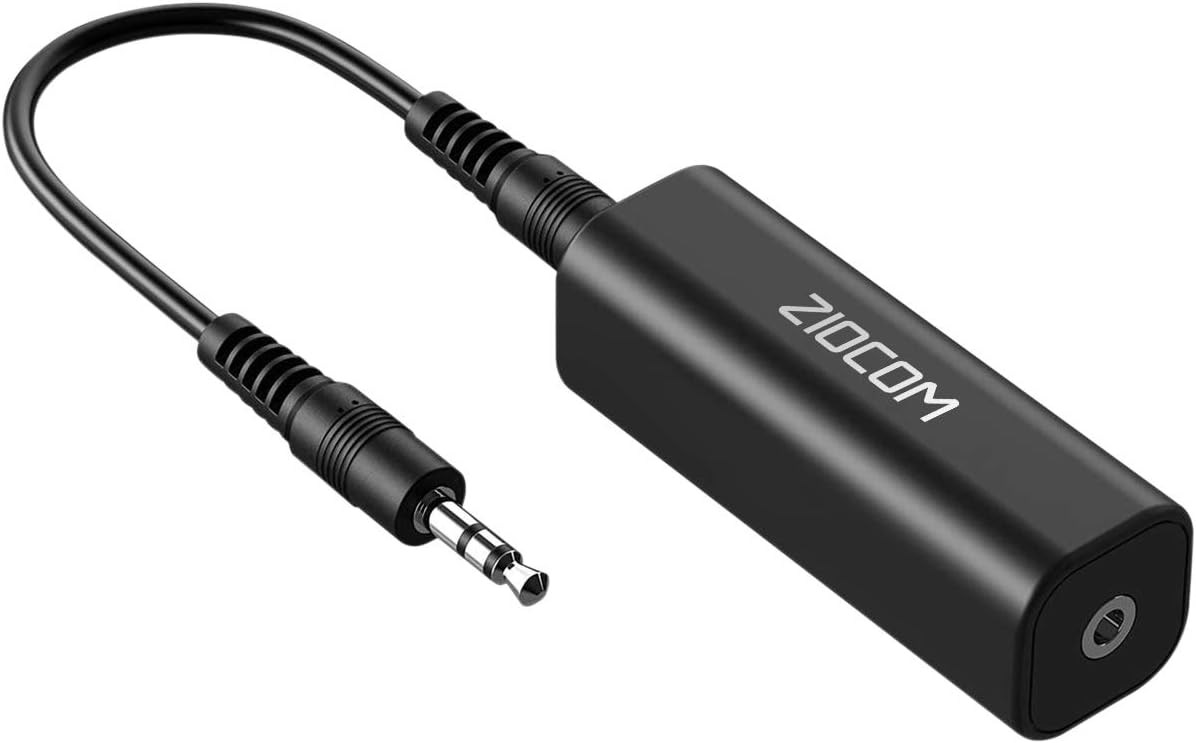
ZIOCOM Ground Loop Noise Isolator
4.3Editor score
Inline 3.5mm installation
Targets buzzing and current noise
Works with car and home systems
Ground loop noise isolators help remove unwanted hum, buzz, hiss, and interference from analog audio connections. The right model depends on connector type, channel count, system configuration, and whether the noise originates from a vehicle, home stereo, television, computer, or portable source.
This guide compares ten ground loop noise isolators using their stated connector configurations, isolation methods, supported applications, ratings, and installation requirements. It covers portable 3.5mm inline units, RCA filters, professional transformer boxes, and multi-channel isolators designed for more demanding audio setups.
The selections show which products stand out for budget convenience, professional connectivity, or broad compatibility. Ratings and technical details reflect the supplied product information, while availability, design, and pricing can change. Readers should confirm connector type and system requirements before purchasing.
4.3Editor score

4.4Editor score

4.2Editor score
As an Amazon Associate we earn from qualifying purchases.
This side-by-side comparison organizes each isolator by its physical connection method, channel support, intended environment, and practical installation features, making it easier to match a filter to a particular audio system.


The BESIGN Ground Loop Noise Isolator is a compact inline solution for eliminating hiss, buzz, and interference caused by ground loops in car audio and home stereo systems. Its 4.4 rating is the highest among the listed products, and its straightforward 3.5mm approach makes it a strong general recommendation for portable sources and basic stereos.
We may earn a commission when you buy through this link, at no additional cost to you.
One of its standout features is compatibility with phones, tablets, MP3 players, speakers, Bluetooth receivers, and hands-free car kits that use a 3.5mm jack. The included audio cable makes the unit practical for installations where the necessary connection length is not already present. Its passive, battery-free design also removes the need for power cables or operating controls.
The main limitation is connector focus. It is built around 3.5mm audio rather than RCA, TRS, or XLR connections, so it cannot directly address a professional installation with those interfaces. The product information also describes it as a remedy for ground-loop noise, meaning it should not be expected to solve radio static, antenna interference, damaged wiring, or unrelated distortion.
This is an excellent choice for someone whose noise appears when a phone, Bluetooth receiver, or similar source is connected to a car or home stereo through an aux input. Choose it when convenience, broad device support, and a straightforward inline installation matter more than professional I/O flexibility.
The isolator fits directly into a 3.5mm signal path, making it a natural choice for portable music sources and Bluetooth receivers. Its included cable also reduces the chance that users will need to locate an additional compatible aux lead.
The stated target problems are hiss, buzz, interference, and current noise associated with grounding issues. It is best considered a focused connection filter rather than a general repair tool for every type of unwanted sound.
We may earn a commission when you buy through this link, at no additional cost to you.
The Summina Ground Loop Noise Isolator is a compact audio filter intended to reduce unwanted hum and interference in home audio connections. Its 3.6 rating is the lowest among the ten products, but the supplied details still identify a straightforward design with plug-and-play installation and compatibility across several common entertainment devices.
We may earn a commission when you buy through this link, at no additional cost to you.
The built-in LED is the most distinctive listed feature. It gives users immediate visual feedback about whether the filter is operating, which can be useful during setup or troubleshooting. The unit is also described as compatible with speakers, amplifiers, stereo systems, televisions, and other audio equipment, making it a general option for home entertainment and recording environments.
Its main drawback is that the product information does not identify the exact input and output connectors. That matters because a ground loop isolator cannot be connected unless its interfaces match the source and receiving equipment. The rating is also lower than those of the other nine products, which may warrant more careful expectation-setting and a close review of customer feedback before purchase.
This product makes the most sense for a home setup where the connection format has already been confirmed and quick visual status feedback would be useful. It is less compelling for a car-specific installation because the supplied description emphasizes home audio rather than detailing automotive connector compatibility.
A visible operating indicator can make setup easier because the user does not have to infer the isolator's status solely from sound. It is a small feature, but one that can be useful when troubleshooting a larger audio chain.
The listed information does not specify connector types, so compatibility must be verified from the package or seller listing. A compact housing cannot compensate for an unsuitable input or output interface.
We may earn a commission when you buy through this link, at no additional cost to you.
The Cable Matters Ground Loop Isolator combines a strong 4.3 rating with one of the simplest installation approaches in the roundup. It targets buzzing, hissing, humming, and static caused by grounding issues in car stereos, home audio systems, computers, phones, tablets, televisions, and other 3.5mm-capable devices.
We may earn a commission when you buy through this link, at no additional cost to you.
The product includes a 3.5mm aux cord, which helps complete the connection between the audio source and the isolator. Installation is described as requiring no tools, while the broad compatibility list makes it a flexible option for users who may move between a car, desktop setup, and home entertainment system.
Like the other 3.5mm units in this guide, it is limited by its connector format. It cannot connect directly to RCA speaker-level wiring, balanced XLR equipment, or professional TRS inputs. The product is presented as an alternative to replacing a car stereo when a compatible grounding problem is present, but it remains a targeted filter rather than a universal audio repair.
For budget-conscious buyers with 3.5mm equipment, this is one of the most balanced options. It is particularly attractive when a user wants a ready-made aux cable, a simple installation, and broad support across common consumer audio devices without moving into professional hardware.
The bundled 3.5mm aux cord makes the package more immediately useful than a bare inline filter. It can be placed between a phone, tablet, computer, or other source and a compatible car or home stereo input.
The stated support for cars, TVs, computers, phones, tablets, headphones, and speakers gives the product broad appeal. The common requirement is a 3.5mm connection rather than a particular source brand.
We may earn a commission when you buy through this link, at no additional cost to you.
The Pyle PHE400 is the most professional-oriented model in the guide, with 1/4-inch TRS and XLR inputs and outputs across two channels. Its 4.2 rating reflects a well-rounded option for home, studio, and professional audio applications where balanced or phone-level connections are required.
We may earn a commission when you buy through this link, at no additional cost to you.
Dual 1:1 isolation transformers form the core of the design. According to the supplied information, they break the ground loop while preserving analog audio and automatically convert unbalanced signals to balanced signals. The passive design needs no external power, and the unit accepts either mono or stereo connections, making it more adaptable than a simple one-channel inline adapter.
The trade-off is complexity and compatibility. It does not offer the immediate 3.5mm convenience of the BESIGN, Cable Matters, ZIOCOM, or PAC products, and its TRS/XLR arrangement is not appropriate for a basic aux cable. Users must also understand signal levels and channel routing rather than simply inserting the unit into any headphone connection.
This is the strongest recommendation for a studio, recording space, live audio setup, or home system built around TRS and XLR connections. Choose it when transformer isolation, balanced signal handling, and two-channel professional I/O are more important than a minimal inline form factor.
Providing both TRS and XLR connections makes the PHE400 suitable for equipment that would not connect to a 3.5mm inline filter. That broader interface support gives it a distinct role in studio and professional signal chains.
The two 1:1 transformers separate connected components while carrying the analog signal. Because the device requires no power, it can be inserted into a suitable setup without adding another power supply to the chain.
We may earn a commission when you buy through this link, at no additional cost to you.
The RECOIL MGLI is a two-channel RCA isolator created specifically for ground-loop hum and alternator whine between car-audio head units and amplifiers. Its 4.1 rating and focused automotive design make it a compelling option for installers dealing with a clearly defined electrical noise problem.
We may earn a commission when you buy through this link, at no additional cost to you.
Its high-fidelity Permalloy transformers are designed to minimize signal loss, with a stated response of plus or minus 0.03 dB from 2 to 20,000 Hz. The connector cable uses pure oxygen-free copper with spiral shielding, and the compact housing is intended to fit into the limited space available around a car amplifier.
The manufacturer is unusually explicit about what the device cannot address. It is not designed for radio static, antenna noise, or speaker distortion. That makes the MGLI a specialist solution: useful when the unwanted sound has been identified as ground-loop hum or alternator whine, but unlikely to solve an unrelated noise source.
Buy the MGLI when a car head unit and amplifier use RCA connections and the noise has been diagnosed as a ground-loop issue. Its focused design is an advantage for automotive users, although installers should confirm the connector layout and cable routing before fitting it into a vehicle.
The product is designed around the connection between a head unit and amplifier, a location where grounding problems commonly appear in upgraded car systems. The two-channel format suits a standard stereo RCA path.
The explicit exclusions for radio static, antenna noise, and distortion are useful diagnostic boundaries. Buying the right filter for the actual problem is more likely to provide a satisfactory result than treating every hiss or hum as a grounding fault.
We may earn a commission when you buy through this link, at no additional cost to you.
The WisWinDa Mini Ground Loop Noise Isolator is a compact RCA filter intended for car and home audio applications. Its 4.1 rating reflects a practical product with gold-coated connectors, an aluminum shell, and a small housing, although the supplied information gives fewer measurable performance details than some competing models.
We may earn a commission when you buy through this link, at no additional cost to you.
Its strongest selling points are straightforward. The RCA configuration suits audio equipment with matching analog connections, the mini size helps where space is limited, and the plug-and-play design keeps installation uncomplicated. Gold coating is also included on the connector contacts, while the aluminum shell gives the unit a more substantial exterior than a lightweight plastic inline adapter.
The product information is less detailed about channel count, transformer construction, and frequency response. Those omissions make it harder to compare fine technical differences with the RECOIL or Pyle units. The listing also states that the isolator solves ground-loop noise, but it does not describe the exact symptoms or applications with the same specificity.
This is a reasonable choice for a user who already knows the system has an RCA ground-loop issue and values a small, straightforward filter. Buyers with sophisticated audio chains may prefer a model that clearly specifies isolation design, channel support, and frequency-response characteristics.
The mini housing and RCA format are well suited to compact car installations and simple home systems. A small isolator can be easier to route and secure when there is little free space around the amplifier or stereo.
The lack of controls, digital features, or stated power requirements keeps the product focused on filtering the analog connection. Users should still verify that matching RCA cables and the required signal path are available.
We may earn a commission when you buy through this link, at no additional cost to you.
The ZIOCOM Ground Loop Noise Isolator is a straightforward inline filter for buzzing and current noise in car and home audio systems. Its 4.3 rating is among the strongest in the group, while the simple design makes it appealing to anyone who wants a quick connection-level remedy.
We may earn a commission when you buy through this link, at no additional cost to you.
It works with audio devices that have 3.5mm jacks and is particularly relevant when a Bluetooth receiver or other source shares a power relationship with the speakers. The working principle is based on filtering current noise, and the product requires nothing more than plugging it into the aux connection.
Compared with the two-pack model in this guide, ZIOCOM includes only one isolator. That may be sufficient for a single car or home setup, but it offers less flexibility for users who want to address noise in two locations or keep a spare on hand. It also lacks the XLR, TRS, and RCA options found in professional models.
This is a good selection for a basic aux installation where the source and stereo use 3.5mm connections. It combines a favorable rating, clear use case, and minimal setup, making it a practical choice for everyday vehicle or home-audio noise reduction.
The product's strength is its lack of complexity. It plugs into the signal path, filters the connection, and requires no separate power or configuration process.
The listed application focuses on buzzing and current noise that can occur when an audio source and speakers share a power source. That makes it best matched to a clearly defined ground-loop scenario.
We may earn a commission when you buy through this link, at no additional cost to you.
The InstallGear Ground Loop Noise Isolator is designed for car audio and home stereo systems, with RCA compatibility and a compact housing measuring 2 by 1.5 by 1 inches. Its 3.8 rating places it below the higher-rated filters, but the product remains relevant for users with a common RCA-based installation.
We may earn a commission when you buy through this link, at no additional cost to you.
The stated benefits include reduced humming and alternator noise, straightforward installation, and compatibility with a range of car and home setups. Its small dimensions make it easier to fit into confined areas, and no professional tools are said to be required, which supports the claim of a quick setup.
Some descriptions are broad rather than precise. The product information refers to compatibility with RCA cables and stereo systems but does not clearly state whether the unit is single-channel or dual-channel, nor does it provide a frequency response. It also claims noise reduction without signal loss, but the supplied facts do not include measured specifications that would substantiate a detailed performance comparison.
InstallGear is most appropriate for an uncomplicated RCA setup in which humming or alternator noise is present and compact placement is important. Users seeking detailed channel specifications, measured response data, or professional balanced connectivity may get a clearer fit from another model.
The stated dimensions help the isolator fit into a small area near a car stereo or amplifier. Its tool-free installation further simplifies a quick retrofit.
The product is described as working with RCA cables and stereo systems in both cars and homes. Users should confirm the exact input and output arrangement before installation.
We may earn a commission when you buy through this link, at no additional cost to you.
The Two-Pack Ground Loop Noise Isolator set includes two compact 3.5mm units, each with an audio cable and an included user manual. Its 4.2 rating is solid, and the dual package gives it a practical advantage for users who need filters in more than one location.
We may earn a commission when you buy through this link, at no additional cost to you.
Both units are designed to filter buzzing, hiss, and interference in car audio and home stereo systems. Installation involves connecting one side to the speakers' aux port and the other to the audio source. Compatible sources include smartphones, tablets, laptops, MP3 players, radios, and other equipment with 3.5mm jacks.
The isolators measure 2.36 by 0.75 by 0.75 inches and weigh 0.05 pounds, making them easy to carry, store, and position. The tradeoff is that the format is limited to 3.5mm, and the supplied information does not provide frequency-response, isolation-ratio, or channel-level measurements for more technical comparison.
Choose this set when two locations need attention, when a backup unit is useful, or when one isolator is needed for a car and another for a home stereo. For a single fixed installation, a one-unit product may be more focused, but this bundle offers greater practical coverage.
The package supports separate car and home installations, two audio paths, or a spare replacement. That flexibility is the clearest advantage over products sold as a single inline unit.
At a stated 2.36 inches long and 0.05 pounds in weight, each unit is easy to carry and fit into a signal path. The lightweight design also makes the set practical for travel or temporary troubleshooting.
We may earn a commission when you buy through this link, at no additional cost to you.
The PAC SNI-1/3.5 is a purpose-built 3.5mm ground loop isolator aimed at portable media players, including iPod, Zune, and iRiver devices. Its 4.2 rating and clearly specified input and output make it a transparent option for users who know exactly what kind of connection they need.
We may earn a commission when you buy through this link, at no additional cost to you.
The unit accepts a female 3.5mm input and provides a male 3.5mm output, so it can sit between a player and an audio system without requiring a complex external box. Its proprietary audio transformers deliver a stated 1.3 dB gain, and the listed frequency response extends from 2 to 20,000 Hz with very close tolerance.
The product's likely audience is narrower than that of newer models that list phones, tablets, computers, and Bluetooth receivers generically. Modern devices without a headphone jack may need an appropriate adapter before the isolator can be used, and the unit does not support RCA, TRS, or XLR connections directly.
The PAC is a good pick for a portable-media-player setup or any 3.5mm chain where the specified male and female orientation fits. Its unusually clear technical details make it easier to integrate with other equipment, although owners of modern jackless devices should first confirm their adapter plan.
The female input and male output remove ambiguity during setup. This is particularly useful for users who want a direct inline arrangement between a source and a stereo.
The stated 2 to 20,000 Hz response and 1.3 dB gain give technical context that many competing listings omit. Those figures can help buyers understand the intended signal characteristics before installation.
We may earn a commission when you buy through this link, at no additional cost to you.
The right ground loop noise isolator is determined less by its appearance and more by matching its isolation method, connector configuration, and intended audio path to the source of the unwanted noise. The following factors help narrow the options before installation.
Ground loop isolators are intended for hum, buzz, hiss, current noise, and interference associated with grounding issues. They are not universal solutions for radio static, antenna noise, loose wiring, speaker distortion, or poorly recorded source audio. The RECOIL MGLI makes this distinction especially explicit by excluding radio noise, antenna noise, and speaker distortion from its intended applications. Before buying, note when the sound begins, whether it affects both channels, and whether it appears only after connecting a phone, Bluetooth receiver, amplifier, or another powered component.
The isolator must physically connect to both the source and the destination. A 3.5mm unit suits headphones-style ports on phones, tablets, computers, media players, and some car stereos. RCA filters suit consumer head-unit and amplifier connections, while the Pyle PHE400 supports 1/4-inch TRS and XLR connections for more professional equipment. A compact inline model cannot connect directly to a balanced XLR input, and a professional box may be unnecessary for a basic aux cable.
A stereo installation generally needs a path for both left and right channels. The RECOIL MGLI and Pyle PHE400 explicitly provide two channels, while the Pyle unit can accept mono or stereo connections. The 3.5mm products are generally used in a conventional stereo aux path, although their channel handling is not described in technical detail. Matching the isolator to the signal path reduces the risk of losing a channel or forcing an unsuitable workaround.
An isolation transformer electrically separates connected components and is a common mechanism for breaking a ground-loop path. The Pyle PHE400 uses dual 1:1 transformers, while the RECOIL MGLI uses high-fidelity Permalloy transformers. Other products in the guide describe themselves as isolation transformers or noise filters without supplying equally detailed construction information. Reviewing the stated mechanism is more useful than choosing solely on a generic hum-eliminator label.
Some products are intentionally narrow. The RECOIL MGLI is optimized for ground-loop hum and alternator whine between a car head unit and amplifier, and the PAC SNI-1/3.5 focuses on portable media-player connections. By contrast, the Cable Matters and BESIGN products list a wider range of consumer devices. Choose a specialized model when it precisely matches the problem and a general model when the isolator may serve several systems or source types.
The simplest products plug directly into an existing 3.5mm path and require no battery, controls, or complicated configuration. Several include an aux cable, which can make the package immediately usable. RCA devices require compatible signal leads, while a professional unit such as the PHE400 may need more careful routing and awareness of balanced or unbalanced signals. A tool-free installation is helpful, but the connectors and signal level still have to be correct.
Some listings provide useful figures, while others offer only general claims. The PAC model lists a 2 to 20,000 Hz response and 1.3 dB gain, and the RECOIL MGLI states a plus or minus 0.03 dB response from 2 to 20,000 Hz. These details make comparison more concrete than descriptions such as clear sound or minimal loss. Specifications are not guarantees that a particular noise will disappear, but they can help distinguish a technically documented filter from a basic inline accessory.
Customer ratings can provide a broad indication of satisfaction, with the BESIGN unit holding the highest listed rating at 4.4 and the Summina model the lowest at 3.6. A strong rating should not override a connector mismatch, and a lower rating does not automatically make a suitable product ineffective. Read ratings alongside the intended application, physical interfaces, stated isolation method, and whether the available cables meet your installation needs.
Begin by reproducing the unwanted noise without the isolator and identifying where it enters the signal chain. Disconnect the source from the stereo or amplifier, then reconnect the cable directly to establish a baseline. Note whether the hum, buzz, or hiss appears with the vehicle running, when a Bluetooth receiver is active, or only with a particular source and destination combination.
Turn the system off before inserting the isolator. For a 3.5mm product, connect the source cable to the appropriate female input and plug the male output into the receiving system's aux port. For RCA, TRS, or XLR products, match left and right channels correctly and follow the labeled signal direction. Power the system back on and compare the result with the original direct connection.
If the noise remains, disconnect the isolator and check other possible causes rather than assuming the filter failed. Inspect plugs and cables, verify that the equipment is properly grounded, and separate power and audio wiring where possible. Keep the unit dry, avoid bending connector pins, and route its cable loosely without creating tight bends or pinched sections.
A ground loop noise isolator helps break or filter the electrical path responsible for hum, buzz, hiss, or interference caused by a ground loop. It is usually placed between an audio source and the receiving equipment. It does not repair damaged speakers, poor recordings, radio interference, or every type of audio distortion.
A ground loop often appears as steady hum, buzz, or electrical interference and may change when a powered source, vehicle electrical system, or new connection is involved. The noise may also appear in both channels or whenever a particular source is connected. Testing with different cables and direct connections can help narrow down the cause before adding an isolator.
Yes, if the car stereo has a compatible 3.5mm aux input and the source can connect through 3.5mm. The BESIGN, Cable Matters, ZIOCOM, and two-pack products are designed for this type of connection. If the car uses RCA speaker-level inputs, choose an RCA isolator such as the RECOIL MGLI instead.
Any passive filter can affect the signal, and the amount depends on its design. Products with documented transformer and frequency-response specifications provide more detail, but those figures do not guarantee a subjective improvement or complete noise elimination. Match the isolator properly and listen for unwanted attenuation, channel imbalance, or coloration.
Not necessarily. The BESIGN, ZIOCOM, Cable Matters, RECOIL, Pyle, and two-pack options are described as passive or plug-and-play devices, so they do not require battery or external power. A passive design can be simpler and less dependent on another power source, provided its connectors and isolation method suit the audio system.
It can if the whine is actually caused by a ground loop in the relevant audio path. The RECOIL MGLI is specifically described for ground-loop hum and alternator whine between car head units and amplifiers. If the whine is mechanical, coming from a charging or electrical component, or associated with radio interference, an audio isolator may not be the correct solution.
Only if the isolator's male output can physically enter the intended headphone connection and the signal path remains suitable. The Cable Matters product lists compatibility with headphones, while the ZIOCOM product is designed to connect through an AUX jack. Plugging an inline unit directly into headphones while trying to listen through them is a different arrangement and may not provide the intended isolation.
Place it at the point where the affected connection enters the system, usually between the source and the amplifier, stereo, or speakers. For a phone connected to a car aux input, the isolator belongs in that 3.5mm link. For professional TRS or XLR equipment, the Pyle PHE400 is designed for that type of signal path.
The BESIGN Ground Loop Noise Isolator stands out as the strongest all-around consumer option because it combines a 4.4 rating with broad 3.5mm compatibility, passive operation, and simple installation. The ZIOCOM model offers a similarly focused approach for aux systems, while the Pyle PHE400 is the most capable choice for users who need dual transformers, two channels, and professional TRS or XLR connections.
The most important buying priority is connector and system fit. Use a 3.5mm inline filter for compatible phones, tablets, media players, and aux-enabled stereos; use an RCA model for a car head unit and amplifier; and consider the Pyle unit for balanced or professional equipment. Also confirm that the unwanted sound is genuinely associated with a grounding issue before expecting an isolator to solve it.
Ratings, availability, design details, and pricing can change, so check the current product listing and recent customer feedback before ordering. Compare the included cables, connector direction, channel support, and installation requirements with the actual equipment in your vehicle, home stereo, or studio before making the final choice.