
SOLUPUP 30W Foldable Solar Charger
4.4Editor score
23% monocrystalline conversion efficiency
Dual USB-A and USB-C outputs
Only 2.4 pounds packed
IPX5 dust and water resistance
Discover the best foldable solar panels for backpacking, with expert comparisons of output, portability, charging ports, durability, and efficiency.
Foldable solar panels give backpackers a way to replenish essential electronics without carrying extra batteries, but their usefulness depends on more than a headline wattage. A good travel panel balances usable solar output, packed weight, port flexibility, weather resistance, and the ease of positioning it in direct sunlight.
The products in this guide were compared using the supplied specifications, including rated output, conversion efficiency, folded size, weight, charging interfaces, water resistance, and intended uses. The list covers lightweight options for phones, higher-output models for tablets and portable power stations, and panels designed to clip to outdoor gear.
Each review identifies the strongest feature and the most important trade-off for backpackers. The first three selections receive Best Budget, Editor's Choice, and Best Premium awards, while the remaining entries show how alternative designs may suit particular trips. Product prices and availability can change, so confirm current details before purchasing.
4.4Editor score

4.4Editor score

4.3Editor score
This side-by-side comparison highlights the major differences among ten travel solar panels, including their rated power, packed weight, port selection, weather protection, and outdoor convenience.


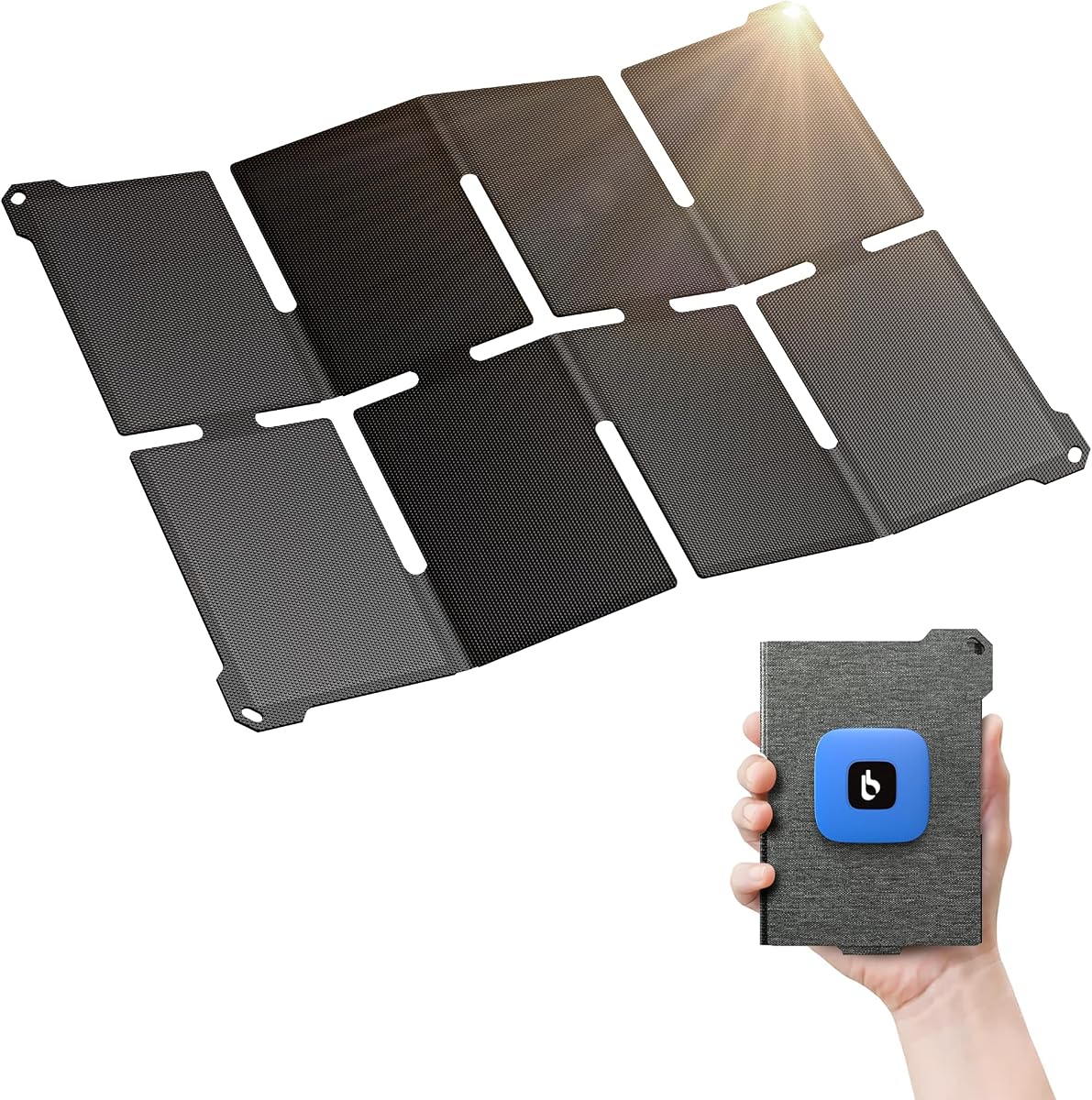

The FlexSolar 40W Foldable Solar Panel Charger is the most versatile option in this guide, earning a 4.4 rating while combining meaningful output with a relatively low packed weight. Its maximum 40W panel rating, three charging interfaces, and 24% conversion efficiency make it well suited to backpackers who need more than a basic phone charger.
We may earn a commission when you buy through this link, at no additional cost to you.
Two USB ports are especially useful for travel because one supports QC3.0 USB-A and the other supports PD2.0 USB-C, with up to 18W available from each. A separate 19V DC connection can feed compatible small power stations. Smart load distribution prioritizes a single port for peak efficiency, while the integrated circuit provides overcurrent, overheating, and short-circuit protection.
Its packed dimensions of 8.0 by 11.1 by 1.8 inches and weight of 1.76 pounds make it easier to carry than many panels with comparable nominal power. The ETFE laminate and IP67 rating improve abrasion and weather resistance. These advantages come with an important caveat: the junction box is not fully waterproof, and shading can reduce performance by as much as 70%.
This is a strong choice for hikers carrying phones, a power bank, and a small portable power station. It may not be ideal for ultralight travelers who need the lowest possible ounce count, but its combination of output, charging flexibility, and manageable weight makes it the most complete pick here. Position it in unobstructed sunlight and keep the electronics themselves shaded.
USB-A, USB-C, and 19V DC outputs let the panel serve more than one kind of travel kit. That flexibility is valuable when a backpacker carries a phone, camera, conventional power bank, and a small station.
The 1.76-pound weight remains manageable for a device-charging panel, and the compact fold reduces its impact on limited pack space. It offers a stronger balance of capacity and portability than many bulkier alternatives.
We may earn a commission when you buy through this link, at no additional cost to you.
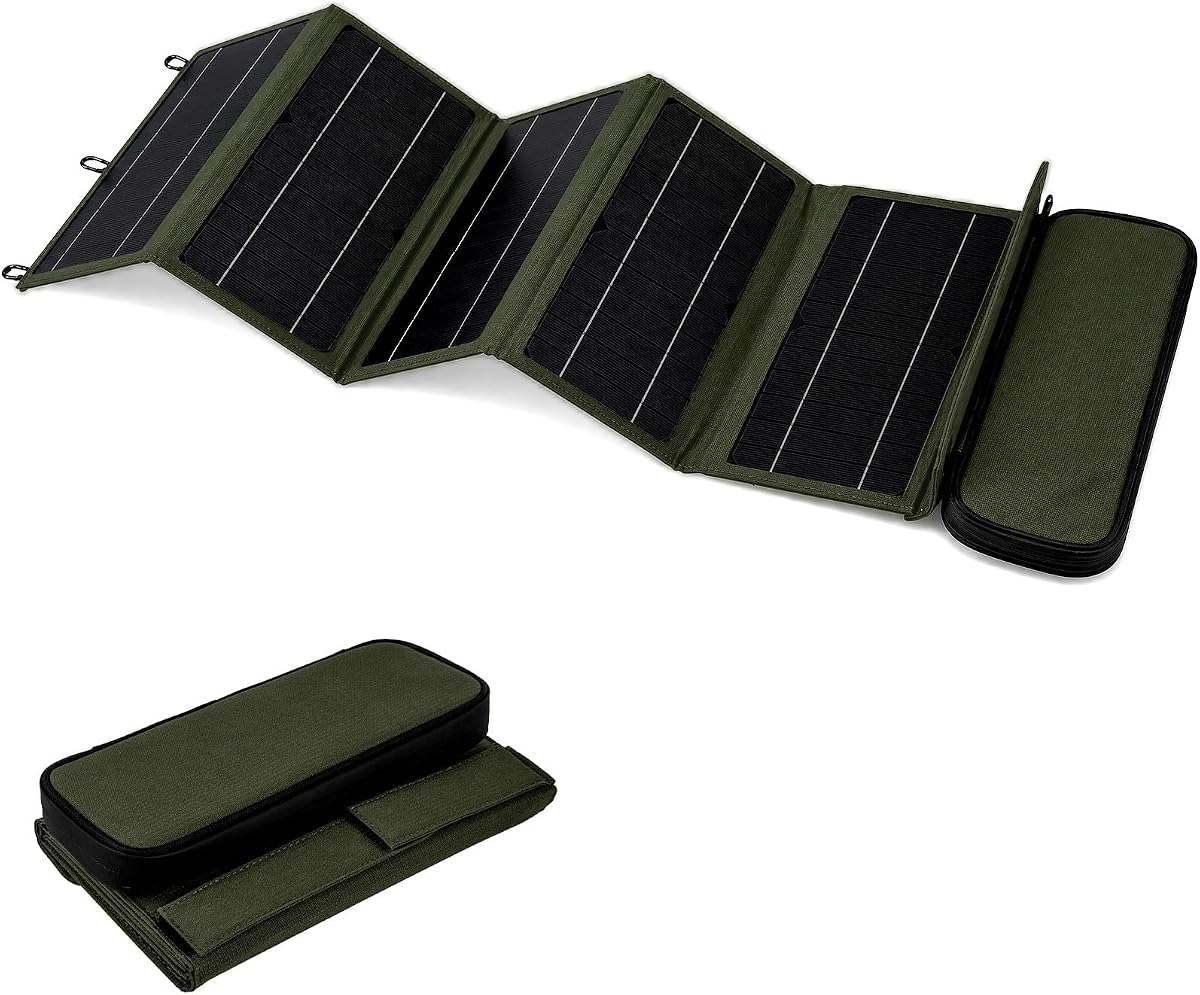
The SOLUPUP 30W Portable Foldable Solar Charger delivers a balanced feature set at a 4.4 rating. It offers a 30W output rating, 23%-plus monocrystalline conversion, and simultaneous USB-A and USB-C charging, covering the everyday electronics most backpackers carry without requiring a large power station.
We may earn a commission when you buy through this link, at no additional cost to you.
Both ports support 5V and up to 3A, with a stated combined maximum of 15W. That is suitable for phones, tablets, power banks, and other compatible small electronics. The smart chip detects connected devices, adjusts charging behavior, and offers overcurrent, overvoltage, and short-circuit protection. Its auto-optimization function reconnects when sunlight returns after an interruption.
The panel folds to 10.63 inches and weighs 2.4 pounds, so it is not the lightest option here. However, the included carabiners make it convenient to clip to a pack, while the adjustable stand offers stability during breaks. IPX5 protection helps against rain and dust, although that rating is less protective than the IP68 ratings offered by several BigBlue models.
Backpackers who mostly need to keep a phone, power bank, or tablet topped up will find this model practical and approachable. It is less suitable for powering a laptop directly because the USB outputs are the only charging interfaces. Even so, the 30W rating and automatic interruption recovery make it a convincing value-oriented choice for standard camping and hiking kits.
USB-A and USB-C provide broad compatibility for common travel electronics. Simultaneous output helps users maintain a phone and a power bank without carrying separate chargers.
Included carabiners and an integrated adjustable stand reduce the need for extra accessories. The panel can transition from pack-mounted transport to a stable campsite position.
We may earn a commission when you buy through this link, at no additional cost to you.
This five-panel 30W solar charger has the highest rating in the supplied group at 4.8. Its stated 25%-plus conversion efficiency, broad device compatibility, and folding five-section design make it a particularly attractive option for backpackers seeking modern output in a straightforward package.
We may earn a commission when you buy through this link, at no additional cost to you.
The panel supplies USB-C and USB-A outputs with up to 5V and 3A per port, for 5V and 6A across both outputs combined. That arrangement suits phones, cameras, GPS devices, camping lights, and other USB-powered gear. A USB-A to USB-C cable is included, removing one potential compatibility obstacle.
Its nylon fabric and wear-resistant surface are intended for regular outdoor use. Integrated hanging loops, secure folding straps, and adjustable kickstands make the panel adaptable to different setups, although no exact packed dimensions or weight are stated. It also lacks a specific water-resistance rating, so users should protect it during sustained rain.
The panel is best for travelers who prioritize efficiency and flexible positioning over ultra-low weight or specialized high-voltage outputs. Its rating is compelling, but real performance still depends on direct sunlight, panel angle, cloud cover, and the device being powered. A power bank remains a useful intermediary for stable charging and energy storage between sunny periods.
A stated conversion efficiency above 25% is attractive for a compact travel panel. It can help when available sunlight is limited, although placement remains essential to realizing the rated performance.
Hanging loops, folding straps, and adjustable kickstands offer several setup methods. These features are useful when trees, terrain, or changing sun angles make a single fixed position impractical.
We may earn a commission when you buy through this link, at no additional cost to you.
The BigBlue SolarPowa 20 has a 4.3 rating and targets backpackers who want a modest amount of solar capability without carrying a large panel. It folds to approximately book size, weighs 1.32 pounds, and provides a 21W maximum output.
We may earn a commission when you buy through this link, at no additional cost to you.
Two USB ports deliver up to 5V and 3A each, with a combined maximum of 5V and 4.2A. That is enough for many phones, tablets, GPS units, and conventional power banks when the entire panel receives strong sunlight. An intelligent charging chip provides overcurrent and short-circuit protection.
The PVDF surface is designed to resist corrosion, environmental wear, and fire while offering improved durability compared with conventional PET panels. Its IP68 rating adds strong water and dust resistance, but the USB junction box is explicitly not waterproof. It must remain dry during heavy precipitation.
This model makes sense for travelers who need a phone-and-power-bank charging kit and prioritize light weight. The 21W rating is below many alternatives, so it is less appropriate for users hoping to run several devices or recharge larger portable batteries rapidly. For a simple, durable travel panel, however, the compact format is difficult to dismiss.
At 1.32 pounds, the SolarPowa 20 is among the lighter options in this guide. Its book-sized folded form makes it straightforward to place in a daypack or attach outside a larger pack.
PVDF construction and an IP68 rating improve resistance to wear, dust, and water. The junction-box exception still matters, so the panel should be brought under cover during sustained rain.
We may earn a commission when you buy through this link, at no additional cost to you.
The FlexSolar 25W earns a 4.4 rating by pairing a low 1.2-pound weight with a 25W output rating. Its folded size of 7.7 by 5.1 inches makes it one of the more compact choices and well suited to travelers who need emergency charging without dedicating much pack volume to solar equipment.
We may earn a commission when you buy through this link, at no additional cost to you.
USB-A and USB-C outputs can charge two compatible devices simultaneously at 5V and 3A. MPPT technology is intended to improve energy collection, including under partial shade, while the intelligent power-management system adjusts output to reduce overcharging. Triple-layer protection covers overvoltage, overcurrent, and overheating.
The panel uses a scratch-resistant surface, UV-stabilized encapsulation, and an impact-absorbing polymer baseplate. Its construction reportedly passed more than 2,000 fold cycles, an important consideration for a product expected to open and close repeatedly. The stated 23.2% photovoltaic efficiency is competitive, and the components carry IP67 protection.
This is a good match for a lightweight kit centered on phones, earbuds, lights, and small power banks. It does not offer a high-voltage DC port for portable stations, and shared output limits total charging flexibility. Nevertheless, its low weight, protected construction, and straightforward dual-port design make it a compelling travel companion.
The maximum power point tracking system is designed to optimize harvested energy. That can be helpful during mixed light, though severe shade can still interrupt charging and reduce output.
A reinforced multi-layer construction and stated fold-cycle testing address a common weakness of flexible travel panels. The included strap and carabiners also help prevent loose unfolding inside a pack.
We may earn a commission when you buy through this link, at no additional cost to you.
The BigBlue 35W combines a 35W output rating with 25.4% conversion efficiency and a relatively low 1.54-pound weight. It earns a 4.4 rating and stands out as a premium option for backpackers who want fast-charging ports and a reasonably compact package.
We may earn a commission when you buy through this link, at no additional cost to you.
Two Type-C ports and one USB-A port support a wider selection of devices. The USB-A output supports QC up to 18W, while one Type-C connection supports PD up to 25W with PPS. The product information states that this particular Type-C port is not compatible with Apple devices, an important limitation to check against the travel kit.
Its dual-string parallel design allows one section to continue producing power if another becomes shaded. This does not create full independence from sunlight, but it can make the panel more forgiving in partially obstructed settings. The construction uses monocrystalline cells and carries an IP68 rating, although the USB junction box is not waterproof.
The panel is best for travelers carrying USB-C phones, tablets, cameras, GPS devices, and power banks, particularly those with power banks that support PD or PPS. Keeping connected devices shaded helps avoid thermal throttling. This is a feature-rich premium choice, though Apple users should confirm port compatibility before relying on the 25W Type-C connection.
QC, PD, and PPS support covers many modern charging protocols. The 25W Type-C output is particularly useful for compatible power banks, cameras, and other USB-C equipment.
Separate parallel strings can maintain output when one section receives less light. This feature is useful around trees or uneven terrain, though direct positioning remains the best way to maximize charging.
We may earn a commission when you buy through this link, at no additional cost to you.
The BigBlue 28W has a 4.3 rating and offers a balanced mix of three USB ports, 25.4% stated efficiency, and a 1.5-pound folded weight. Its shadow-free front surface and N-type cells are intended to improve collection and low-light performance compared with conventional panel layouts.
We may earn a commission when you buy through this link, at no additional cost to you.
Dual USB-C and one USB-A port can deliver 5V and 3A each, with a stated combined maximum of 5V and 4.8A. This is suitable for phones, tablets, GPS devices, flashlights, earbuds, and power banks. As with the other direct-charging panels, output varies with sunlight intensity, orientation, temperature, and the connected device.
The folded package measures 11 by 6 by 1.4 inches and includes a 50-centimeter USB-C to USB-C cable, carabiners, and a manual. Its IP44 rating offers less weather protection than the IP68-rated BigBlue alternatives, and the junction box is not waterproof. The solid blue LED gives a clear indication of proper charging operation.
This panel is a good fit for travelers who need multiple USB connections but do not expect to charge a laptop directly. Its low-light-oriented design and efficient cells are appealing in variable weather. The IP44 rating, however, makes it less attractive for trips where rain exposure is likely, so a dry position is important.
N-type cells and a surface without front-side metal lines are intended to improve light capture and operating temperature. These characteristics may be useful during overcast periods, although output still depends heavily on available light.
Two USB-C connections and one USB-A port offer practical flexibility. The panel can support several small devices at once without adding separate wall adapters to a travel kit.
We may earn a commission when you buy through this link, at no additional cost to you.
The BigBlue Ultra-Light 25W stands out with a packed weight of just 0.84 pounds, making it the lightest panel in this comparison. It combines that portability with a 25W output rating, 25.4% conversion efficiency, and an IP68 protection rating for a capable lightweight option.
We may earn a commission when you buy through this link, at no additional cost to you.
USB-A provides up to 5V and 2.4A, while USB-C provides up to 5V and 3A. Both can operate simultaneously, allowing a phone and a small power bank to charge together. Smart charging technology is included to optimize power delivery and provide device protection.
The N-type cells use a front surface without metal lines, which can reduce heat and improve collection. ETFE coating, UV-resistant EVA, a solid baseplate, and the stated IP68 rating support outdoor durability. The panel folds to 4.65 by 6.42 by 1.38 inches and comes with a USB-C to USB-C cable, two carabiners, and an elastic strap.
This is the strongest choice for an ultralight hiker who only needs to maintain phones, lights, earbuds, or a small power bank. The smaller surface area means it will not provide the same charging speed as a 40W to 60W panel, and only two ports are available. For basic lightweight utility, though, the carried weight is exceptionally well managed.
At 0.84 pounds, the panel places less demand on a pack than most alternatives. It is easier to justify carrying on a fast hiking or ultralight backpacking trip.
The folded footprint is smaller than a tablet, and the included strap keeps the panels together. Carabiners provide a quick way to attach the unit to a pack or tent.
We may earn a commission when you buy through this link, at no additional cost to you.
The LUMOPAL 60W is the highest-output charging choice here, with a 4.3 rating and a 60W maximum USB-C output. It is designed for backpackers who carry more demanding electronics, including tablets, laptops, cameras, and compatible portable power stations.
We may earn a commission when you buy through this link, at no additional cost to you.
The output selection includes PD USB-C at up to 60W, USB-A QC3.0 at up to 22W, and an 18-20V DC connection. A smart chip detects connected equipment and provides overcurrent, overheating, and short-circuit protection. The 23.5% conversion efficiency and monocrystalline construction provide a capable foundation for larger power demands.
The folded panel measures 6.7 by 9.5 inches and is rated to withstand pressure up to 176 pounds. ETFE lamination, IP65 protection, waterproof nylon, and a waterproof zip improve resistance to abrasion, corrosion, and weather, although the junction ports remain unprotected. The 3.42-pound weight is the main drawback for long-distance travel.
Choose this model when charging speed and device range matter more than minimizing every carried ounce. It is less appropriate for a minimalist overnight kit or a fast hiker who only needs phone power. For a heavier expedition load, a stationary power station, or a traveler working on the trail, its range of outputs makes the extra weight more defensible.
The 60W USB-C connection can support compatible laptops and demanding power banks. The 18-20V DC port broadens the panel's usefulness for selected portable stations and higher-voltage equipment.
ETFE lamination and a stated 176-pound compression resistance help the panel tolerate packing pressure. Weatherproof fabric and a zip improve resilience, while the non-waterproof junction ports still require shelter.
We may earn a commission when you buy through this link, at no additional cost to you.
The ELECOM NESTOUT 28W has a 4.5 rating and a distinctive four-panel design centered on portability and organization. Unlike many minimalist solar surfaces, it incorporates a storage bag with mesh pouches for cables, carabiners, and other small accessories.
We may earn a commission when you buy through this link, at no additional cost to you.
Its two USB-A ports charge devices such as phones, tablets, and Bluetooth earbuds. An LED current display shows power being delivered into the ports, which offers a quick way to confirm operation. The absence of a listed USB-C connection is the main limitation for travelers with modern USB-C-only equipment.
The enclosure uses water-resistant ripstop nylon, while two built-in adjustable stands help maintain a favorable sun angle. Three exterior loops allow attachment to trees, tents, or cables. SunPower MAXEON cells are specified to provide up to a 24% efficiency increase compared with traditional solar cells.
This model is especially appealing to organized campers who value cable storage and quick access. It is less suitable for a minimalist kit built around USB-C fast charging, and the ripstop exterior should not be confused with a fully waterproof enclosure. Its design strengths make it a distinctive alternative among the more conventional waterproof-panel choices.
The integrated mesh pockets keep charging cables and small carabiners organized with the panel. This is a practical advantage over loose accessories in a crowded backpack.
Two USB-A ports and a current display keep operation straightforward. Adjustable stands and exterior loops provide several ways to orient and suspend the panel outdoors.
We may earn a commission when you buy through this link, at no additional cost to you.
The right backpacking solar panel depends on the devices you carry, the weight you can tolerate, and the amount of direct sun available along your route. Review output, charging protocols, packed dimensions, construction, and setup features before comparing models.
Maximum wattage provides a useful indication of the panel's potential output under favorable conditions, but it is not the amount of power a device will continuously receive. Real output changes with sunlight intensity, panel angle, temperature, shading, conversion losses, and the connected device's charging protocol. A 30W panel may be sufficient for a phone and small power bank, while a 35W to 60W model is more appropriate for tablets, laptops, or portable power stations.
Every panel adds weight to a load that must be carried over every mile. The products here range from 0.84 pounds to 3.42 pounds, a difference that can become significant on long trails. Consider both weight and folded dimensions, paying attention to whether the panel can sit inside a pack, fit in a side pocket, or must remain strapped externally. A smaller panel may also expose less surface area to sunlight, so portability and performance must be balanced.
USB-A remains broadly useful for older phones, conventional power banks, lights, and cameras, while USB-C supports more current devices. Look for QC, PD, or PPS when device compatibility and charging speed matter. Some panels add a 19V or 18-20V DC output for portable stations, but that connection only works with compatible equipment and appropriate cables. Confirm the protocols and voltage requirements of every device before buying.
Conversion efficiency describes how effectively a panel converts incident sunlight into electricity. Models in this guide range from 23% to 25.4%, and the highest-rated BigBlue models use N-type cells to improve light collection. Higher efficiency is valuable when pack space or panel area is limited, but it cannot compensate for shade, a poorly chosen angle, or a device that requires more power than the panel produces.
IP ratings vary from IP44 to IP68, but even a high panel rating may not cover the junction box where cables connect. Waterproof panel surfaces should not be mistaken for completely sealed electronics. Look for ETFE, PVDF, or UV-resistant laminates, abrasion-resistant surfaces, and reinforced folding structures. For rough trips, compression resistance and fold-cycle durability are also useful indicators, while sheltered storage remains prudent during heavy rain.
A panel cannot charge efficiently while lying flat in a shaded bag or tent. Adjustable kickstands, built-in stands, hanging loops, and exterior hooks allow users to change the angle and location as the sun moves. Pack-mounted options are convenient while walking, but stable ground or tree placement generally offers better conditions. The best kit includes enough mounting hardware to keep the surface unobstructed and oriented toward direct sunlight.
None of these products is described as storing electricity for later use. They are direct-charging panels, meaning a connected device receives power only while sunlight is available. Many backpackers therefore carry a power bank as a buffer, charging it from the panel during sunny periods and using it after dark. A panel's inability to store power is not necessarily a flaw, but it should influence how you organize the rest of your electrical kit.
Panels with two or three USB ports can maintain multiple small devices at once, which is convenient for couples or travelers carrying a phone, camera, and power bank. Some specifications define separate maximum rates for each port, while others specify a shared total. Smart load distribution can improve efficiency, but a port advertised at 18W may deliver less when several devices draw power simultaneously. Compare both individual and combined limits for the intended use.
Unfold the panel fully in direct sunlight before connecting a device. Remove any packing strap or protective film that could block the solar surface, attach the included carabiners or stands, and aim the cells toward the sun. Avoid placing the panel on dark ground because heat can shorten charging performance; a light, open position is generally better.
Connect only one device first if the panel includes automatic load distribution. Once charging is confirmed, add a second device if the shared output is appropriate. Keep phones, tablets, and cameras shaded while their cables remain connected to the sunlit panel. Remember that a foldable solar charger does not store energy, so charging stops when sunlight is interrupted.
After the trip, fold the panel along its original creases, secure it with the included strap, and store it dry. Keep the junction box away from heavy rain even when the solar surface has a high IP rating. Use a soft, dry cloth to remove dust and dirt, inspect the cable connections for damage, and allow the panel to dry fully before packing it into a closed bag.
The foldable solar panels in this guide are direct-charging devices and do not include an internal battery for nighttime use. They supply power only when exposed to sufficient sunlight. If you need energy after dark, carry a power bank and charge it from the panel during the day.
A 21W to 30W panel is generally suited to phones, lights, cameras, and smaller power banks, while a 35W to 60W model offers more flexibility for tablets, laptops, or portable power stations. Choose based on your largest device and the number of devices you expect to charge. Weight and usable sunlight are often more important than the maximum wattage alone.
Only certain models include outputs powerful enough for a compatible laptop. The LUMOPAL 60W and FlexSolar 40W offer higher-power USB-C or DC connections that may be suitable, but device compatibility and charging protocols must be confirmed. A power bank can also act as a buffer and make laptop charging more practical.
The most common causes are shade, an incorrect sun angle, low cloud cover, high panel temperature, or a device that is thermally throttling. Move the panel into unobstructed sunlight and keep the connected device in a cooler, shaded location. Charging speed also depends on the panel's output limits and the protocol supported by your device.
An IP68 rating generally indicates strong resistance to dust and water ingress for the rated components, but the rating may not include the junction box. Several products in this guide specifically state that their USB junction boxes are not waterproof. Keep those connections dry during heavy rain and store the panel dry after exposure to moisture.
Not always. Actual speed depends on the panel's protocol, the maximum output for that port, the connected device, and available sunlight. Some models provide faster USB-C PD or PPS output, while others offer USB-A and USB-C at the same basic rate. Confirm both the panel specification and your device's supported charging protocol.
Direct outdoor sunlight produces substantially better results than light passing through fabric or glass. Tents and windows can block or diffuse solar energy and may create heat that reduces efficiency. Place the panel outside in a clear position, then run its cable to devices or a power bank kept in the shade.
Fold it along the intended seams, fasten it with the provided strap or elastic band, and place it in a dry compartment where it cannot be crushed. Do not leave cables pinched in a fold. Before storing it, let the panel dry and check the surface and junction box for dirt, moisture, or damage.
The FlexSolar 40W is the most well-rounded pick because it combines 40W rated output, three connection types, 24% efficiency, and a manageable 1.76-pound weight. SOLUPUP offers the best budget balance, while the LUMOPAL 60W takes the premium position for travelers who need higher power and broader device compatibility.
Prioritize the combination of packed weight, available sunlight, and device requirements rather than choosing only by wattage. Ultralight hikers may prefer the 0.84-pound BigBlue 25W, while phone-focused users can choose a smaller 21W model. Larger expedition loads may justify a 35W or 60W panel with advanced USB-C and DC outputs.
Check current product details, compatibility requirements, and prices before ordering, as specifications and availability can change. Position the chosen panel in direct sunlight, protect non-waterproof junctions, and carry a power bank when reliable energy is needed outside sunny hours.