
Acer Chromebook 315
4.4Editor score
15.6-inch Full HD IPS
Wi-Fi 6 connectivity
64GB eMMC storage
Up to 10-hour battery
Choosing a laptop for an 11-year-old means balancing school applications, video calls, creative projects, entertainment, and dependable battery life. The best device should be easy to carry, simple enough to use independently, and powerful enough for homework without becoming intimidating or overly complex.
We compared ten laptops across display quality, memory, storage, processors, connectivity, portability, operating system, and practical features such as webcams, microphones, touchscreens, and charging. The list includes mostly Chromebooks suited to web-based learning, plus a Windows laptop for software flexibility.
Each review explains where a model fits best and where its compromises may matter. Ratings reflect available customer feedback rather than hands-on testing, and configurations can vary. Prices and promotions change frequently, so readers should confirm the current listing and included accessories before buying.
4.4Editor score

4.4Editor score

4.3Editor score
As an Amazon Associate we earn from qualifying purchases.
The table below compares all ten candidates by processor, memory, storage, display, and connectivity, making it easier to identify the option that best matches an 11-year-old's schoolwork and daily routines.
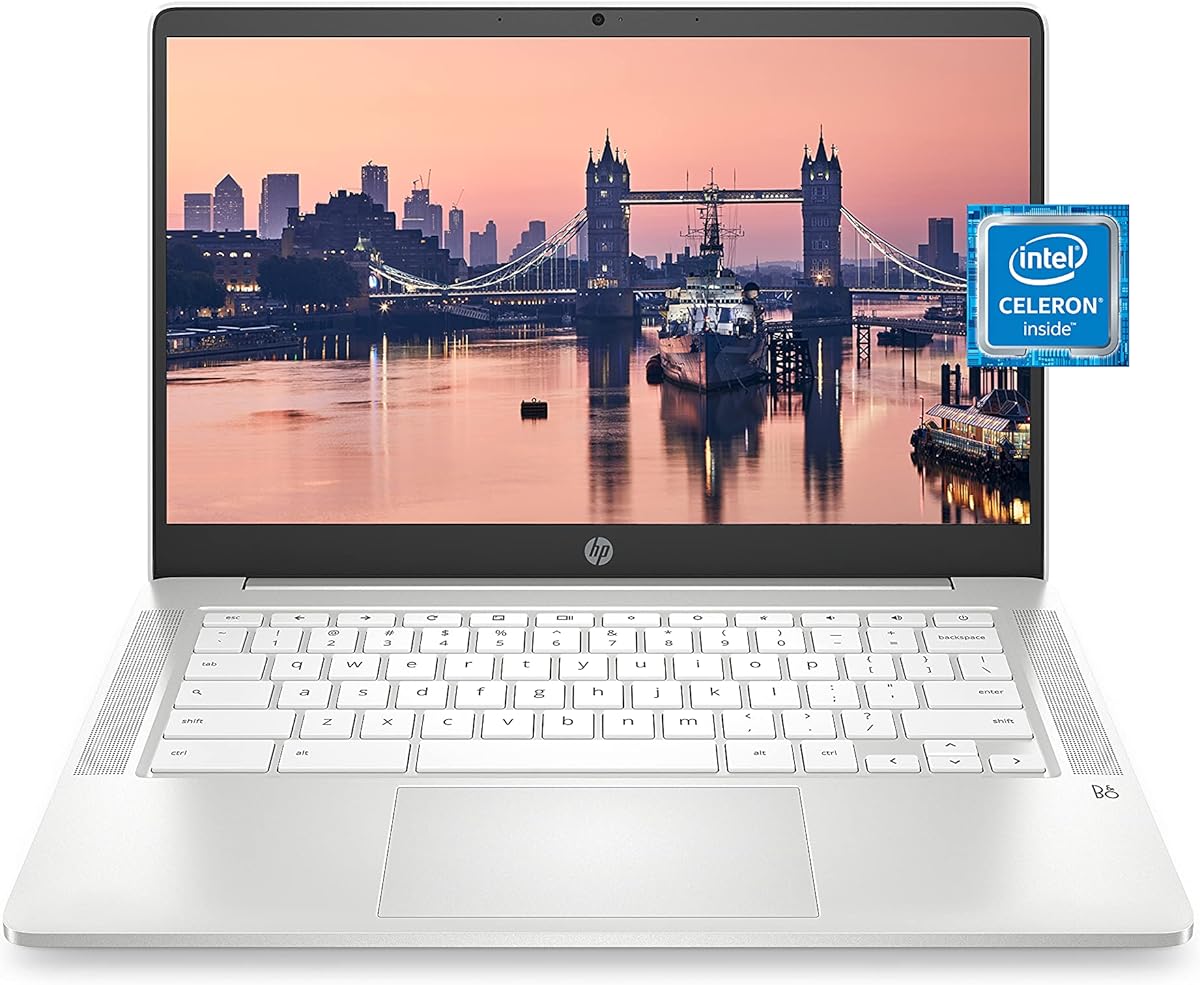





The HP Chromebook 14 inch Laptop 14a-nf0099nr combines a modern Intel N100 processor with 8GB of LPDDR5 memory and 128GB of UFS storage. It holds a 4.4 customer rating, making it one of the strongest all-around recommendations for an 11-year-old who needs enough power for school applications, browsing, communication, and entertainment.
We may earn a commission when you buy through this link, at no additional cost to you.
Its main advantage over many entry-level Chromebooks is the combination of 8GB RAM and 128GB UFS storage. The extra memory gives a child more room to keep browser tabs, video calls, and educational applications open, while UFS storage offers faster operation and lower power consumption than the eMMC storage found in several alternatives. Intel UHD Graphics are also suitable for streaming 4K content and casual games.
The 14-inch anti-glare HD display is practical for studying at a desk or using the computer away from a bright window. However, 1 million pixels are less detailed than a Full HD panel, and the absence of a touchscreen may disappoint a child who expects tablet-like interaction. The Chromebook operating system also centers on web-based workflows, so specialized desktop software should be checked before purchase.
This is our top overall choice for families seeking a capable school laptop without moving into a full-size Windows machine. Its processor, memory, and storage provide a useful balance for assignments, research, Google Classroom, video meetings, and general entertainment. It is especially suitable for a child moving into a more demanding stage of school without needing demanding creative or gaming software.
The 8GB of LPDDR5 memory is the standout specification. It allows more applications and tabs to remain active, reducing the likelihood of slowdowns during research, video calls, and note-taking sessions.
With 128GB of UFS storage, this model offers more local room for school files and offline media than the 32GB and 64GB configurations seen elsewhere. Chrome OS cloud storage can further reduce dependence on local capacity.
We may earn a commission when you buy through this link, at no additional cost to you.
The Lenovo Flagship Chromebook is a strong option when a child values a responsive touchscreen and a sharp display. Its MediaTek Kompanio 520 is an eight-core processor with four A73 and four A53 cores, while the 14-inch 1920-by-1080 IPS panel supports finger navigation and wide viewing angles. It carries a 4.2 customer rating.
We may earn a commission when you buy through this link, at no additional cost to you.
The Full HD touchscreen makes this model useful for drawing, math notation, browsing, and group schoolwork. The privacy shutter over the 720p webcam provides welcome reassurance for a child using the computer in shared spaces. Wi-Fi 6, Bluetooth 5.1, USB-A, USB-C, a microSD reader, and a headphone-microphone jack create a practical connection package.
Its main limitation is 4GB of RAM. That is enough for ordinary Chromebook workloads, but several applications and browser tabs can consume the available memory. The 64GB eMMC storage is also modest. Families relying on large media libraries or offline files may want more capacity, while the 0.73-inch thickness and 2.86-pound weight remain attractive for portability.
This Chromebook is a good fit for a student who enjoys interacting with a touchscreen or who works on collaborative projects at home. It may be less ideal for heavy multitasking than the HP N100 model, but the Full HD touchscreen, wide-angle panel, and lightweight design create a compelling all-around package for everyday school use.
The Full HD IPS touchscreen makes handwritten-style input and scrolling feel natural. It also creates a larger, clearer workspace for lessons, diagrams, and educational applications than a conventional low-resolution panel.
Wi-Fi 6 helps the laptop remain responsive on crowded home and school networks. USB-C and USB-A ports make it easier to connect accessories without relying on a single connection type.
We may earn a commission when you buy through this link, at no additional cost to you.
The HP 14-inch HD Chromebook Laptop for Students is a practical choice built around a quad-core Intel Celeron N4120. It holds a 4.4 customer rating and pairs the processor with 4GB of LPDDR4x memory, 64GB of eMMC storage, and Chrome OS. That combination suits Google Classroom, web research, documents, and routine communication.
We may earn a commission when you buy through this link, at no additional cost to you.
A useful feature is the port selection: two USB-A ports, one USB-C port, HDMI, and a headphone jack. A student can connect a mouse, external storage, a display, headphones, and a charger without needing a large collection of adapters. The anti-glare 1366-by-768 screen also makes longer classroom work more comfortable than a reflective glossy panel.
Compared with the more powerful N100 option, this model has less memory and an older-generation processor, so intensive multitasking and demanding games are outside its strongest area. The listing also includes CUE Accessories, but exact bundle contents should be confirmed with the seller. Parents may wish to add a protective sleeve or case for regular transport.
It is a sensible recommendation for a child whose school day centers on web-based tools, written assignments, and video calls. The generous port selection and 64GB storage are particularly useful, while the 4.4 rating suggests generally positive customer satisfaction. It delivers core Chromebook functions without adding unnecessary complexity.
Having both USB-A and USB-C connectivity reduces adapter friction. HDMI makes classroom presentations straightforward, while the headphone jack and USB ports support focused study and external accessories.
The 4GB LPDDR4x memory is suitable for typical Chromebook applications, while 64GB of eMMC gives better local file capacity than 32GB alternatives. Google Drive can supplement this for families using cloud-based schoolwork.
We may earn a commission when you buy through this link, at no additional cost to you.
The HP Chromebook 14 14a-na0226nr is designed for students who need to move between classes, study at the library, or travel without constantly seeking an outlet. It combines an Intel Celeron N4120 processor, 4GB RAM, 64GB eMMC storage, and a 14-inch anti-glare display. Its customer rating is 4.3.
We may earn a commission when you buy through this link, at no additional cost to you.
The highlighted up-to-14-hour battery life is the distinguishing feature, although actual runtime depends on screen brightness, network activity, and workload. HP Fast Charge is also listed as taking the device from zero to 50 percent in approximately 45 minutes. That quick top-up can be valuable after a long school day, though the full charging time is longer.
The custom-tuned stereo speakers add to its suitability for music and video, and Intel UHD Graphics 600 supports 4K content and next-generation games within the limits of the platform. Four-finger gestures on the touchpad improve navigation. The 1366-by-768 resolution and 4GB memory are modest, so demanding desktop software and intensive multitasking remain less suitable.
This model fits a child who values endurance and portability over a touchscreen or a very high-resolution screen. It offers a conventional, dependable Chromebook experience with a full-size keyboard, long claimed battery life, and easy Chrome-based access to school applications. It is a particularly attractive option for travel and full-day school use.
The long advertised runtime helps reduce charging interruptions. Families should still confirm real-world performance because video streaming, gaming, and high display brightness can shorten the stated estimate.
HP Fast Charge can add useful battery time during a short break or before a ride home. A protective case that leaves the charging port accessible will make this feature easier to use regularly.
We may earn a commission when you buy through this link, at no additional cost to you.
The Samsung Galaxy Chromebook Go offers a refined alternative to the more utilitarian models in this roundup. It has a slim, lightweight design, a 12-hour advertised battery, 4GB of memory, 64GB of storage, and a Chrome OS environment built around Google applications. The customer rating is 4.3.
We may earn a commission when you buy through this link, at no additional cost to you.
Samsung emphasizes premium craftsmanship and military-tough durability, making the device appealing for children who regularly carry a laptop in a backpack. Its phone integration lets users transfer files and control a phone from the Chromebook, which can simplify moving homework and media between devices. A bundled Google AI Pro trial with 5TB of cloud storage is also listed.
Internally, the Intel Celeron N4500 and 4GB RAM place it below more modern processors in this selection. Older hardware can be less comfortable with many heavy tabs, demanding web applications, and games. The 64GB storage is adequate for cloud-centered use but limited for large offline media collections. A one-year-old platform may also offer a shorter support runway than newer models.
The Chromebook Go is best for families prioritizing build quality, portability, and ecosystem integration rather than maximum specifications. It feels more refined than many entry-level alternatives and should handle routine schoolwork comfortably. Buyers should compare the current configuration and bundle terms carefully, especially the temporary cloud-storage promotion.
The slim construction makes the laptop easier to fit into smaller backpacks. Its durable design also offers reassurance for the inevitable bumps and drops associated with regular school transport.
Phone interaction and easy file transfer can make school organization less complicated for younger users. Google applications are integrated directly into Chrome OS, supporting a familiar workflow for assignments and collaboration.
We may earn a commission when you buy through this link, at no additional cost to you.
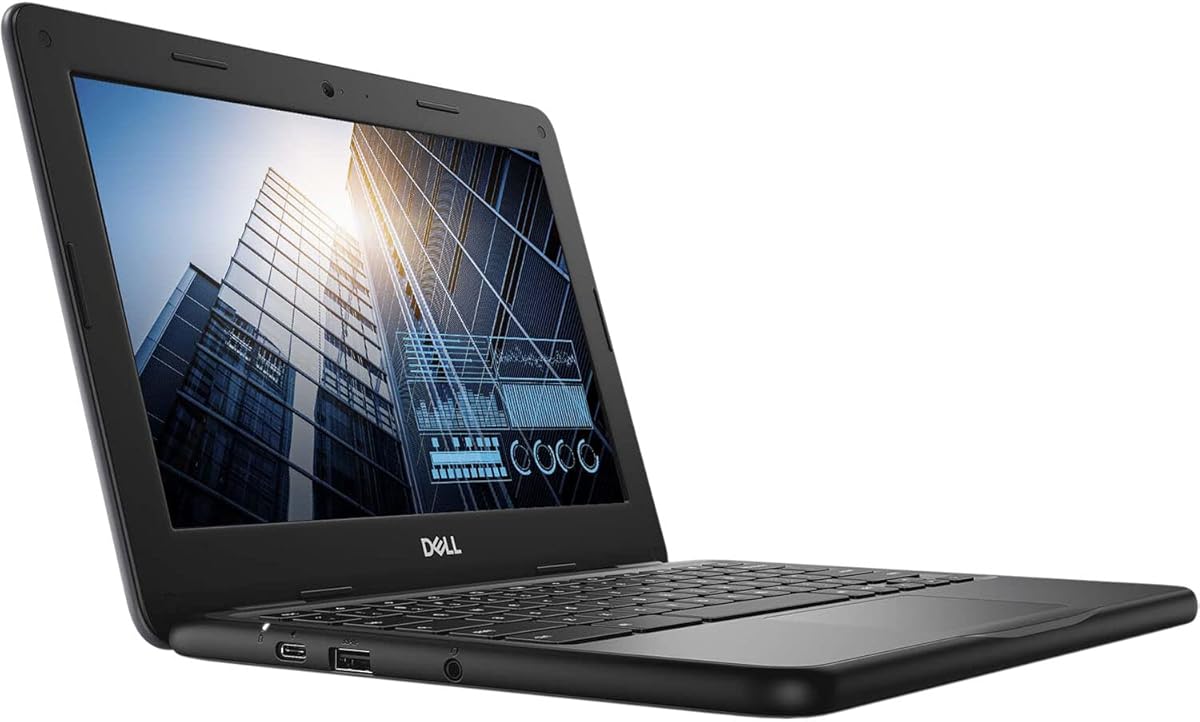
The Dell Chromebook 11 3100 stands out for its small 11.6-inch touchscreen and convertible 2-in-1 format. It uses a dual-core Intel Celeron N4020, 4GB of RAM, and 32GB of flash memory. The listed customer rating is 4.3, making it one of the more compact choices for an 11-year-old.
We may earn a commission when you buy through this link, at no additional cost to you.
A compact device is easier for a child to carry and can be more comfortable for writing in a notebook. The touchscreen also provides an alternative to the keyboard for browsing, drawing, and watching lessons. A power adapter is included, while Bluetooth and USB-C connectivity support common accessories and charging needs.
The trade-offs are substantial for heavy users. A 32GB storage capacity leaves relatively little room for offline files, and the N4020 is a basic dual-core processor. Because this is a renewed product, cosmetic wear, battery condition, warranty details, and included accessories may vary. Buyers should examine the listing and return policy carefully.
The Dell is best for a child who prioritizes a small, flexible form factor over storage and processing power. It can handle browsing, Google Classroom, documents, and light media use when demand is moderate. For heavier multitasking or local file storage, one of the 64GB models offers a safer margin.
The 11.6-inch display keeps the Chromebook compact and manageable for younger users. Its smaller footprint is especially helpful for limited desks and daily backpacks.
The 2-in-1 form gives users more ways to position the display. That flexibility can help with note-taking, viewing, and keeping a child's workspace organized.
We may earn a commission when you buy through this link, at no additional cost to you.
The HP Chromebook 11 11a-na0010nr combines a compact 11.6-inch touchscreen with MediaTek MT8183 processing, 4GB RAM, and 32GB eMMC storage. Its 4.4 customer rating places it among the better-rated products here, though its 2020 model year means buyers should consider its remaining support lifecycle.
We may earn a commission when you buy through this link, at no additional cost to you.
The anti-glare touchscreen offers wide viewing angles up to 178 degrees, making it useful for lessons, media, and casual tablet-style input. A full-size keyboard, dual speakers, HP True Vision camera, and integrated dual-array microphones support online classes and communication. The Google Play Store extends the range of available Android applications.
Its 32GB drive is the clearest limitation. School documents should be synchronized with cloud storage, and families should monitor installed applications to avoid filling the local drive. The MediaTek platform is efficient enough for ordinary schoolwork but not ideal for intensive gaming, large creative projects, or many demanding browser tabs.
This model suits an 11-year-old who wants a smaller, touch-enabled device and primarily uses cloud-based applications. It is also a logical option for families prioritizing a familiar Google environment and portable size. Those wanting greater storage and a newer platform should consider one of the 64GB or 128GB alternatives.
The small touchscreen is easy to use for reading, lesson review, and app-based activities. Its wide viewing angles make the screen easier to share when an adult needs to help with schoolwork.
The camera, dual microphones, speakers, and built-in wireless connectivity support a complete remote-learning setup without requiring several separate accessories.
We may earn a commission when you buy through this link, at no additional cost to you.
The HP Stream 14 is the only traditional Windows laptop in this group, making it the clearest choice when a child's school requires desktop applications outside the Chrome ecosystem. It runs Windows 11 on an Intel Processor N150, with 4GB of DDR4 memory, a 720p webcam, and a listed rating of 4.2.
We may earn a commission when you buy through this link, at no additional cost to you.
Storage is its standout feature. The laptop includes 128GB of UFS storage and a docking station with 1TB of storage, for a listed combined capacity of 1.12TB. The bundle also includes a 7-in-1 docking station, a 32GB microSD card, charging and data cables, and a cleaning cloth. That is an unusually substantial accessory package for a student computer.
The N150 is optimized for efficiency, while 4GB of RAM is the primary limitation for heavier multitasking. A Windows laptop also demands more active maintenance than Chrome OS, including system updates, malware awareness, and software management. The included one-year Office 365 subscription adds value, but families should clarify what happens to access and storage after that period.
This model is best for students whose curriculum, family software, or future learning path depends on Windows. It offers more application flexibility and local storage than most Chromebooks in the list. Those working primarily in web-based school platforms may find the HP N100 Chromebook easier to manage, while those needing specialized applications should favor this Windows option.
Windows 11 supports the broad software selection often expected in schools and homes. That makes the Stream 14 useful when a child may later need more advanced desktop tools, programming environments, or creative applications.
The docking station and 1TB drive materially expand local storage. Numerous included cables and the microSD card reduce the need for immediate extra purchases, although buyers should verify each accessory's condition and compatibility.
We may earn a commission when you buy through this link, at no additional cost to you.
The Acer Chromebook 315 CB315-4H-C8XU is a compelling choice for children who prefer a large, sharp workspace. Its 15.6-inch Full HD IPS display provides 1920-by-1080 resolution, while 4GB of LPDDR4x memory and 64GB of eMMC storage cover conventional Chromebook needs. It carries a 4.4 customer rating.
We may earn a commission when you buy through this link, at no additional cost to you.
The large IPS panel makes worksheets, Google Docs, videos, and research easier to view than on a compact 11-inch model. Dual-band Wi-Fi 6 provides a strong network foundation, and the two USB-C ports support USB 3.2 Gen 2 data, DisplayPort over USB-C, charging, and power input. Two USB-A ports and DTS audio add everyday flexibility.
Its larger display makes the laptop less convenient for a small backpack and less ideal for a child working in tight spaces. The dual-core N4500 is adequate for web-based schoolwork but can feel slow compared with the HP N100 and other newer processors. With 4GB of RAM, heavy multitasking should be approached thoughtfully.
The Acer is a strong alternative for a child who spends much of the day reading, writing, or watching educational videos on a desk. Its Full HD quality is excellent for the category, while up to 10 hours of advertised battery life supports ordinary school use. It is particularly compelling for families prioritizing screen size and wireless capability over compactness.
A 15.6-inch Full HD display creates a generous workspace for writing, research, and group video calls. The IPS panel also makes the screen comfortable to view from different positions.
Wi-Fi 6 is well suited to busy modern networks. DisplayPort over USB-C can even let the Chromebook connect to a larger monitor for more focused study.
We may earn a commission when you buy through this link, at no additional cost to you.
The HP Chromebook 14 14a-na0021nr offers a simple, portable route into Chrome OS. It uses an Intel Celeron N4000 processor, 4GB RAM, 32GB of eMMC storage, and a 14-inch anti-glare HD display. The 4.4 customer rating indicates broad satisfaction despite the model's entry-level specifications.
We may earn a commission when you buy through this link, at no additional cost to you.
At 3.24 pounds, the laptop is light enough for an 11-year-old to carry comfortably. Its claimed battery life of up to 13 hours and 30 minutes supports school days and travel, although actual runtime varies. A Wide Vision HD webcam, integrated dual array microphones, Wi-Fi 5, and Bluetooth 5.0 cover communication and accessory needs.
The 32GB storage is the most significant restriction. It leaves limited room for downloaded media or offline files, making cloud storage organization important. The processor is suitable for ordinary browsing, documents, and video calls but is less comfortable with intensive multitasking. The 1366-by-768 screen is adequate for schoolwork but not especially detailed.
This HP Chromebook is best for a child whose work is primarily web-based and whose family wants a familiar, uncomplicated device with a large-enough display. Its portability, light weight, and battery focus are meaningful advantages. Buyers who anticipate frequent downloads, larger files, or more demanding applications may prefer a 64GB or 128GB configuration.
The 3.24-pound chassis helps a child bring the laptop between classes or travel without much burden. A slim protective sleeve can add impact protection without greatly increasing bulk.
The included webcam and dual array microphones support online classes and conversations with friends. Bluetooth 5.0 also allows convenient connection to headphones and other wireless accessories.
We may earn a commission when you buy through this link, at no additional cost to you.
The right school laptop depends on the child's curriculum, workload, home setup, and need for portability. Parents should compare operating systems, performance, display, battery claims, connectivity, and adult-management tools before making a final decision.
Chrome OS is the simplest and most secure option for a child whose school relies on web-based platforms such as Google Classroom, Docs, Forms, and Slides. It updates automatically, boots quickly, and reduces the likelihood of encountering traditional Windows malware. Windows 11 provides broader access to desktop software, including specialized learning, coding, design, and productivity applications. Before purchasing, obtain the exact list of programs required by the school and check whether each program runs in a browser, as a Chromebook app, or only on Windows.
A Chromebook is usually easier for an 11-year-old to maintain, but a Windows laptop is safer when future coursework may involve advanced software. Choose the platform that matches current assignments without unnecessarily complicating the device.
The processor determines how smoothly the laptop handles browser tabs, video calls, documents, and light creative work. Intel N100 and N150 processors provide a useful balance of efficiency and responsiveness, while the Celeron N4020, N4120, and N4500 chips are adequate for ordinary Chromebook tasks. The MediaTek Kompanio 520 offers eight cores and a useful touchscreen-focused Chromebook configuration, while the older MT8183 favors efficiency and portability. A faster processor helps most when many tabs, streaming video, and school applications remain open simultaneously.
For typical web-based schoolwork, a current efficient processor is enough. For intensive applications, advanced creative software, or many simultaneous tasks, choose more processing power and memory rather than saving for a larger screen or extra storage.
RAM helps the system keep multiple applications and browser tabs available without slowing down. Most entry-level Chromebooks in this guide include 4GB, which can manage ordinary assignments but becomes restrictive when a child leaves educational tools, videos, messaging apps, and numerous tabs open. The HP N100 model's 8GB of LPDDR5 memory gives it a meaningful advantage for sustained school days and heavier online activity.
For a typical 11-year-old using web-based tools, 4GB is workable, especially with sensible tab management. If the laptop will be shared, used for advanced applications, or kept open throughout the day, 8GB is a worthwhile upgrade.
Local storage determines how many files, applications, and offline videos can remain on the device. A 32GB model offers the least room and demands careful cloud organization, while 64GB provides a more comfortable margin for ordinary use. The 128GB HP N100 and the HP Stream's 1.12TB combined storage are better suited to students who download projects, keep media locally, or install larger applications. Chromebook cloud storage helps, but students should still maintain a working local file system for active projects.
Choose at least 64GB for a school laptop unless cloud-only use is certain. Check how much storage is already occupied when the device arrives, and use a shared family account with suitable backup and recovery settings.
A 14-inch display is a versatile middle ground for schoolwork and portability, while 15.6 inches offers a larger reading and editing area. Compact 11.6-inch models are easier to carry and may be more appropriate for a younger child or limited desk space. Full HD resolution produces clearer text and more useful screen space, while a touchscreen can make annotation, drawing, and tablet-style navigation feel intuitive. Not every child needs touch input, and it may encourage more app-based distraction.
Choose the smallest comfortable screen for frequent carrying and the largest practical screen for desk-based study. Pay more attention to clarity and comfortable dimensions than to maximum resolution alone.
Advertised battery life is usually based on light or standardized usage, so real results vary with brightness, streaming, games, and wireless activity. A claimed 10 to 14 hours provides a useful benchmark for a full school day. Fast charging can be valuable for a child who needs a quick boost between activities, but the complete charging cycle still takes considerably longer than the highlighted partial recharge. A reliable charger and a second charging option may be useful for long trips or school days with heavy use.
Treat battery claims as estimates, not guarantees. Choose a model that can comfortably cover the longest expected day, and use low-power or battery-saving modes when the work allows.
Wi-Fi 6 is preferable for crowded home and school networks, while Wi-Fi 5 remains sufficient for many ordinary environments. USB-A, USB-C, HDMI, a headphone jack, and a microSD reader expand what a child can connect without adapters. A reliable webcam, microphones, and speakers are essential for remote learning. Some models include accessories, but the exact bundle should be checked because packages can change. Families may also need a sleeve, wired earbuds, mouse, or charger, though none should be required to complete ordinary schoolwork.
Prioritize a full-size keyboard, usable touchpad, clear webcam, and at least one USB-A and one USB-C port. Avoid buying a model that relies entirely on a single connector when the child's routine may require peripherals.
A child will carry, open, close, and occasionally drop a laptop, so a durable case and reliable manufacturer warranty matter. Chrome OS provides a simpler and generally less risky computing environment, while Windows laptops require regular updates and stronger supervision. Parental controls can limit account creation, app installation, browsing, and screen time, but the right setup depends on the child's maturity. The goal is to support independence without removing the safeguards needed during the learning process.
Choose a device the child can operate comfortably and a protection plan that matches their behavior. Review accounts, permissions, purchases, and location settings together before the first day of school.
Begin by signing into the child's individual school account and completing operating-system updates before adding important assignments. Set up the required learning applications, browser bookmarks, and communication tools, then confirm that the camera, microphone, speakers, Wi-Fi, and charging port work. For Chrome OS, set up the child's Google account and check that required school services are active. For Windows, install only the needed applications and activate the included Microsoft 365 access through the official process.
Create an organized folder system for classes, subjects, and media instead of saving everything to the desktop. Use descriptive file names and maintain a consistent cloud folder for active assignments. Parents can establish regular weekly backups and discuss what should be kept locally versus synchronized. It is also wise to update the device, clear unnecessary downloads, and review browser extensions or applications together on a regular schedule.
To protect the device, use a padded sleeve or rugged case and keep drinks away from the keyboard and ports. Clean the screen with a soft microfiber cloth and avoid harsh household cleaners. Charge on a hard, ventilated surface rather than soft bedding, inspect the charger cable for damage, and use a surge-protected outlet when possible. Teach the child to save work, close tabs, shut down cleanly, and report overheating, swelling, unusual noise, or charging problems immediately.
A Chromebook is often an excellent first laptop for an 11-year-old whose schoolwork centers on web-based tools and Google applications. It boots quickly, updates automatically, and presents fewer traditional security concerns than a Windows computer. The main limitation is software compatibility, so parents should verify whether required school programs are available as web or Chromebook applications.
At least 4GB of RAM is suitable for ordinary Chromebook assignments, browsing, video calls, and document work. A child who keeps many tabs open, uses demanding educational applications, or shares the computer with a parent may benefit from 8GB. More memory improves multitasking, but a modern efficient processor and organized software habits also matter.
For cloud-based schoolwork, 64GB is usually a workable amount, especially with Google Drive or another backup service. Students should avoid keeping large game installations and unnecessary video downloads on the device. A 32GB model requires more active management, while 128GB or more is preferable for local media, offline files, and specialized applications.
A touchscreen can make browsing, drawing, annotation, and some educational apps more intuitive, especially on compact models. It is not essential for standard typing-based homework, however. A traditional keyboard and trackpad may encourage better writing and study habits, and some children find touch controls distracting.
A 14-inch display is the most versatile choice because it balances workspace and portability. An 11.6-inch model is easier to carry and may suit a smaller child, while a 15.6-inch Full HD screen is better for prolonged reading, writing, and video calls. Consider desk size, backpack dimensions, and the child's comfort before choosing.
A laptop capable of lasting roughly ten hours under typical use should cover a full school day without constant charging. Actual runtime varies with brightness, streaming, games, and wireless activity. Fast charging is useful between classes, but families should still keep a charger available for unusually demanding days.
A renewed model can be a practical way to reduce the cost of a reliable device, but the condition and warranty vary by listing. Parents should examine cosmetic wear, battery health, included accessories, return terms, and coverage before purchasing. A protective case and prompt replacement plan are especially important for a younger student.
Many school applications support the web or offer Android and Chromebook versions, but some specialized programs require Windows or macOS. Ask the school for its exact software list and test important applications before the start of term. If Windows-specific software is required, a model such as the HP Stream 14 may offer a more appropriate path.
The HP Chromebook 14 with the Intel N100 is the strongest overall choice because 8GB of memory, 128GB of UFS storage, and an efficient processor create the best balance for everyday school use. The Acer Chromebook 315 stands out for its large Full HD display and Wi-Fi 6, while the Samsung Galaxy Chromebook Go is the premium choice for portability, construction, and phone integration.
Prioritize the platform and specifications that match the child's actual curriculum. Chrome OS is usually easier to manage, Windows offers wider application access, and at least 4GB of RAM plus 64GB of storage is a sensible baseline. Display size, battery life, webcam quality, keyboard comfort, and durability should be weighed according to how and where the laptop will be used.
Before purchasing, confirm the current configuration, condition, warranty, included accessories, and current price on the product page. Promotions and technical details can change, and a listing's appearance does not always reveal every option. Reviewing the final specifications at checkout helps ensure the selected laptop meets the child's school needs without paying for features that will not be used.