OxyGo and Inogen Car Charger
4.4Editor score
Broad Inogen model compatibility
Twelve-to-twenty-four-volt input
Six-point-five-foot reinforced cable
Over-voltage and short-circuit protection
Battery backup for oxygen machine options can be compared for power compatibility, runtime, portability, safety, and convenience in this practical buying guide.
Battery backup for oxygen machine users is not as simple as choosing the largest available power source. A useful backup must match the concentrator’s power requirements, connector, charging protocol, and intended setting while remaining portable enough for travel, emergencies, or extended outages.
This guide compares ten supplied products across vehicle charging cables, wall chargers, portable power stations, uninterrupted power supplies, replacement batteries, and oxygen-cylinder carrying bags. The review distinguishes true electrical backup options from accessories that support storage, transport, or maintenance but do not power a concentrator.
The selections show that the right solution depends on the oxygen system and the backup scenario: vehicle use, a home outage, a travel day, or simply organizing a cylinder and keeping essential charging equipment accessible. Compatibility should always be confirmed before purchase, and current product listings and availability may change.
4.4Editor score

4.6Editor score

4.3Editor score
This side-by-side comparison separates full battery-power options from concentrator-specific charging accessories and oxygen-cylinder carrying products. It also highlights compatibility limits, portability, outlet type, and the practical role each product can play in a backup plan.


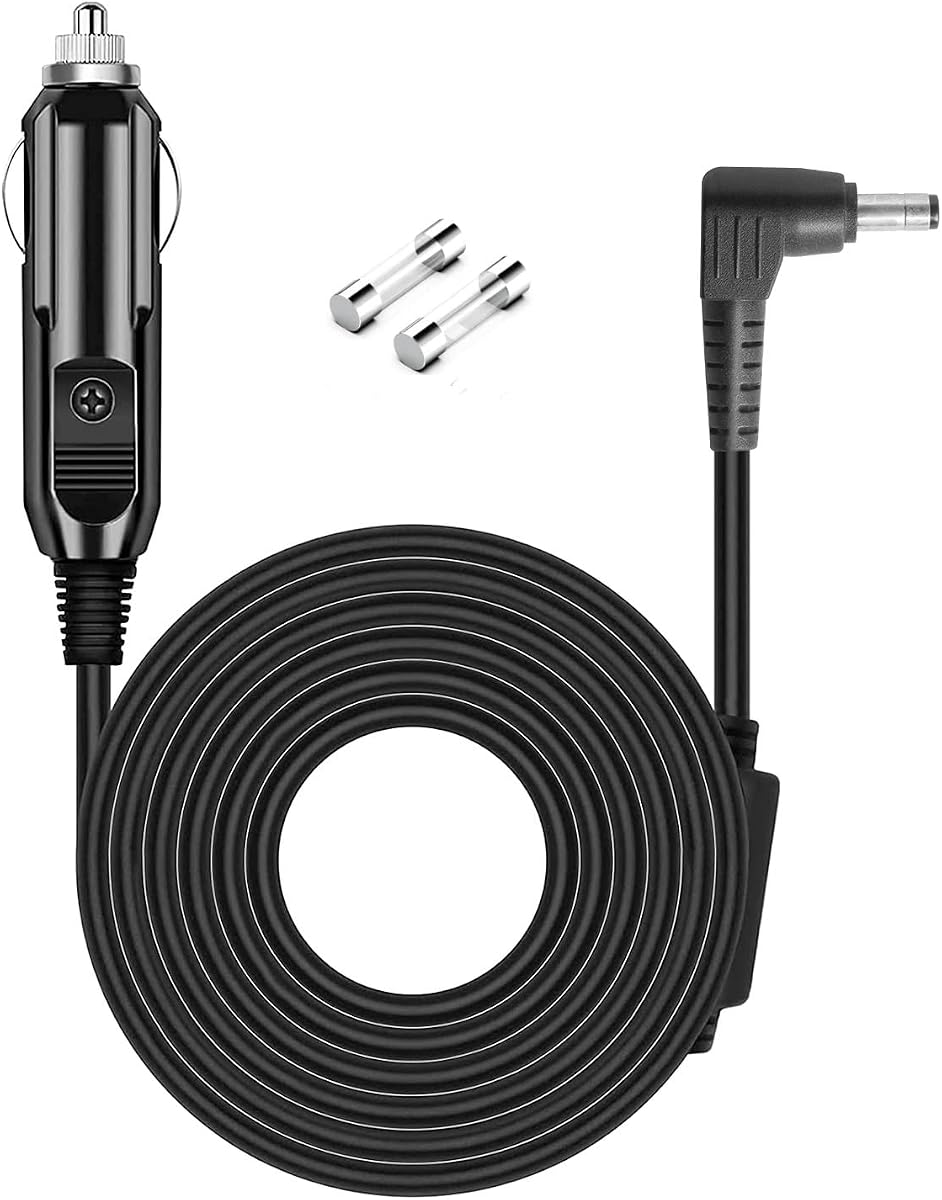
This car charger is a practical vehicle-based power option for users of several listed OxyGo and Inogen portable oxygen concentrators. It carries a 4.4 rating and stands out for broad model coverage, a 12-to-24-volt input range, and compatibility with cars, trucks, recreational vehicles, boats, and other vehicles using an appropriate cigarette-lighter connection. It does not store energy by itself, but it can keep a compatible concentrator supplied while the vehicle is running.
We may earn a commission when you buy through this link, at no additional cost to you.
The cable is described as 16 AWG pure copper, measuring two meters or 6.56 feet, and covered with a weather-resistant double PVC jacket. The manufacturer also lists over-voltage, over-current, and short-circuit protection. Two additional UL-listed 15-amp fuses are included, which adds practical replacement options, while a 24-month manufacturer warranty and email support offer some reassurance for a frequently used travel accessory.
Its main limitation is obvious: this is a vehicle charger rather than a battery backup that can provide power away from an engine or outlet. Compatibility also must be verified against the concentrator model, connector, and power requirements rather than inferred solely from the brand name. The product information mentions support for OxyGo NEXT, OxyGo FIT, Inogen One G3 through G5, and Inogen Rove 6 or Rove 4 IO-501, but users should check their exact equipment and manufacturer guidance first.
This is a sensible budget-focused choice for travelers who routinely drive and want a durable way to power a compatible concentrator from a vehicle. It is less appropriate for someone who needs quiet, stationary backup during a power failure or medical equipment support away from a vehicle. As long as the model and connector match, its long cable, protective construction, and wide voltage input make it a strong vehicle-focused backup accessory.
The listed 12-to-24-volt input range covers many common vehicle electrical systems. That makes the cable useful for road trips, camper travel, and other situations where a compatible concentrator can remain connected to the vehicle.
Heavy-duty copper wiring, a double PVC jacket, and a stated bend-life testing record address the wear associated with regular use. The included replacement fuses and manufacturer warranty further support travel use.
We may earn a commission when you buy through this link, at no additional cost to you.
This wall charger is designed as a convenient spare for the Inogen One family, with specific emphasis on the G5. Its 3.7 rating reflects mixed customer feedback, yet the central technical specification is attractive: a 19-volt, 6.32-amp output rated at 120 watts. The product information specifically warns against using a generic 24-volt supply with a concentrator that requires pure 19-volt input, making voltage matching especially important for this purchase.
We may earn a commission when you buy through this link, at no additional cost to you.
The charger is positioned as a way to keep a second power supply at home, in an office, or in a travel bag. Its compatibility information lists Inogen One G1 through G5 systems, while a standard barrel connector is intended to connect with the machine or an external battery charger. Automatic over-voltage, over-current, and short-circuit protection, V-0 flame-retardant materials, and a reinforced extra-long cable are also listed.
This is not an independent battery backup and cannot keep an oxygen concentrator operating during an outage unless it is connected to a suitable battery system. The lower 3.7 rating means buyers should examine recent customer feedback carefully, especially regarding connector fit, cable quality, heat, and actual charging behavior. Although the stated power delivery is specific, compatibility should still be confirmed with the exact concentrator and battery-charger model before use.
The product makes the most sense for Inogen owners who want a dedicated second wall charger, especially after experiencing the inconvenience of moving one cable between home, work, and travel. It is a helpful component of a broader backup strategy rather than the backup itself. For users who need outage operation, the EcoFlow DELTA Pro is far more comprehensive, while this charger fills the gap for reliable tethered charging and equipment rotation.
The stated 19-volt, 6.32-amp output is the key feature. Oxygen concentrators are life-sustaining medical devices, so users should verify voltage, current, connector type, and manufacturer requirements before connecting any replacement supply.
Keeping a dedicated charger in a second location reduces the need to unplug and repack the original cable. That convenience can be especially useful for users who divide their time between home, work, and travel.
We may earn a commission when you buy through this link, at no additional cost to you.
The EF ECOFLOW DELTA Pro is the most capable general-purpose battery backup in this list. It combines a 3,600-watt-hour lithium iron phosphate battery with 3,600 watts of continuous AC output and carries a 4.6 rating. Unlike the concentrator-specific cables and spare wall charger, it can support a broad collection of loads and includes conventional household outlets, making it a more realistic option for outage planning.
We may earn a commission when you buy through this link, at no additional cost to you.
Its output flexibility is a major strength. The unit offers two USB-A ports, two USB-A fast-charge ports, two 100-watt USB-C ports, five AC outlets, two DC outlets, a car output, and an Anderson port. Capacity can be expanded with DELTA Pro Extra Batteries or Smart Generators, and two units can be paired for 7,200 watts. The listed charging methods include wall outlets, solar, an EV station, a car outlet, and a smart generator.
Trade-offs include weight, size, charging logistics, and the need to verify the concentrator’s power requirements against the correct adapter. Although the DELTA Pro offers plenty of capacity, users should not assume every oxygen machine will accept its output automatically. Medical-device guidance, connector polarity, voltage, current, and whether the concentrator can operate directly from an external source all need confirmation. A powered device can also lose function when an overloaded output is switched off.
This is the strongest recommendation for someone who needs backup power for more than a single concentrator or who wants one system to support essential medical and household electronics. Its capacity, expandable architecture, multiple outputs, and app monitoring make it much more versatile than a small UPS. For users requiring a lightweight in-vehicle cord, the dedicated OxyGo and Inogen car charger is more purpose-built, while the DELTA Pro is the better long-duration outage solution.
The base 3,600-watt-hour capacity already exceeds that of conventional small UPS units. Expansion with additional batteries or compatible generators offers a path to larger household backup systems when more runtime is needed.
Household AC outlets, USB connections, DC outputs, and vehicle power make the station useful beyond oxygen equipment. That versatility can simplify emergency planning by reducing the number of separate power components.
We may earn a commission when you buy through this link, at no additional cost to you.
This Technical Precision replacement battery is specifically intended for the FRESENIUS Optima PT. It is not a general-purpose battery bank or oxygen concentrator power supply. Instead, it serves as a device-specific replacement component for equipment designed around that battery, which can help restore or maintain operation when the original battery has reached the end of its useful service life.
We may earn a commission when you buy through this link, at no additional cost to you.
The supplied information is deliberately limited: it identifies the product as a replacement for the FRESENIUS Optima PT and states that one unit is included per sale. No capacity, chemistry, dimensions, runtime, connector, or operating-condition details are provided in the product data. The product also has no listed customer rating, so this review cannot assign a rating or make claims based on customer feedback.
Its narrow compatibility is both its strength and its limitation. It may be the correct part for an organization operating a compatible FRESENIUS device, but it is not useful for an Inogen, OxyGo, or other concentrator. Buyers should confirm the equipment model, battery identifier, replacement procedure, and any manufacturer service requirements before ordering. Specialized medical or laboratory equipment should generally be serviced according to its documentation and applicable professional standards.
This battery is best for someone who already owns the named FRESENIUS Optima PT and needs an exact replacement rather than a backup power system for a portable oxygen concentrator. It does not meet the broader needs of most readers searching for an emergency battery source for an oxygen machine. Its value lies in equipment-specific maintenance, and the buyer must accept that the available specifications are too limited to support generalized capacity or runtime claims.
Replacement batteries are not interchangeable by appearance alone. Users should compare the model number, battery identifier, physical dimensions, and manufacturer instructions before installing the unit.
This option is designed for owners or operators of the FRESENIUS Optima PT. It is not a general battery backup and does not support most portable oxygen concentrators.
We may earn a commission when you buy through this link, at no additional cost to you.
This portable oxygen tank backpack is a carrying and storage solution for users of several cylinder sizes, including A, B or M6, C or M9, D, M2, ML6, and M7 formats. It has a 4.1 rating and is especially relevant to users who want to transport a compressed oxygen cylinder while maintaining access to tubing and small essentials.
We may earn a commission when you buy through this link, at no additional cost to you.
Its exterior is made from Oxford fabric described as tough and machine washable. Adjustable shoulder straps and a chest strap help stabilize the load, while a carrying handle provides an alternative way to pick it up. An interior foam pad and adjustable internal fixing belt help protect the cylinder from bumps and scratches and keep it from shifting. The exterior zipper pocket offers storage for small personal items.
Four outlet holes are designed to route oxygen tubing and reduce tangles while the bag remains closed. This is a convenience feature, but it does not turn the backpack into an electrical backup. The product listing does not mention a battery, charger, or power capacity, so users should not treat it as a source of backup electricity. Its listed dimensions are 7.5 inches long, 4.3 inches wide, and 15.7 inches high, which users should compare with their cylinder and tubing.
This backpack is a good companion for a travel or mobility kit that already includes a cylinder and independent concentrator power plan. It is particularly useful for people who need a more structured, hands-free way to carry an oxygen cylinder than a basic fabric sleeve. Buyers should verify cylinder fit, valve clearance, regulator arrangement, and local rules for transporting oxygen. For actual electrical backup, pair it with an appropriately matched power system rather than relying on the bag alone.
The internal belt, foam padding, and tubing holes work together to keep a cylinder and its hose more orderly during transport. These details make the bag more practical than a loose protective cover.
A machine-washable Oxford exterior simplifies maintenance for daily mobility use. Users should still follow the manufacturer’s cleaning guidance and remove the cylinder and equipment first.
We may earn a commission when you buy through this link, at no additional cost to you.
This DC car charger closely resembles the first-ranked vehicle cable and shares its 4.4 rating. It is listed for OxyGo NEXT, OxyGo FIT, Inogen One G3, G4, G5, and Inogen Rove 6 or Rove 4 IO-501 portable oxygen concentrators. Its vehicle-based purpose makes it relevant for road travel, mobile use, and locations where access to mains electricity is limited.
We may earn a commission when you buy through this link, at no additional cost to you.
The charger accepts a 12-to-24-volt DC input and has a maximum listed output of 180 watts. It uses 16 AWG copper wiring, a two-meter or 6.6-foot cable, and a double PVC jacket described as weatherproof, flexible, and wear resistant. Over-voltage, over-current, and short-circuit protections are listed, and two additional UL-listed 15-amp fuses are included. A 24-month manufacturer warranty and email support are also advertised.
Because its specifications closely mirror another cable in the list, buyers may struggle to distinguish meaningful differences. The product data does not state a unique advantage beyond the same two-meter cable length and compatible model set. It remains a vehicle charger, not a standalone battery, and therefore cannot support an oxygen concentrator in a location where the vehicle cannot run safely or where an idle vehicle is impractical. Exact connector and electrical compatibility remain essential.
This option is best for someone who prefers a dedicated 12-to-24-volt vehicle cable for one of the listed concentrators and values the included fuses, reinforced construction, and long reach. It may be easier to find than a generic concentrator cord, but it should be evaluated as one specialized accessory within a complete backup strategy. Buyers who need true battery storage should consider the EcoFlow DELTA Pro instead.
The six-point-six-foot lead offers enough reach for many passenger, RV, and camper arrangements. Positioning the vehicle outlet away from heat, sharp edges, and foot traffic remains important.
Listed over-voltage, over-current, and short-circuit protection helps address common electrical faults. The spare fuses provide additional protection if a suitable fuse is ever needed.
We may earn a commission when you buy through this link, at no additional cost to you.
The Vive Oxygen Tank Holder Backpack has a 4.5 rating, making it the second-highest-rated item among the ten products. It focuses on ergonomic cylinder transport, with multiple straps and handles intended to make travel, errands, and daily activities more manageable. It is not an electrical backup, but it can help a user carry an oxygen supply while keeping both hands available.
We may earn a commission when you buy through this link, at no additional cost to you.
A comfortable adjustable shoulder strap helps distribute the tank’s weight and reduces strain compared with a basic handgrip carrier. Padded construction protects the cylinder from scratches, bumps, and minor impacts, while the overall bag is described as made from high-quality materials. Multiple carrying options make it possible to adapt between shoulder carrying and other handling methods depending on the environment.
The supplied product details do not identify specific compatible cylinder sizes, dimensions, ventilation features, tubing ports, or internal restraints. As a result, buyers should check the physical dimensions and valve clearance before ordering, especially if using a regulator or accessories that add bulk. A high customer rating is encouraging, but it does not establish electrical performance or compatibility with every oxygen cylinder and travel arrangement.
This is a useful option for people who rely on a portable oxygen cylinder and want hands-free carrying for errands or travel. It can make an oxygen kit more manageable, but a complete backup plan still needs a separate power strategy for an oxygen concentrator or enough cylinder capacity for the planned emergency. The 60-day guarantee provides a straightforward return window, while careful fit checks should precede purchase.
The padded, adjustable shoulder strap is designed to spread the load and reduce localized strain. Users should adjust it snugly enough to prevent bouncing without restricting breathing or circulation.
The padded bag helps shield the cylinder from everyday scratches and minor impacts. It does not make the cylinder suitable for every transport environment, so local handling rules still apply.
We may earn a commission when you buy through this link, at no additional cost to you.
This portable oxygen tank backpack is another transportation-oriented product rather than an electrical battery backup. It has a 4.1 rating and fits A, B or M6, C or M9, M2, ML6, and M7 size cylinders according to the supplied information. Its dimensions are listed as 7.1 inches long, 4.1 inches wide, and 15.7 inches high.
We may earn a commission when you buy through this link, at no additional cost to you.
The bag uses Oxford fabric described as durable and machine washable. Adjustable shoulder straps, a chest strap, and a carrying handle distribute and stabilize the load. Inside, padding protects the cylinder from bumps and scratches, while an adjustable strap helps prevent shifting. An exterior zipper pocket offers a place for small essentials, and four outlet holes provide dedicated routing for oxygen tubing.
Compared with the other multi-size backpack in this list, the design is very similar in concept, but the dimensions and included size group differ. The product data does not provide a load rating, a list of included accessories, or detailed information about internal width at the valve. It also provides no electrical capacity or charging capability. Those limitations mean the bag should be treated as an organizational accessory rather than emergency backup power.
This backpack is best for users who regularly move an oxygen cylinder and want a structured, washable carrier with tubing access. It may help keep the oxygen kit together, but a compatible concentrator still needs an independently verified power source. For travel planning, check cylinder dimensions, regulator clearance, local oxygen-transport rules, and whether the destination requires a different cylinder format. With those checks completed, it offers a practical way to carry a compact oxygen setup.
Interior padding and an adjustable retaining strap reduce movement during walking or travel. The padded exterior also helps protect against ordinary bumps and surface wear.
Dedicated outlet holes keep hoses routed through the bag while reducing tangles. This makes it easier to connect or disconnect equipment without opening the entire carrier.
We may earn a commission when you buy through this link, at no additional cost to you.
The ResOne Oxygen Tank Backpack is a focused carrier for one D-size oxygen cylinder. It carries a 3.5 rating, the lowest listed customer score in this group, and should be evaluated primarily as a transportation accessory. Its black Oxford-cloth construction is designed to look discreet and professional while keeping a single cylinder organized for homecare, travel, and daily mobility.
We may earn a commission when you buy through this link, at no additional cost to you.
Padded shoulder straps and a sternum strap help balance the load and improve stability. An integrated tubing port allows oxygen tubing to connect while the bag remains closed, reducing the need to open the entire carrier. The bag can be used in backpack or shoulder-bag configurations, giving users some flexibility in how they carry it.
Its main limitation is specificity. It is designed for D-size cylinders and does not offer the broader size compatibility listed for several competing bags. The product information does not state dimensions, maximum load, included hardware, or an internal securing system, so buyers should check these details before ordering. The 3.5 rating also warrants a careful look at recent customer feedback, particularly regarding fit, strap comfort, and durability.
This is a reasonable focused option for a user who carries a D cylinder and values an integrated tubing connection. It may simplify daily use by keeping the cylinder upright and the hose accessible. It does not provide backup electricity and should be paired with a separate, compatible concentrator power solution. Buyers who need one bag for several cylinder formats will likely find the multi-size options more flexible.
The integrated tubing port provides a practical path for oxygen tubing through the closed bag. Users should still check whether the port suits their regulator, hose diameter, and connection arrangement.
Padded shoulder straps and the sternum strap help keep the cylinder closer to the body. Proper adjustment can improve comfort and reduce unwanted movement.
We may earn a commission when you buy through this link, at no additional cost to you.
The Eaton Tripp Lite BC350 is a compact small UPS with a 4.3 rating. It is designed primarily for electronics such as televisions, computers, and Wi-Fi routers, but its battery-backed outlets can also support appropriately sized low-power equipment. Its 350-volt-amp rating, 210-watt output specification, and six-outlet design make it a possible emergency option for a compatible oxygen concentrator whose power draw fits comfortably within the available capacity.
We may earn a commission when you buy through this link, at no additional cost to you.
Three outlets provide both UPS battery backup and surge protection, while the remaining three offer surge protection only. A five-foot power cord and bottom mounting tabs support home or office placement, and the internal battery can be replaced. The device filters EMI and RFI disturbances, operates quietly under normal conditions, and uses a green LED to communicate protection, overload, and battery status. It also carries a three-year manufacturer warranty.
The important limitation is capacity and runtime. A 210-watt output rating does not imply that a concentrator can run for a meaningful period during an outage, and actual run time depends on the connected device, battery condition, and output load. The unit produces sine-wave output in AC mode and PWM sine-wave output in battery mode. Some medical equipment may require a specific waveform or charging behavior, making compatibility testing and manufacturer guidance essential.
This UPS is best for a home-office setup with a small compatible device, network equipment, and a short-term transition during an outage. It may be useful alongside a concentrator’s own battery, but it should not replace a properly sized portable power station for extended support. Buyers should confirm the concentrator’s wattage, plug requirements, and tolerance of the UPS output before relying on it with life-sustaining equipment.
The small footprint makes the unit practical for a desk or equipment cabinet. Its combination of battery backup and surge protection can keep selected low-draw devices operating during brief power interruptions.
A replaceable internal battery can extend the useful life of the UPS. Users should follow the manufacturer’s replacement procedure and test the unit regularly to confirm that its backup status remains ready.
We may earn a commission when you buy through this link, at no additional cost to you.
The right backup depends first on the oxygen equipment, then on the required duration, portability, and environment. Buyers should separate genuine electrical backup from charging accessories and cylinder carriers while prioritizing manufacturer-approved compatibility.
Start with the exact manufacturer and model of the oxygen concentrator, its external battery, and any power supply already in use. Record the input voltage, current or wattage, connector shape, polarity, and whether the device can operate directly from an external source. Model families may contain different models with different requirements, so a brand name alone is not enough. This verification is especially important because the products in this guide serve very different functions: some are concentrator-specific chargers, one is a general portable power station, one is a small UPS, and several are cylinder bags.
A short interruption and an extended home outage require very different power systems. Estimate how long the oxygen equipment must operate without grid power, then multiply its average power draw by the desired hours to estimate the energy required. Add room for conversion losses and device variation rather than relying on a single wattage figure. A UPS may cover a brief transition, while a 3,600-watt-hour portable power station is more appropriate for keeping compatible equipment running for a longer period or alongside essential household devices.
A backup may have abundant capacity but still be unusable if its output does not match the oxygen equipment. AC outlets, DC barrel connectors, USB ports, and vehicle sockets are not interchangeable. Check connector dimensions, polarity, voltage, current, and power limits. A concentrator designed to charge its internal battery may not operate continuously when connected to a generic power source, while another may accept a specific DC supply. Use manufacturer documentation and seek professional advice whenever the electrical requirements are unclear.
Backup value depends partly on whether the user can bring the power source where it is needed. A 3,600-watt-hour power station offers substantial capacity but is substantially heavier and bulkier than a wall charger, vehicle cable, or small UPS. A vehicle charger is convenient during travel but depends on access to a suitable outlet. Weigh the system against the oxygen equipment, mobility needs, lifting capacity, storage space, and likely transport method rather than comparing capacity alone.
Look for documented over-voltage, over-current, short-circuit, overload, and thermal protection. For products connected to oxygen equipment, sound electrical design and correct installation matter more than marketing language. Inspect cables for damage, keep connections dry, avoid overloaded outlets, and do not use damaged power supplies. For a large portable power station, follow its battery-management, ventilation, charging, and storage guidance. Small electronics UPS models also benefit from periodic testing and timely battery replacement.
An oxygen-tank backpack is not a battery backup, and a spare wall charger cannot operate during an outage unless connected to another source. These accessories still matter because organized transport can prevent missed equipment and a spare charger can prevent a charging gap. Build a layered plan instead of expecting one product to satisfy every need: a compatible concentrator with its internal battery, a spare correct charger, a suitable power source for outages, and a safe way to carry any cylinder.
A backup that cannot be recharged is not a dependable plan. Check how each product is charged, how long that process takes, and whether multiple charging methods are available. The EcoFlow DELTA Pro supports wall, solar, vehicle, EV-station, and generator charging, while the dedicated chargers require their respective wall or vehicle sources. For critical needs, consider keeping a second compatible cable or charger available and periodically testing the complete system without relying on the backup until an outage reveals a problem.
Oxygen concentrators are medical devices, and backup choices should be evaluated against the equipment maker’s instructions and the advice of the prescribing provider or clinician. Some manufacturers specify approved battery and power-supply combinations. Travel can add airline, vehicle, and destination requirements, while local rules may govern oxygen-cylinder transport. Record the concentrator’s approved accessories and have the provider confirm whether any backup arrangement changes expected operating guidance or battery-management needs.
Begin by identifying the oxygen concentrator, internal battery, and backup unit by model and electrical specification. Test the backup with a safe, non-critical electronic load before relying on it in an emergency. For a portable power station, charge it fully, verify the correct output mode, and connect the oxygen equipment through the manufacturer-approved adapter. For a UPS or vehicle cable, test the transfer or connection in ordinary conditions and observe the concentrator’s status indicators before an outage.
Care for each system according to its design. Keep power-station and UPS units dry, ventilated, and away from excessive heat. Inspect cables for cuts, exposed conductors, loose plugs, or damaged insulation, and replace questionable components. Store lithium-based equipment at the charge level recommended by its manufacturer and recharge it on a regular schedule. Keep spare vehicle fuses and compatible charging cables clean, dry, and readily available.
Rehearse the complete setup as part of the oxygen contingency plan. Show a caregiver or travel companion where the backup is stored, how it is charged, which connector belongs to the concentrator, and how to recognize a depleted or failed system. Replace the internal battery in a small UPS when its status indicator reports a problem, and have portable power-station capacity checked before travel or storm season. Never rely on a carrier bag as the sole oxygen contingency plan.
Yes, if the power station has enough usable capacity, the correct output, and a compatible connection for the exact concentrator. Check voltage, current, connector, polarity, and whether the device permits continuous external operation. A suitable adapter may be needed, but it should not be improvised without manufacturer guidance.
An oxygen concentrator battery is designed specifically for one device and usually integrates with its charging and operating system. A portable power station is a separate energy system that can support compatible electronics and, when properly matched, a concentrator. The power station offers greater flexibility but requires careful capacity and connection planning.
A small UPS may work only if the concentrator’s power draw is safely below its continuous output and the device is compatible with its battery-mode waveform. Runtime may be short, especially when the UPS also supports routers, computers, or other equipment. Confirm all requirements with the concentrator manufacturer before relying on it for life-sustaining support.
No. A backpack is a carrying and storage accessory for a compressed oxygen cylinder. It may improve organization and comfort, but it contains no battery or charging system. Electrical backup must come from a compatible concentrator battery, UPS, portable power station, or another correctly matched source.
Only when its voltage, current, connector, polarity, and approved model compatibility match the concentrator’s requirements. Some Inogen and OxyGo families use specific connections and power levels, and an incorrect supply may not charge correctly or may damage the device. Check the concentrator’s manual and confirm the exact model before using an aftermarket cable.
The required capacity depends on the concentrator’s power draw and the desired backup duration. Multiply the device’s average wattage by the number of hours needed, then allow margin for conversion losses and variable demand. A UPS may provide a short transition, while a larger portable power station is more appropriate for extended operation.
Pack the compatible concentrator, its internal battery, a correctly matched charger, a tested backup power source, and any approved cylinder-carrier equipment. Keep cables organized, preserve spare vehicle fuses where relevant, and confirm airline or destination rules for both batteries and oxygen cylinders. Rehearse the setup before departure and avoid relying on a single charging location.
Test it on a regular schedule and always after changing equipment, adapters, outlets, or settings. Confirm that the source charges, the connection is stable, the output is correct, and the oxygen equipment behaves normally. Recharge the backup after use and replace aging batteries according to the manufacturer’s guidance.
The EF ECOFLOW DELTA Pro is the strongest all-around electrical backup because it combines a large lithium iron phosphate battery, high AC output, numerous charging methods, and expandable capacity. The OxyGo and Inogen car charger is the most budget-focused vehicle option, while the Eaton Tripp Lite BC350 offers a compact wall-powered backup for low-draw compatible equipment.
Prioritize exact equipment compatibility before comparing size or capacity. Confirm output requirements, connector type, waveform or charging behavior, and manufacturer guidance. Build redundancy with a compatible concentrator battery, a correctly matched charger, and a tested stationary backup rather than depending on one cable or one location.
Before ordering, review the current product listing and manufacturer instructions for the exact model being supported. Availability and configurations may change, so verify all specifications, included accessories, warranty terms, and current marketplace options at the time of purchase.