
G-PLUG 15FT RG8X Coaxial Cable
4.5Editor score
15-foot RG8X cable
Double-shielded 50-ohm design
Gold-plated PL259 center pins
Flexible weather-resistant PVC jacket
Our expert guide compares the best coax cables for Ham Radio, evaluating loss, shielding, connectors, length, weather resistance, and installation flexibility.
Coax cables for Ham Radio carry the signal between an antenna, radio, tuner, analyzer, and other RF equipment. A quality cable must suit the operating frequency, installation length, power level, connector type, and environmental conditions. The wrong choice can introduce unnecessary loss, interference, or connection problems.
The products in this guide were compared using their stated construction, impedance, frequency capability, shielding, connector design, cable diameter, length, and suitability for common amateur-radio applications. The list includes heavy-duty RG8X, RG8, LMR400-style, RG58, and thin RG316 options rather than treating every coax as interchangeable.
Each review explains the cable's strongest qualities, practical trade-offs, and likely users. The top picks highlight a budget-friendly short jumper, a well-balanced 50-foot cable, and a premium long-run model. Availability and prices change over time, so compare current listings before purchasing.
4.5Editor score

4.7Editor score
4.7Editor score
The table below compares the ten cables by construction, length, connector arrangement, and practical RF use, making it easier to identify the right option for a base station, mobile installation, or short equipment connection.


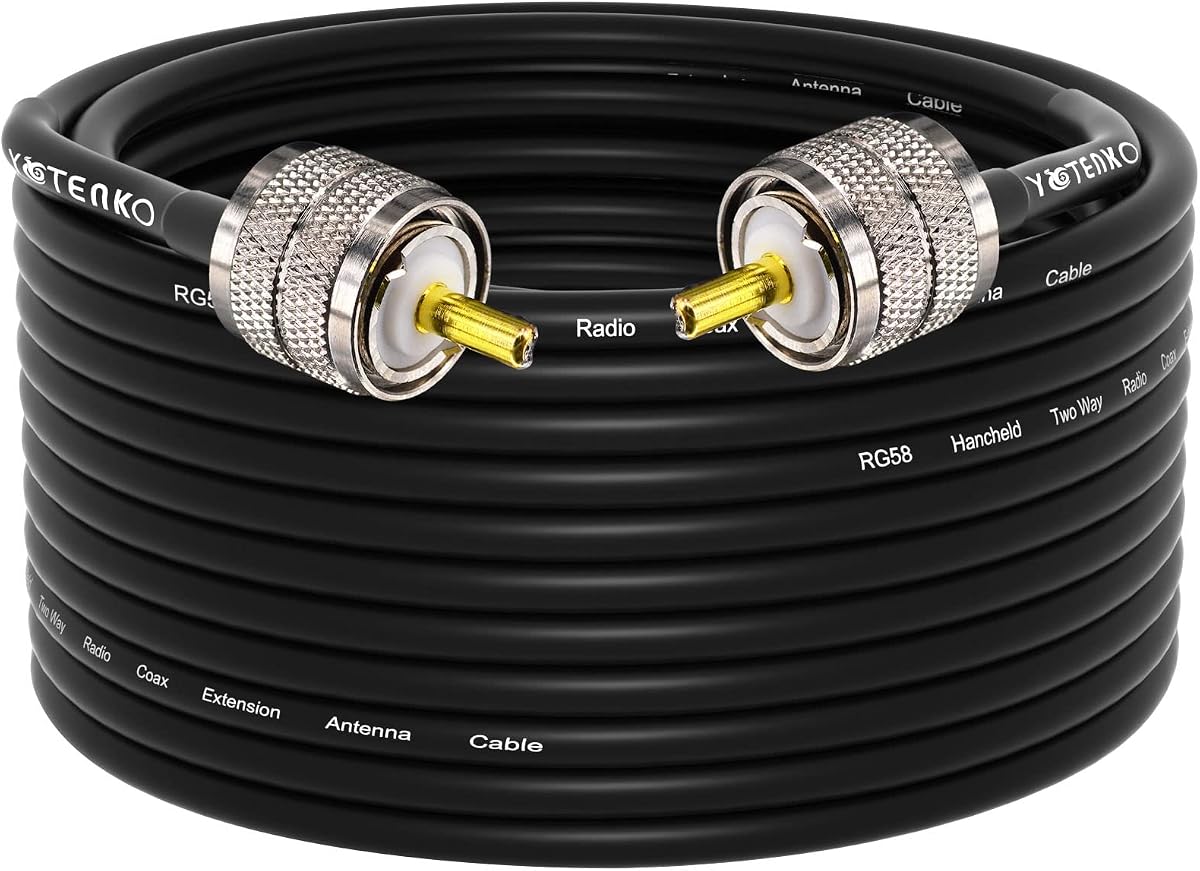

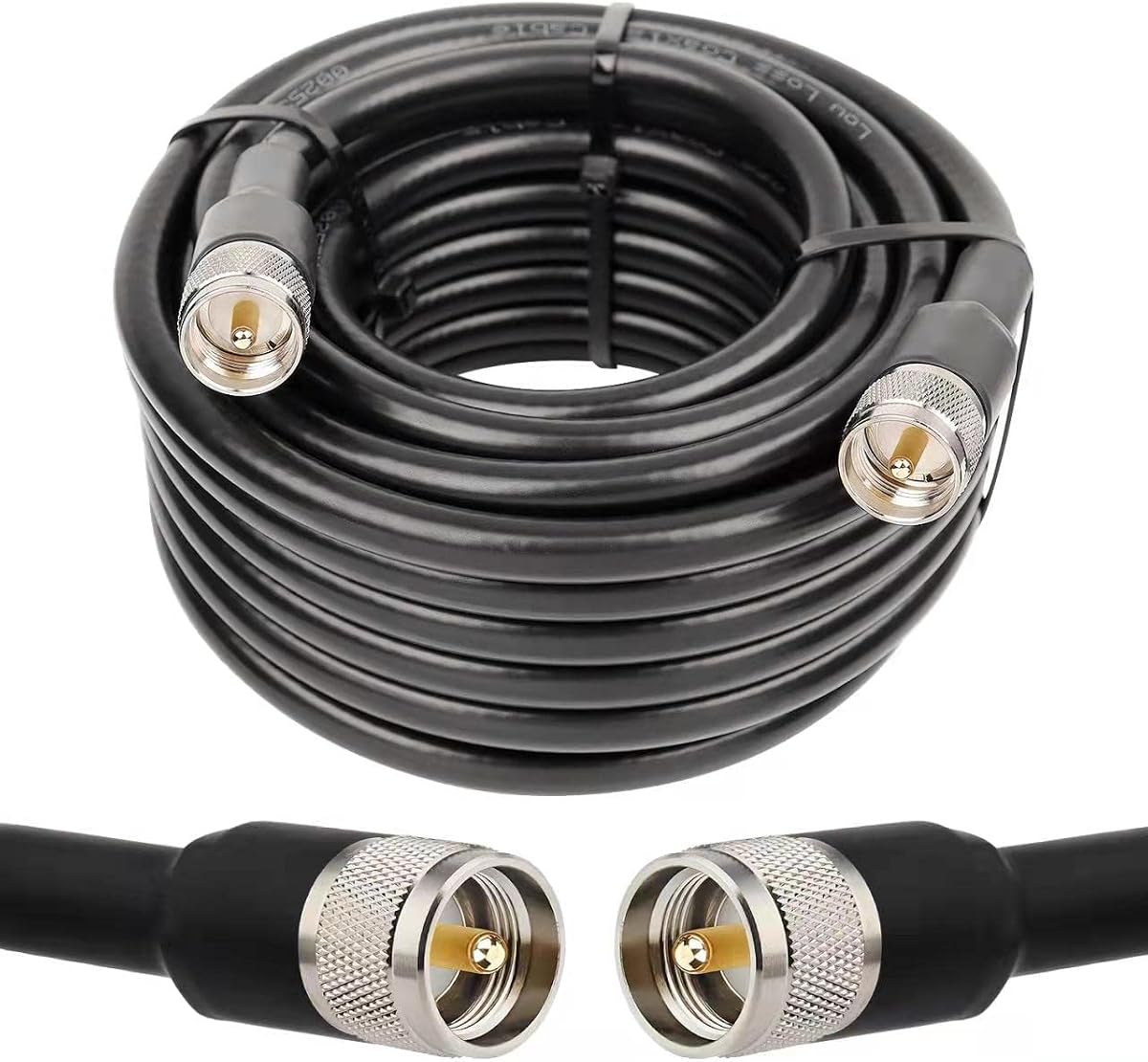

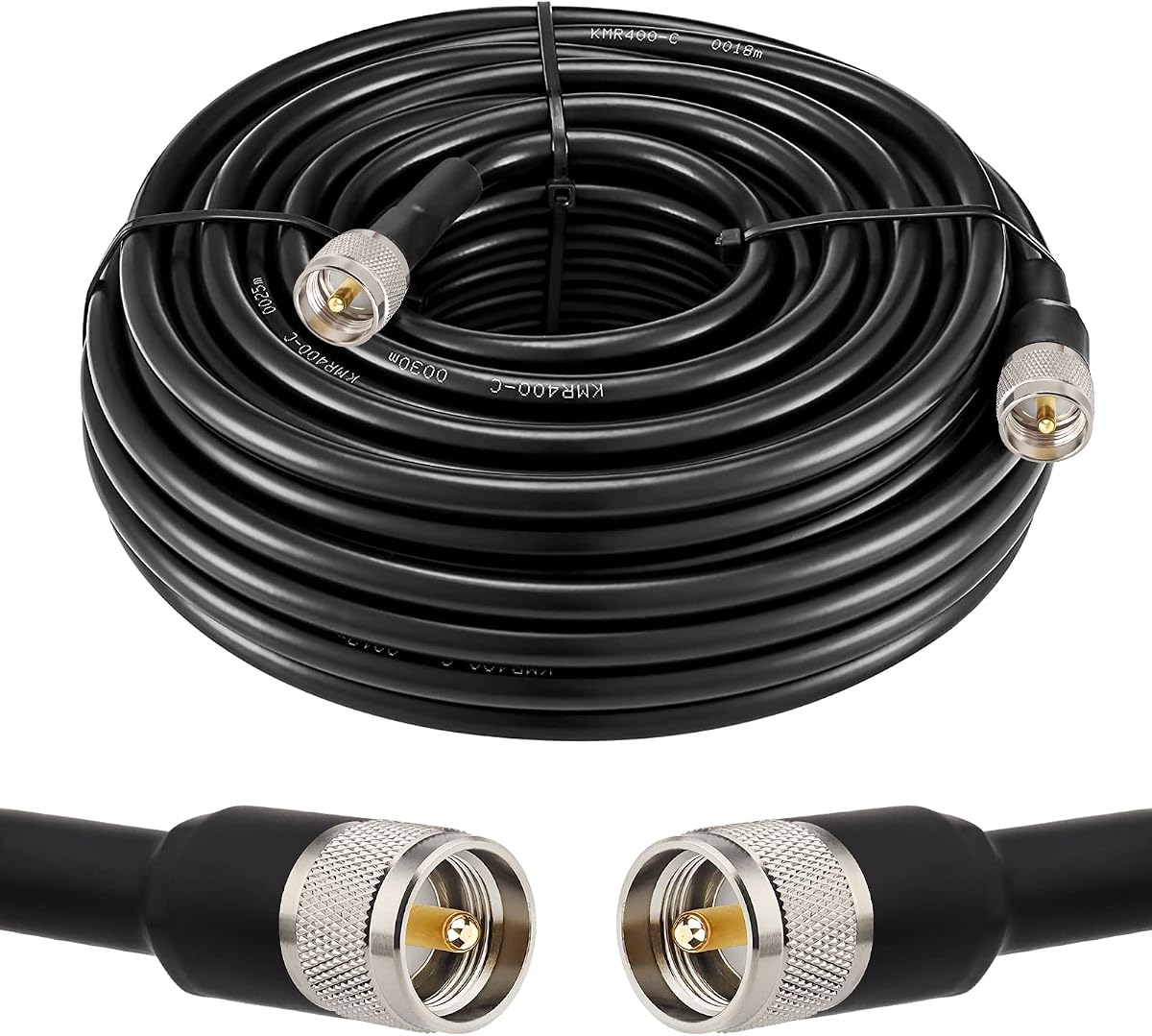
This RG8X cable combines a 50-foot length with a pure copper center conductor, double shielding, and molded PL259 connectors. It carries a 4.6 rating, and its construction appears aimed at users who want more signal-carrying capacity than a basic RG58 jumper without moving to the largest cable in the guide.
We may earn a commission when you buy through this link, at no additional cost to you.
The 17AWG pure copper conductor is the defining feature. A larger conductor and heavier shielding generally suit longer runs and higher-power stations better than lightweight coax. Fully molded nickel-plated brass UHF connectors with gold-plated center pins are also useful because they create a secure interface and resist corrosion when the cable is exposed to outdoor conditions.
The trade-off is physical bulk. RG8X is less flexible than RG58 and much less flexible than the 0.1-inch RG316 cable. It may also be more than a new operator needs for a short bench connection or low-power setup. Nevertheless, for a conventional base-station installation, the balance of conductor size, shielding, and handling makes this a strong general-purpose choice.
Buy this cable when you want a dependable 50-foot run between an amateur-radio transceiver and 50-ohm antenna equipment. It suits CB radio, HF setups, tuners, SWR meters, dummy loads, and antenna analyzers. It is a particularly sensible choice for operators who favor a pure copper center conductor and do not need the extra diameter of a 100-foot KMR400 installation.
The 17AWG pure copper core gives this cable more capacity than RG58 while remaining lighter than the largest KMR400 models. That balance can be useful for high-powered applications and installations where signal retention matters.
Double shielding helps reduce signal leakage and external interference, while molded PL259 connectors provide a dependable fit. Gold-plated center pins and nickel-plated bodies support reliable connections in indoor or outdoor installations.
We may earn a commission when you buy through this link, at no additional cost to you.
This 50-foot KMR400 cable is a low-loss option for operators who want more signal-retention capability than conventional RG8X without paying the size penalty of a 100-foot heavy-duty cable. Its 4.7 rating reflects a favorable balance of construction, specifications, and user response.
We may earn a commission when you buy through this link, at no additional cost to you.
The product information states loss below 2.8 dB at 450 MHz and SWR at or below 1.25. Its copper-clad aluminum center conductor is supported by aluminum foil and tinned copper braid. A nickel-plated copper connector shell, durable PVC jacket, and 2.2-inch adhesive-equipped heat-shrink tube add practical protection at the connection points.
KMR400-style cable is physically heavier and less flexible than RG8X, so routing it through a tight window or crowded vehicle interior can require additional planning. Its fixed PL259 termination may also require an adapter when the radio or antenna uses a different connector. These considerations matter most in permanent installations rather than short tabletop configurations.
This is a strong recommendation for a 50-foot home-station run, especially when low loss, shielding, and a sealed connector-to-cable transition are priorities. It can connect amateur-radio and marine VHF equipment and also works with an SWR meter, surge protector, antenna tuner, antenna analyzer, dummy load, or walkie-talkie system.
The stated low-loss figures make this model appealing for VHF-oriented amateur-radio installations. The 50-foot length provides a useful middle ground between compact jumpers and long-run premium cable.
A longer adhesive-lined heat-shrink section helps protect the joint from moisture and mechanical stress. Nickel-plated hardware also supports resistance to oxidation and corrosion in outdoor service.
We may earn a commission when you buy through this link, at no additional cost to you.
The STEREN RG8X is a 50-foot, 50-ohm PL259 cable intended for CB, amateur-radio, HF, and general 50-ohm RF installations. It holds a 4.7 rating and stands out for molded connectors, environmental durability, and an extensive list of compatible radio equipment.
We may earn a commission when you buy through this link, at no additional cost to you.
Molded PL259 connectors offer a secure, repeatable connection without requiring users to assemble separate plugs. The cable is positioned as an upgrade over RG58 for high-powered applications, which makes sense for users running base-station antennas, tuners, switches, and meters through relatively long signal paths.
As with most RG8X options, the cable is less flexible than RG58 and RG316. The fixed male-to-male configuration may not match every radio directly, and a more advanced operator may want to inspect the installed system with an analyzer after setup. It is also worth checking the exact contents against the current listing, since the product description discusses different installation examples.
This cable is a good match for a home base station, vehicle installation, 10-meter antenna, firestick antenna, or other 50-ohm setup needing 50 feet of reach. It offers a straightforward path to connect a transceiver to an antenna or measurement device, provided the equipment accepts PL259 connections or suitable adapters are available.
Fully molded PL259 fittings simplify installation and help maintain a consistent connection. Their nickel plating is intended to add durability where connectors may be repeatedly handled or exposed to changing conditions.
The stated compatibility extends across radios, antennas, tuners, meters, switches, and mobile equipment. That flexibility makes the cable useful beyond a single station configuration.
We may earn a commission when you buy through this link, at no additional cost to you.
The G-PLUG 15FT RG8X is the most compact ready-made cable in the guide. It provides 50-ohm RG8X construction, double shielding, and PL259 connectors in a manageable length, making it well suited to a radio, tuner, analyzer, or nearby antenna setup.
We may earn a commission when you buy through this link, at no additional cost to you.
A pure copper core is one of the cable's strongest features. The double shield helps minimize leakage and external interference, while gold-plated center pins and nickel-plated brass connector bodies provide a stable, corrosion-resistant connection. The flexible PVC jacket is intended to withstand outdoor conditions while remaining easy to route.
Fifteen feet is the central limitation. It is excellent for connecting equipment across a desk, within a radio room, or between nearby devices, but it cannot accommodate a typical elevated antenna installation without an extension or additional cable. It is also less useful for operators who prefer a single uninterrupted run from a transceiver to a distant antenna.
This is the best budget-oriented choice for a short but substantial coax connection. New hams and portable operators can use it for CB radio, amateur radio, an SWR meter, or an antenna analyzer. Experienced operators should first map the required distance to ensure that 15 feet will not create an unnecessary gap.
The cable preserves the useful 50-ohm RG8X format while avoiding the bulk of a 50- or 100-foot assembly. It fills a distinct niche between ultra-thin coax and full-length station cable.
Nickel-plated brass bodies, gold-plated pins, and a weather-resistant jacket make the assembly practical for outdoor-oriented amateur-radio work while retaining useful flexibility.
We may earn a commission when you buy through this link, at no additional cost to you.
This 49.2-foot RG58 cable prioritizes flexibility and mechanical protection. It carries a 4.6 rating and is tailored to amateur-radio, CB, mobile, RV, and field-day installations where a 0.195-inch cable is easier to route than heavier RG8 or LMR400-style alternatives.
We may earn a commission when you buy through this link, at no additional cost to you.
Its most distinctive feature is the six-centimeter reinforced strain-relief section at the PL259 connectors. This distributes bending stress away from the solder points, a useful benefit when the cable is repeatedly moved or connected in temporary setups. The shield is bare copper braid rather than copper-clad aluminum, supporting good solderability and oxidation resistance.
RG58 has a smaller center conductor than RG8X, RG8, or KMR400. It is most appropriate for moderate-length, lower-demand runs and applications within the stated 1–300 MHz range. Operators running higher power, longer paths, or more demanding multiband antennas may prefer a heavier cable to preserve additional margin.
Choose this cable for a car, truck, RV, or portable setup where routing space is tight. It also works for 10-meter and 2-meter amateur-radio use, CB radio, home-base antennas, and connections to an SWR meter. Its near-50-foot length provides more reach than a short jumper without the stiffness of heavier coax.
The unusually long heat-shrink section helps protect the connector joint during repeated handling. This is a meaningful advantage in vehicles, temporary installations, and field-day environments.
The slender 0.195-inch RG58 construction can pass through window frames and narrow conduits more easily than RG8X. That flexibility can prevent sharp bends and connector strain during installation.
We may earn a commission when you buy through this link, at no additional cost to you.
The exgoofit RG8X provides 100 feet of 50-ohm coax for installations in which the radio and antenna are not close together. Its 4.6 rating reflects a strong product proposition built around a large center conductor, double shielding, and molded connectors.
We may earn a commission when you buy through this link, at no additional cost to you.
The center conductor uses 16AWG construction made from 19 strands of 0.3-millimeter tinned pure copper. Compared with a common 17AWG RG8X design, the stated conductor is larger and intended to improve performance and durability. The cable also includes fully molded nickel-plated brass PL259 connectors with gold-plated center pins.
One hundred feet of RG8X is substantial for a temporary arrangement, and the cable should be supported along its route rather than left hanging in a sharp curve. A long cable can also make connector errors and poorly seated joints more consequential because the signal path is less forgiving. A two-year warranty adds reassurance, but buyers should still confirm the installation conditions fit the cable's design.
This is a practical choice for a backyard antenna, elevated base station, long cable route, or a transceiver positioned away from the radio room. It works with CB and ham radio, antenna analyzers, tuners, dummy loads, SWR meters, transceivers, and compatible Jeep Wrangler installations.
The 16AWG stranded pure copper center conductor distinguishes this model from more basic RG8X cables. It gives long-run users a substantial conductor without moving to the diameter of a 100-foot KMR400 cable.
Flexible PVC construction supports routing, while double shielding helps protect the signal from leakage and interference. Fully molded connectors and gold-plated center pins add mechanical and electrical consistency.
We may earn a commission when you buy through this link, at no additional cost to you.
The XRDS 100FT KMR400 is the premium long-run choice in this lineup. It combines a large 0.41-inch cable, copper-clad aluminum center conductor, clamp-style PL259 connectors, and a UV-resistant jacket. Its 4.7 rating makes it one of the strongest overall options for permanent or demanding installations.
We may earn a commission when you buy through this link, at no additional cost to you.
The large diameter supports a greater center conductor and more signal retention than RG58 or smaller 240-type coax. Clamp-style connectors are used instead of a crimp-only design, adding mechanical security. A 2.2-inch adhesive-lined heat-shrink section seals the cable-to-connector transition, while the flexible UV-resistant RF-PVC jacket is designed for prolonged outdoor exposure.
Premium construction comes with added bulk. The 0.41-inch diameter can be difficult to route through small openings, and the cable is heavier than RG8X or RG58. Installing a 100-foot run also demands careful support, weatherproof entry points, and attention to connector compatibility. These are acceptable limitations for users who value long-run performance more than minimal size.
This cable is suited to elevated antennas, expansive base stations, HF and VHF radio, marine antennas, tuners, analyzers, surge protectors, dummy loads, scanners, and other 50-ohm equipment. It is especially appropriate when the antenna is far from the radio and a smaller cable would have less performance margin.
The 0.41-inch KMR400-style architecture gives the cable a substantial center conductor and low-loss profile. It is well matched to long cable runs where preserving signal across the full installation is a priority.
Clamp-style PL259 fittings resist pull-apart better than a crimp-only connector. The adhesive-lined heat-shrink seal adds environmental protection around the most mechanically demanding part of the assembly.
We may earn a commission when you buy through this link, at no additional cost to you.
This 50-foot RG8 cable is a low-loss PL259 jumper designed for amateur-radio, CB, marine VHF, and general RF equipment. Its 4.6 rating and stated performance figures make it appealing for users who want more signal retention than lighter RG58 cable without selecting the largest option.
We may earn a commission when you buy through this link, at no additional cost to you.
The product information reports loss below 1.5 dB at 450 MHz and SWR at or below 1.25. Construction combines a copper-clad aluminum center conductor with aluminum foil and tinned copper braid. Clamp-style connectors, nickel plating, and a 2.2-inch adhesive-lined heat-shrink section provide a secure and sealed connection.
RG8 is heavier and less flexible than RG58, which may complicate mobile routing or installation in a confined radio room. The fixed connector arrangement can also require adapters, and published performance figures should be understood as manufacturer-provided specifications rather than an independent station comparison. For most amateur-radio users, the trade-offs are reasonable.
Choose it for a home base, marine VHF installation, antenna connection, SWR meter, surge protector, or walkie-talkie system. It is a particularly good fit when 50 feet is the required run, environmental sealing is important, and the operator wants a clamp-style termination that resists pulling apart.
The stated attenuation and SWR figures position the cable as a strong link for VHF-oriented stations. Its 50-foot length makes it more useful for full installations than a compact bench jumper.
Clamp-style fittings and longer adhesive heat-shrink improve mechanical durability. The nickel-plated shells and waterproof-oriented PVC jacket support use in outdoor conditions.
We may earn a commission when you buy through this link, at no additional cost to you.
The XRDS RF RG316 cable is the thin, flexible option for situations where cable bulk matters more than high-power handling. It has the highest rating in the group at 4.8 and provides 50 feet of cable with a diameter of only 0.1 inch.
We may earn a commission when you buy through this link, at no additional cost to you.
Silver-plated copper forms the stranded center conductor and braid, while a Teflon jacket provides flexibility and resistance to harsh outdoor environments. The stated maximum frequency is 6 GHz, attenuation at 3 GHz is no more than 0.45 dB per foot, and VSWR is stated at or below 1.15. These characteristics suit many VHF and UHF interconnections.
Unlike most other products here, this arrives without the PL259 connectors shown on the competing assemblies. The description states that it can be used to build antenna cables by crimping suitable SMA or other connectors. Users therefore need the correct connector, tools, crimping technique, and a clear understanding of the intended impedance and connector arrangement.
Buy this cable for balun antenna work, VHF and UHF interconnections, ham-radio projects, Wi-Fi equipment, 4G LTE systems, and ADS-B installations. It is particularly useful when routing must pass around furniture, through compact spaces, or alongside other wiring. For a conventional high-power PL259 antenna feed, a pre-terminated heavier cable is generally simpler.
A 0.1-inch diameter makes this cable easy to conceal and route in confined areas. It is substantially more flexible than RG8X, RG8, or KMR400-style alternatives.
Silver-plated copper conductors and a low-loss specification make the cable useful across VHF, UHF, and other interconnection tasks. The Teflon jacket is built for flexible outdoor service.
We may earn a commission when you buy through this link, at no additional cost to you.
The Superbat RG8X is a 50-foot, 50-ohm cable with a 4.7 rating and a low-loss design. It is presented as an upgrade over RG58 for high-powered applications and users who want a larger cable without moving to the heaviest KMR400-style construction.
We may earn a commission when you buy through this link, at no additional cost to you.
The stated SWR is below 1.15, and the waterproof PVC jacket is designed for outdoor use. The product description says it can be bent and strapped without inducing signal interference. It is also listed for broad compatibility with CB ham radio, antenna analyzers, SWR meters, cell boosters, and Wi-Fi repeaters.
The listing does not provide as much detail about the center conductor as several competing products, so buyers who prioritize a specific conductor material should verify the current package information. Connector configuration may also vary by order, making it important to confirm whether PL259, SMA, BNC, TNC, UHF, or N-type ends are included before purchase.
This cable is a good general option for a 50-foot run, especially for operators who want flexible outdoor handling and low-loss RG8X characteristics. It can suit a base station, CB installation, analyzer connection, or repeater arrangement. Confirm the termination and planned use before ordering to avoid needing an unnecessary adapter.
The RG8X format and stated SWR target suit typical 50-ohm radio systems. It offers a practical step up from RG58 while remaining easier to handle than the largest heavy-loss cable.
A flexible waterproof PVC jacket helps the cable tolerate outdoor routing and secure strapping. This makes it useful for fixed installations as well as temporary station arrangements.
We may earn a commission when you buy through this link, at no additional cost to you.
Selecting coax involves balancing electrical performance, mechanical size, connector compatibility, and installation environment. The best cable is the one that preserves the signal across the actual route while remaining practical to install and maintain.
Most amateur-radio antennas, transceivers, tuners, analyzers, and SWR meters are designed around a 50-ohm system. A 50-ohm cable is therefore the standard choice for the products in this guide. Matching impedances helps limit unwanted reflections and keeps the antenna, feed line, and radio working together more predictably. Cable impedance should not be confused with attenuation: impedance describes the relationship between voltage and current along the line, while loss describes how much signal is reduced as it travels.
Choose 50-ohm coax for conventional ham-radio installations. Verify that every connected device and any adapter also supports the intended system.
RG8X, RG8, KMR400-style, RG58, and RG316 cables occupy different performance and flexibility categories. RG8X offers a common middle ground for HF and VHF work. RG8 and KMR400-style constructions are better suited to longer runs or higher-power needs. RG58 is smaller and easier to route, while RG316 is exceptionally thin and used here for compact or high-frequency interconnections. Always compare the stated frequency range with the bands and equipment you actually intend to operate.
Match the coax class to the installation rather than choosing solely by length. Heavier is not always necessary, but a lightweight cable may offer less margin on a demanding path.
Every cable loses some signal as power travels along it, and loss generally increases with frequency and cable length. A short jumper between a radio and tuner may not justify a heavy premium cable, while a 100-foot run feeding a high-band antenna benefits from a larger, low-loss conductor. Manufacturer-stated attenuation figures provide a starting point, but connector quality, bends, nearby interference, and the actual operating frequency can also affect the complete installation.
Estimate the full route before buying, then select a construction with comfortable performance margin. Avoid adding unnecessary adapters or long connector extensions in the signal path.
A larger center conductor can support more current and help reduce resistive loss. Pure copper is a familiar high-conductivity option, while copper-clad aluminum and tinned copper strands are common in heavier low-loss cables. The difference matters most for long runs, higher power levels, and frequencies where the installation approaches the upper capability of a lighter cable. It matters less for short, low-power interconnections where connector quality and physical routing remain the dominant concerns.
Treat conductor material as one part of the overall design. Shielding, jacket, connector construction, and installation discipline also influence dependable results.
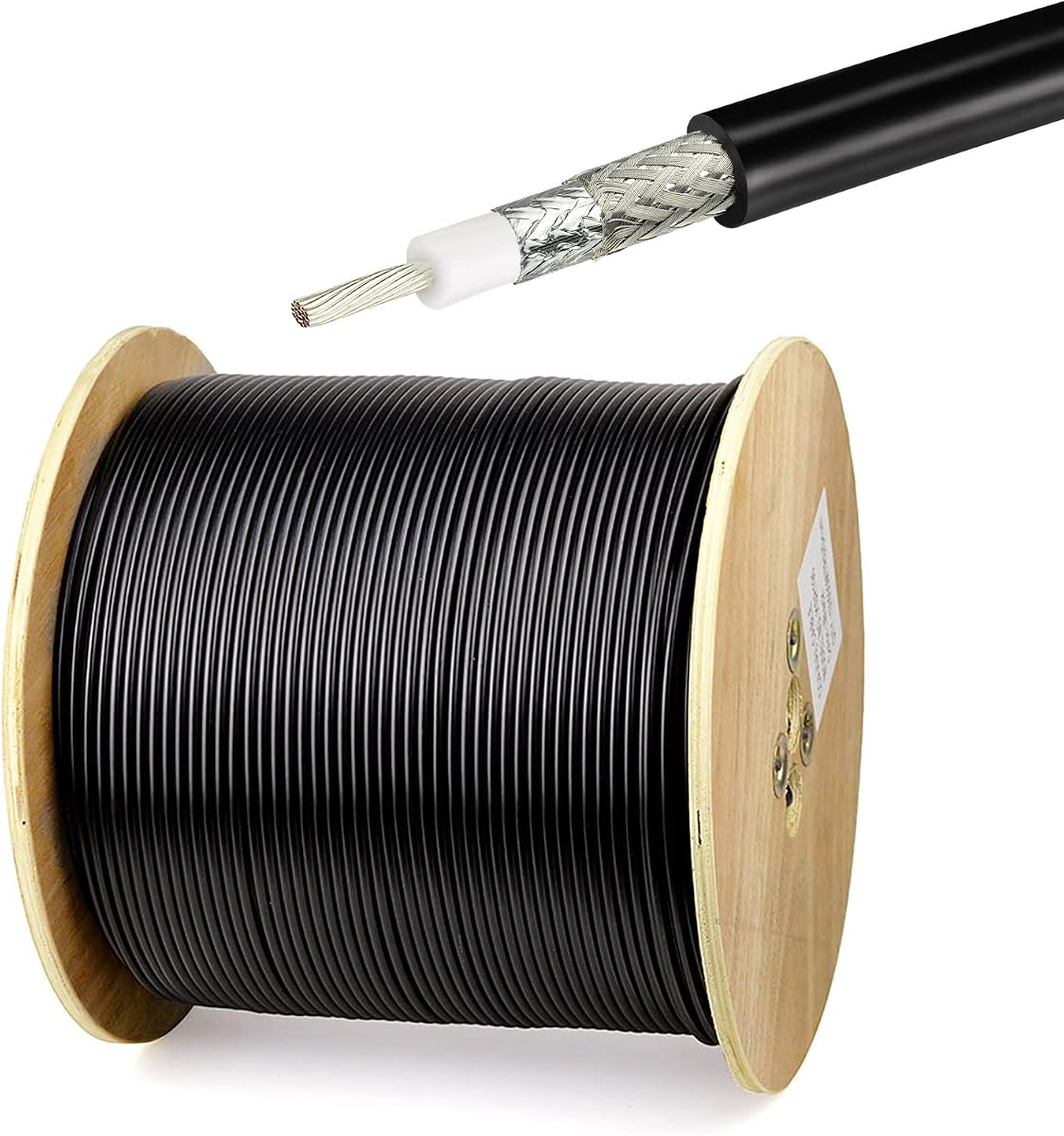
A coax cable contains a center signal conductor, an insulating dielectric, a shielding layer, and an outer protective jacket. Double-shielded constructions can improve rejection of external interference and reduce signal leakage into nearby electronics. This is valuable in urban areas, near computers, in vehicles with abundant electrical systems, or beside sensitive receiving and measuring equipment. Shielding is valuable, but a proper shield-to-connector transition and sound grounding practices are equally important.
Look for a continuous, well-sealed shield and connector body. Avoid damaged braid, pinched coax, and improvised splices within the RF path.
PL259 UHF connectors are common on heavier amateur-radio and CB feed lines, while smaller systems may use BNC, SMA, TNC, N, or other interfaces. The cable's connector must physically and electrically match the radio, antenna, tuner, and measurement equipment. Molded, crimped, and clamp-style terminations offer different levels of mechanical security. Adhesive-lined heat-shrink can improve environmental protection, while extended strain relief helps where a cable will be moved or repeatedly plugged in.
Confirm male and female genders, connector quantity, and included hardware before ordering. Suitable adapters are useful, but every extra interface adds another possible failure point.
Cable diameter affects both handling and signal capacity. RG58 and RG316 are easier to route through tight spaces, window frames, and vehicle conduits. RG8X offers a middle ground, while RG8 and KMR400-style cables are heavier and require more deliberate support. A rigid or sharply bent cable can create stress at connectors, distort impedance, and shorten service life. Allow smooth bends, avoid pinching the jacket, and use appropriate cable hangers or straps for permanent outdoor runs.
Choose the smallest construction that comfortably meets the performance requirement. Excessive diameter can make a simple installation unnecessarily difficult.
Outdoor coax is exposed to ultraviolet radiation, rain, condensation, dirt, temperature changes, and insects. A UV-resistant or waterproof-oriented jacket is important, but the connector and cable transition are especially vulnerable. Fully molded connectors, clamp-style fittings, and adhesive-lined heat-shrink improve resistance to moisture and mechanical separation. Wherever possible, route the cable so water does not pool at an equipment entry point, and inspect the connectors during routine station maintenance.
Weather resistance is not permission to leave connections submerged or poorly supported. Secure the cable, preserve its natural shape, and check for jacket or seal damage.
Start by confirming that the cable's connectors match your radio and antenna system. Connect the feed line with the antenna disconnected, and inspect each PL259 or other fitting for loose strands, crushed braid, damaged insulation, or an incomplete seal. Tighten the connector fully by hand, then use the appropriate wrench without applying excessive force to the shell.
Route the cable with smooth bends and avoid sharp turns, knots, and tension at the connectors. Secure long outdoor runs with weather-resistant supports at suitable intervals. Keep the cable away from sharp metal edges, moving vehicle parts, and power cables that may create interference. For a vehicle installation, route the coax through a suitable passage and verify that the jacket cannot chafe against the body.
After installation, test the complete antenna system rather than judging the cable by appearance alone. Check continuity, inspect for shorts, and use an SWR meter or antenna analyzer under the intended operating conditions. Disconnect power before changing connectors, and periodically examine outdoor weather seals, jacket damage, corrosion, and connector tightness. Replace a cable that is crushed, persistently intermittent, or visibly damaged rather than trying to conceal the fault with additional tape.
For most home installations, a 50-ohm RG8X cable is a practical general-purpose choice. RG8 or KMR400-style cable offers more margin for long runs or demanding power levels, while RG58 and RG316 are better when flexibility and compact routing matter. The ideal choice depends on length, frequency, power, and connector requirements.
Yes, because all real cables experience some attenuation. Loss generally rises with cable length and frequency, while sharp bends, poor connectors, and damaged shielding can make performance worse. Choosing a suitable conductor size and minimizing unnecessary adapters helps preserve signal quality across the installation.
RG8X is commonly used across amateur-radio applications, including HF and VHF, provided its length and frequency specification suit the system. For very long VHF runs, higher frequencies, or greater performance margin, a heavier low-loss construction may be preferable.
PL259 connectors are widely used with 50-ohm CB, amateur-radio, and related RF equipment, but not every radio has a PL259 port. Check the connector type and gender on both ends, then use a quality adapter if required. The adapter should support the same impedance and frequency range as the system.
RG8X is generally the stronger choice for higher-power use, longer paths, or installations that benefit from a larger conductor. RG58 is lighter, easier to route, and may be perfectly adequate for shorter, lower-demand setups. The radio's output power, antenna location, operating bands, and total cable length should guide the decision.
Keep the cable away from sharp edges, support it without crushing it, and preserve smooth bends. Protect the connector-to-cable transition from moisture and mechanical strain, and avoid creating water-collection points. Periodic inspections can identify damaged jackets, loose connectors, corrosion, or movement before they interrupt operation.
An analyzer is useful but not strictly necessary for every installation. Basic continuity, resistance, and short checks can reveal gross faults, while an SWR meter and antenna analyzer provide more insight into the complete antenna system. Testing under the intended operating conditions is more meaningful than relying on a cable's printed specification alone.
Yes, but connector selection and workmanship are critical. The connector must match the cable's 50-ohm design, conductor size, and intended impedance. Use the correct crimp tool and follow the connector manufacturer's assembly instructions carefully, because a poorly prepared or crimped termination can cause high loss, poor shielding, or intermittent operation.
The G-PLUG 15FT RG8X is the top budget pick for short, practical connections, while the MOOKEERF 50ft KMR400 offers a balanced low-loss option for a full 50-foot installation. The XRDS 100FT KMR400 stands apart as the premium choice for long runs, large conductor capacity, secure clamp-style terminations, and outdoor durability.
Prioritize impedance, frequency range, loss, connector compatibility, and the actual route before focusing on cable size. Longer and heavier constructions can make sense for distant antennas or high-power stations, but compact RG58 and RG316 cables remain better when routing flexibility is the main challenge. Always inspect the termination and support the cable properly.
Before ordering, confirm the current package contents, connector genders, length, and advertised specifications because product configurations can change. Prices and availability also vary over time, so compare current listings and make sure the selected cable matches the equipment and operating conditions in your station.