
Kaico GameCube HDMI Adapter
4.6Editor score
Dedicated DOL-001 compatibility
Up to 480p or 576p
Included shelf support
Our GameCube HDMI Adapters guide compares ten converters for picture quality, console compatibility, audio, latency, power needs, and ease of setup in 2026.
GameCube HDMI adapters make classic Nintendo games easier to enjoy on modern televisions, monitors, and projectors. A good converter should improve picture clarity, preserve useful audio, provide a stable connection, and avoid unnecessary setup. The right choice depends heavily on whether your console has a digital video port or relies on analog outputs.
We compared the ten adapters by examining console compatibility, supported display modes, signal path, power requirements, aspect-ratio controls, latency claims, included accessories, and warranty information. The list covers dedicated digital-port adapters, universal analog converters, and multi-function devices designed for several retro Nintendo systems.
Each review explains where an adapter stands out, where its compatibility limitations matter, and which type of GameCube owner it best serves. Ratings and product details reflect the supplied information, while prices and availability can change, so compare the current listing and console configuration before purchasing.
4.6Editor score

4.4Editor score

4.4Editor score
The comparison below highlights the console paths, output capabilities, power arrangements, and practical features that distinguish each GameCube HDMI adapter.

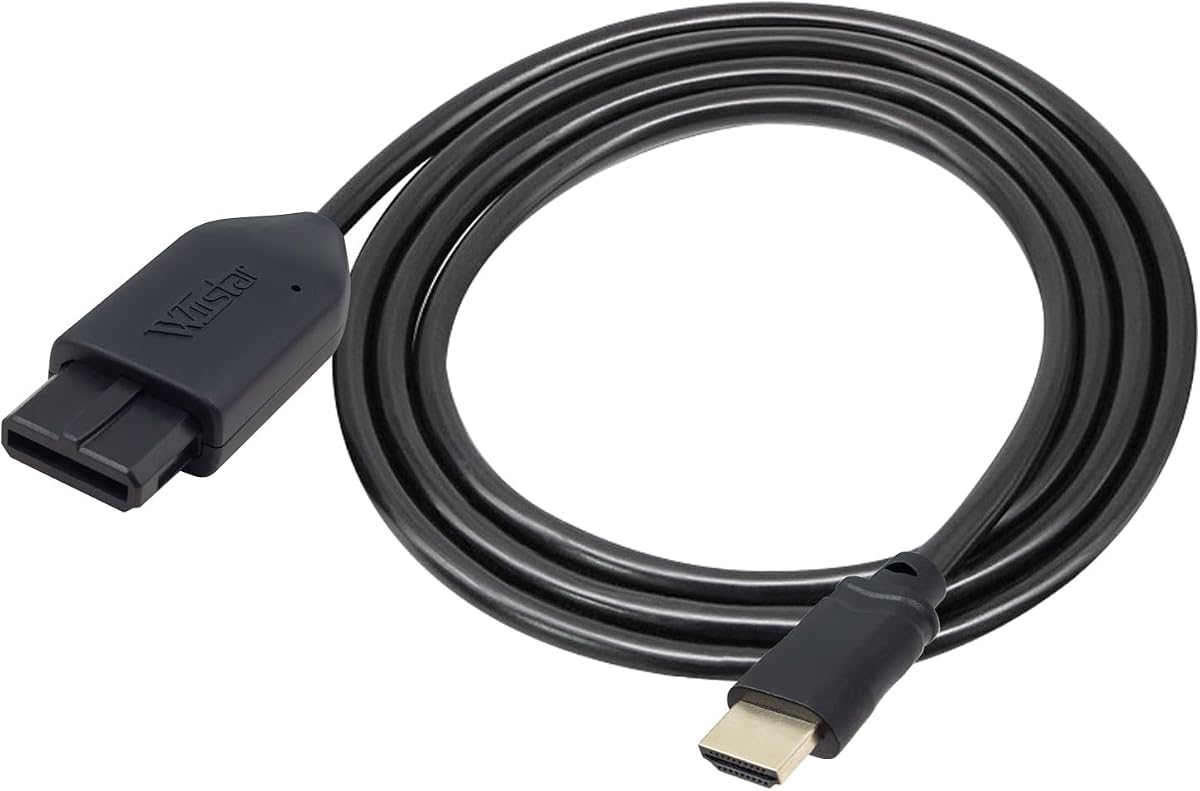


The Kaico GameCube HDMI Adapter earns a 4.6 rating and is the strongest dedicated option in this guide for owners of a DOL-001 console. It connects through the GameCube's digital output rather than relying on composite or S-Video, allowing it to deliver a cleaner digital signal with support for resolutions up to 480p or 576p. That makes it especially attractive for players who want more detail than the console's standard analog output can provide.
We may earn a commission when you buy through this link, at no additional cost to you.
Its GCVideo operating system adds useful display controls. Owners can enable line doubling and scanlines through the included programmed remote, allowing them to choose the appearance that best suits their television. The adapter also includes a USB port for firmware updates and a three-dimensional printed shelf that supports the console connector and reduces strain on the digital port. A 12-month support, repair, and replacement warranty adds further reassurance.
The central limitation is hardware compatibility. This model is designed for DOL-001 GameCubes with a digital port on the back, not later revisions that rely on analog video. The included shelf may also occupy space behind the console, and remote adjustment is unnecessary for users who already know exactly which picture mode they prefer. These are meaningful constraints, but they do not undermine the adapter's value for a compatible early console.
This is the pick for someone who owns a digital-port GameCube and prioritizes image quality, convenient mode selection, and a straightforward dedicated solution. Check the back of the console before ordering. If the GameCube has a digital port and you want the full benefit of its native digital signal, the Kaico adapter is a particularly well-rounded choice.
The digital-port connection preserves the GameCube's available digital video modes, while GCVideo and the included remote make line doubling and scanlines easy to test. This is a more refined setup than a generic analog converter for owners of compatible hardware.
The included shelf supports the digital connection and is intended to reduce strain on the connector. A USB port also provides a route for firmware updates without changing the core connection.
We may earn a commission when you buy through this link, at no additional cost to you.
The Tengchi RCA to HDMI Converter has a 4.4 rating and offers a budget-friendly route to connecting a GameCube and other analog equipment to an HDMI television. It accepts a female RCA connection carrying yellow composite video and red and white audio, then outputs HDMI 1.3 at up to 1080p. Although the output label is attractive, the source signal remains analog composite, so it should not be confused with a native digital GameCube connection.
We may earn a commission when you buy through this link, at no additional cost to you.
This converter is especially versatile because it supports PAL, NTSC 3.58, NTSC 4.43, SECAM, PAL/M, and PAL/N inputs. That broad support makes it usable with a GameCube, as well as compatible PS2, PS3, Xbox, N64, set-top box, VHS, VCR, and DVD equipment. The package includes the converter, an HDMI cable, a USB power cable, and a user manual. Installation is essentially plug and play once power is connected.
There are trade-offs. A USB power source is required during use, and the supplied listing notes that the power source itself is not included. The device also does not support 3D, 4K, or HDMI-to-AV conversion, and its RCA input is limited to standard analog signals. Owners seeking sharper results may find a dedicated S-Video converter more appropriate.
Choose this adapter if your main goal is a straightforward, inexpensive connection and your GameCube is already connected through standard AV hardware. It is also a practical general-purpose converter for a collection of older devices. For a GameCube with a digital port, however, a native digital adapter will generally offer a better basis for image quality.
The broad television-standard and device support makes this converter useful beyond Nintendo hardware. It can serve as a shared adapter for older consoles, disc players, and video equipment with standard composite AV output.
The converter arrives with both an HDMI cable and USB power cable, reducing the number of separate accessories needed. Users should keep the USB supply connected throughout normal operation.
We may earn a commission when you buy through this link, at no additional cost to you.
The BITFUNX NGC to HDMI Adapter carries a 4.4 rating and combines a dedicated GameCube HDMI solution with a separate multi-function storage adapter. For DOL-001 consoles with a digital port, it supports 240p, 288p, 480i, 576i, 480p, and 576p. The GC2SD Gen2 side expands support to all GameCube consoles, compatible Wii models, and the storage-related functions described in the product information.
We may earn a commission when you buy through this link, at no additional cost to you.
The dedicated NGC HDMI section provides video and audio through a full digital HDMI connection. It includes line doubling and scanline options controlled by a programmed remote, plus a USB port for firmware updates and a protective bracket. The broader GC2SD Gen2 portion supports microSD cards up to 512GB with an additional adapter, widescreen patches, game-file backup and restoration, and homebrew software such as Swiss.
This breadth is both its main attraction and its main complexity. Owners who only need a straightforward GameCube video connection may find the additional storage features unnecessary. The expanded storage card capability requires an adapter, and the GC2SD unit cannot function as a standalone memory card. The listing also advises GameCube users to use the latest version of Swiss for the best compatibility.
This is an excellent choice for an enthusiast who wants more than basic video conversion and owns compatible Nintendo hardware. It is particularly compelling when native digital output, selectable scanline treatment, firmware support, and optional game storage are all useful. Those who only need clean GameCube video should compare its relevant digital features with the more focused Kaico option.
Six display modes give compatible DOL-001 owners room to compare original-style and progressive outputs. The remote makes switching between available options practical without repeatedly reconnecting cables.
The GC2SD Gen2 component can expand supported GameCube storage when the necessary microSD adapter is present. It also supports backup, restoration, widescreen patches, and homebrew software, extending its appeal beyond video conversion.
We may earn a commission when you buy through this link, at no additional cost to you.
The universal HDMI Adapter for N64, GameCube, and SNES has a 4.2 rating and focuses on a simple way to move several classic Nintendo consoles onto a modern HDTV. It advertises 720p and 1080p conversion, comes with an HDMI cable, and uses a plug-and-play design. Its strongest appeal is convenience for households that want one adapter format to serve more than one Nintendo system.
We may earn a commission when you buy through this link, at no additional cost to you.
The GameCube is only one part of the product's compatibility story. The same adapter is listed for the Nintendo 64 and SNES, making it appealing for retro gaming setups with multiple consoles. It is designed to work without screen lag, although that claim should be understood as a product specification rather than an independently verified test result. External power is required, which adds one more connection to manage.
The listing warns that a lack of sound or a blue screen can indicate a connection problem. This suggests that correct routing of the console's video and audio connections is important. It also means buyers should compare the included cable and connector arrangement with the cables already available in their setup. The product does not provide the deeper mode-selection features found on dedicated digital GameCube adapters.
This converter is best for a multi-console Nintendo collection where convenience matters more than native digital extraction. It is a reasonable choice for a SNES or N64 owner who also wants GameCube support, provided the external power arrangement and composite-based image quality meet expectations. It is less compelling for a DOL-001 owner focused on maximum video fidelity.
Supporting the N64, GameCube, and SNES makes this a practical option for multiple retro consoles. Buyers can keep one adapter model in the collection without buying a separate converter for each system.
The included HDMI cable and advertised 720p or 1080p conversion reduce setup complexity. Keeping the required external power connected is essential for a stable operating environment.
We may earn a commission when you buy through this link, at no additional cost to you.
The All-in-One Nintendo HDMI Cable has a 4.1 rating and prioritizes a clean, uncomplicated connection. It converts analog RGB signals from the N64, GameCube, SNES, and SFC into digital HDMI for modern televisions, monitors, and projectors. Its built-in console-specific port and male HDMI plug are designed to eliminate the need for several separate cables around the console.
We may earn a commission when you buy through this link, at no additional cost to you.
Image processing is intended to make S-Video output brighter, sharper, and more detailed. That matters because the GameCube's standard analog output is commonly used to carry S-Video through the Multi-Out connection. The cable also uses an upgraded design that does not require external power, which is a major convenience advantage over adapters that need a continuously connected USB supply.
The output format is limited to 1080p60, and the listing notes that 720p60 is not supported. The product also warns that a blue screen means no video input is being detected, while missing audio can require reconnecting the cable. Although the all-in-one construction is attractive, the proprietary connector arrangement is specific to each supported console rather than a single universal plug for every model.
Choose this option for a tidy retro station, particularly if you already know that its console-specific connection suits your GameCube. It is also a good fit for owners of several compatible Nintendo systems who prefer minimal cable clutter. Verify the connector shape and the current display's input arrangement before buying, because the product is not a standard Multi-Out-to-HDMI adapter for every installation.
The integrated console connector and HDMI plug create a compact installation. This is especially useful when the television is close to the gaming area or the user values a visually clean setup.
The adapter uses signal processing to sharpen and brighten the source picture. Because it extracts the console's analog signal rather than using a native digital GameCube port, results still depend on the original output quality.
We may earn a commission when you buy through this link, at no additional cost to you.
The Three-in-One Nintendo HDMI Adapter has a 4.4 rating and converts analog S-Video from the GameCube, N64, and SNES into HDMI for modern displays. Its detachable design allows a prepared extension or higher-end HDMI cable to be used, offering more placement flexibility than a permanently attached converter. The included processing is intended to improve color, resolution, and visible detail.
We may earn a commission when you buy through this link, at no additional cost to you.
One of its most practical GameCube-oriented features is the physical aspect-ratio switch. Users can select 4:3 or 16:9 according to the display and preferred framing. The listing also describes low, unnoticeable lag, making the adapter attractive for action-oriented games. Its three-console support reduces the need for separate converters in a multi-system Nintendo collection.
The picture still originates from an analog S-Video signal. A DOL-001 with a native digital port can therefore deliver a cleaner source to a dedicated digital adapter. The 4:3 and 16:9 toggle also changes presentation rather than adding detail to the original GameCube image. Replacement within 365 days and customer support are listed, but buyers should still understand that this is a converter rather than a native digital transcoder.
This is a good all-around option for users who want simple HDMI output, an aspect-ratio control, and one device across several Nintendo consoles. Choose it when your GameCube is already using S-Video and you value flexible presentation over maximum source fidelity. It is also easier to position than a fixed built-in cable because the HDMI side detaches.
The 4:3 and 16:9 toggle makes it easy to fit the console image to different television styles. It is a useful control for modern widescreen displays that would otherwise show prominent black bars.
A detachable HDMI connection allows users to use a longer cable or position the converter more conveniently. That makes the adapter easier to integrate into a compact gaming setup.
We may earn a commission when you buy through this link, at no additional cost to you.
The OLCLSS HDMI Adapter is a broadly compatible converter for the Nintendo 64, GameCube, SNES, and SFC. It converts analog signals to HDMI and advertises output up to 1080p for modern HDTVs, monitors, and projectors. The product has no numerical customer rating in the supplied data, so its evaluation here rests on the stated features rather than a rating-based comparison.
We may earn a commission when you buy through this link, at no additional cost to you.
Its upgraded power design is intended to work without an additional power source during ordinary use. A USB connection can be used when additional accessories are involved or when extra power is desired. The adapter also supports 4:3 and 16:9 aspect ratios, claims stable signal transmission and very low input lag, and is presented as a true plug-and-play device with no required drivers or complicated software.
The main uncertainty is that this listing provides fewer technical details about the source signal than some competing products. It does not explain the precise GameCube modes, included cables, or whether the 1080p label reflects upscaling rather than native detail. The product's compatibility with several consoles is valuable, but buyers should verify connector requirements and the contents of the package before ordering.
This is a practical option for a retro Nintendo setup that spans multiple console generations and values simple installation. It may be especially attractive to users who want 1080p output, aspect-ratio flexibility, and the option of external power. Those seeking the cleanest possible GameCube image should still compare it with a dedicated digital-port adapter.
The adapter covers four familiar Nintendo hardware families, making it useful for a varied retro collection. Its driver-free approach also keeps initial setup focused on physical connections.
The upgraded design aims to operate without an additional power source in normal circumstances. The USB connection provides flexibility for users who need more power or plan to connect accessories.
We may earn a commission when you buy through this link, at no additional cost to you.
The Kaico N64 HDMI Adapter has a 4.2 rating and serves owners of the Nintendo 64, SNES, and GameCube through their proprietary analog ports. It supports S-Video and composite output, requires no extra power, and avoids the need to install software or additional hardware. That combination makes it a simple choice for classic Nintendo systems that do not have a digital video connection.
We may earn a commission when you buy through this link, at no additional cost to you.
The adapter's strongest benefits are convenience and broad console support. A single product can serve three popular systems, reducing the need for separate cables and converters. The claim of no messy cables is particularly relevant to the GameCube's Multi-Out arrangement, which can be awkward to route in a compact entertainment area. It is also a natural companion for an owner building a retro Nintendo shelf.
The picture is still limited by the quality of the analog source. The listing does not claim native digital extraction, progressive GameCube modes, scanline controls, or firmware updating. It is therefore a more basic proposition than the dedicated DOL-001 models. A 12-month support, repair, and replacement warranty provides useful coverage, although packaging may vary.
Choose this adapter for an uncomplicated, shared solution across multiple Nintendo consoles, especially if power management and easy setup are priorities. It is well suited to casual retro gaming and less demanding display setups. Owners of a digital-port GameCube who want the best possible picture should consider a native digital option instead.
Nintendo 64, SNES, and GameCube compatibility makes this an economical choice for a classic Nintendo collection. It also reduces the number of different conversion approaches required in one gaming area.
The product is designed to work immediately through a plug-and-play connection. Owners do not need to configure software, drivers, or a separate power supply for normal use.
We may earn a commission when you buy through this link, at no additional cost to you.
The Nintendo HDMI Converter has a 4.1 rating and provides a budget-focused HDMI option for the N64, GameCube, and SNES. It includes an HDMI cable, supports 16:9 conversion for HDTV use, and operates without an additional power supply. The straightforward design targets players who want a modern display connection without a complex installation.
We may earn a commission when you buy through this link, at no additional cost to you.
The product listing emphasizes clear and smooth picture quality for legacy consoles. It also claims a lag-free plug-and-play experience, though the supplied information does not provide independent test measurements. The absence of a required power adapter keeps the cable arrangement relatively simple, while the included HDMI cable means users can begin connecting without purchasing that additional item separately.
The feature set is basic compared with dedicated digital adapters. There are no listed remote-controlled scanline or line-doubling options, no firmware update path, and no native DOL-001 video mode selection. The listing warns that a lack of sound or a blue screen can indicate a failed connection, so proper placement of the source and display cables remains important. A one-year replacement policy and 30-day return option provide some buyer reassurance.
This converter is a sensible choice for a shared Nintendo setup where affordability and simple power-free operation matter. It works particularly well for owners who want basic HDMI connectivity and 16:9 presentation from standard analog output. For a digital-port GameCube, a native adapter remains the stronger choice for image fidelity and selectable video modes.
The converter needs no additional power supply and includes an HDMI cable. This keeps the required connection path short and suitable for a simple gaming setup.
Support for 16:9 conversion is useful on modern flat-panel televisions. It changes how the image is presented, although it does not create detail absent from the console's analog source.
We may earn a commission when you buy through this link, at no additional cost to you.
The S-Video Nintendo HDMI Converter has a 3.9 rating and takes a deliberately straightforward approach. It connects through the AV Multi-Out port of the N64, SNES, SFC, or GameCube, extracts the S-Video signal, and sends that image to an HDMI television, monitor, or projector. Unlike many competitor listings, it explicitly states that the output remains at the original console resolution rather than being upscaled to high-definition modes.
We may earn a commission when you buy through this link, at no additional cost to you.
Its key advantage over a composite-only connection is the use of the cleaner S-Video path already available through the Multi-Out plug. The result should look more defined than standard RCA composite, particularly on a large modern display. The converter works without an external power source during normal use because the console generally supplies sufficient power through the Multi-Out port. A Micro-USB input is reserved for optional backup power in unusual cases involving instability or no signal.
There are limitations. The adapter does not upscale the original GameCube image to HD resolutions, so viewers seeking a larger apparent resolution may find dedicated digital adapters more appealing. A Micro-USB cable is not included, and backup power is only for uncommon situations. At 3.9, it has the lowest numerical rating in this group, although the product's stated simplicity remains relevant for the right setup.
Choose this converter when you want a clean, direct S-Video-to-HDMI path, original console resolution, and no routine power requirement. It is a good fit for owners who value faithful output and already understand the Multi-Out connection. It is less suitable for buyers whose main priority is the highest possible output mode or native digital video.
The Multi-Out connection carries both composite and S-Video. This adapter uses the S-Video path, which provides a cleaner and more defined starting point than a standard RCA composite cable.
Normal operation does not require an external power adapter. The Micro-USB port is intended only as optional backup power for unusual no-signal or unstable-display situations.
We may earn a commission when you buy through this link, at no additional cost to you.
The right GameCube HDMI adapter depends on your console revision, available video outputs, desired image treatment, display type, and tolerance for extra cables or power connections.
The most important compatibility check is whether your GameCube has a digital port on the rear panel. DOL-001 consoles equipped with that port can use dedicated digital adapters that support multiple GameCube display modes, including 240p, 288p, 480i, 576i, 480p, and 576p where the product provides them. Later GameCube revisions do not have the same digital connection, so a universal adapter that uses the console's proprietary analog Multi-Out port is the more practical choice. Confirm the model and inspect its rear connections before selecting a product.
In short, match the adapter to the ports your actual console provides, not merely to the word GameCube on the listing.
A native digital connection can provide a cleaner source than analog conversion and may allow access to several progressive and interlaced modes. Analog adapters extract video from S-Video or composite and then convert it to HDMI. That approach is more universal, particularly for later GameCubes, but the final image cannot contain detail that was not present in the original analog signal. S-Video is generally a better source than composite when an adapter supports both.
Choose digital for maximum control and cleaner capture; choose analog when console versatility or a straightforward Multi-Out connection matters more.
A converter may advertise 1080p output while using an analog source, or may state that it preserves the original console resolution. These labels describe different goals. A higher output number can make the image easier to fill a modern television, but it does not necessarily mean the converter adds native detail. Dedicated digital adapters that specify supported GameCube modes give owners more precise expectations about what the console can actually transmit.
Look for clear wording about native modes, upscaling, and whether the output remains at the original resolution.
Video conversion and audio support are related but separate concerns. A product may accept red and white RCA audio alongside composite video, output digital audio with a native digital connection, or require careful cable routing to pass sound correctly. The universal Nintendo adapter and several basic analog products specifically warn that missing audio or a blue screen can indicate a connection issue. Review the cable arrangement and included accessories before ordering, especially if your display has limited inputs.
Treat sound as a required compatibility feature, not an assumed extra, and confirm whether the package includes every necessary connection.
Some converters draw enough power from the GameCube's Multi-Out connection, while others require a continuously connected USB supply. Products such as the Tengchi and universal Nintendo HDMI adapter explicitly require external power, whereas several alternatives advertise no routine external power need. The S-Video Nintendo HDMI Converter includes a Micro-USB port only for optional backup power. The simplest setup is usually the one with fewer required leads, but stable power can be worth adding when it is necessary.
Prefer fewer mandatory cables for a cleaner station, but follow the manufacturer's power instructions whenever a separate supply is specified.
Classic Nintendo games were designed primarily around a 4:3 picture. Modern widescreen televisions can therefore show large side bars unless the console image is scaled. Adapters with a 4:3 and 16:9 switch, such as the three-in-one model, make it easy to compare presentations. Other products advertise 16:9 conversion. These controls alter framing, not source detail, but they can make a display setup look more intentional and immersive.
For a widescreen television, favor an adapter with an explicit aspect-ratio control if you dislike pillarboxing.
Several listings describe low or unnoticeable lag, while others emphasize signal processing that improves brightness, sharpness, color, and detail. No supplied information includes controlled latency measurements, so it is best to regard these as stated design goals rather than independently verified results. More processing can make an analog source easier to see on a large display, but dedicated digital devices reduce the need to recreate information lost through analog capture.
For competitive play, prioritize low-latency specifications, simple processing, and a connection style that adds as little delay as possible.
Detachable HDMI cables and all-in-one console connectors can make cable management easier, but they also affect which displays and console positions work best. Firmware update support, included remotes, protective brackets, printed shelves, and warranty coverage add convenience and may justify a more specialized purchase. At the other end, a basic plug-and-play adapter can be ideal when compatibility is straightforward and the goal is simply to play on a modern screen.
Compare included accessories, mounting needs, update options, and warranty terms alongside core image features.
Before connecting anything, identify the outputs on your console and the input on your television, monitor, or projector. A DOL-001 with a digital port requires a dedicated digital adapter connected at that port. Later GameCubes and universal analog setups use the proprietary Multi-Out connection. Generic composite converters use the appropriate red, white, and yellow RCA leads, while S-Video-based products use the color-coded S-Video socket within the Multi-Out connection.
Connect the GameCube to the adapter, attach the adapter's HDMI output to the display, and select the matching HDMI input. If the product requires external power, connect its USB cable to a suitable power source before turning on the system. For adapters with remote-controlled options, use the supplied remote to choose the desired resolution, line-doubling setting, or scanline treatment. For aspect-ratio controls, compare 4:3 and 16:9 with the console's source screen visible.
Care for the setup by avoiding sharp bends in the GameCube's Multi-Out or digital plug and by supporting the connector rather than placing weight on the cable. Keep powered adapters connected as instructed, and use the optional backup power only if the manufacturer recommends it for an unstable or missing signal. Firmware updates should be performed with a stable power supply and the correct console connection. If a blue screen or missing sound appears, reseat the source cables, confirm the television input, and verify the selected display mode before troubleshooting further.
No. Dedicated digital adapters generally require a DOL-001 GameCube with a digital port on the rear panel, while universal analog adapters work through the Multi-Out connection found on other revisions. Always identify the console model and inspect its outputs before purchasing. The BITFUNX GC2SD Gen2 function is described as supporting all GameCube consoles, but its dedicated NGC HDMI mode still applies only to compatible DOL-001 hardware.
A digital adapter is usually preferable for a compatible DOL-001 because it receives the console's digital video signal and can expose multiple original display modes. A universal analog converter is more practical for later GameCubes or mixed Nintendo collections. The better choice depends on compatibility first and picture quality second, not merely on the adapter's advertised maximum HDMI resolution.
Not always. Some products upsample an analog source to a higher HDMI output, while others output the original console resolution. The dedicated digital adapters support specific GameCube modes up to 480p or 576p, depending on the model. Higher output labels can improve presentation on modern displays, but they do not add detail that the original source did not contain.
Audio depends on the adapter and the correct connection of its video and audio leads. Some analog converters use separate red and white RCA connections, while digital designs can carry video and audio together. Several listings warn that missing sound or a blue screen may indicate an incorrect connection. Check the supplied instructions and make sure the game is running on the console and the display is set to the correct input.
A switch is useful when a modern widescreen display leaves large side bars around a classic 4:3 image. It gives you quick control over presentation without changing the console or display settings. However, changing aspect ratio does not increase native source detail. If image fidelity is your priority, compare the analog path and supported resolution as well as the framing control.
That depends on the model. The Tengchi and universal Nintendo HDMI adapter require external power during normal use, while the Kaico, all-in-one cable, three-in-one adapter, and several other products are described as operating without an additional power supply. The S-Video Nintendo HDMI Converter normally draws power from the Multi-Out port but offers a Micro-USB backup connection for unusual no-signal or instability situations.
First confirm that the television or monitor is selecting the correct HDMI input. Then reseat the console-side connector and check every video and audio lead. On analog adapters, ensure the correct yellow, red, white, or S-Video connections are in use. If the adapter supports selectable modes, return to a known default and verify that external power is connected when the listing requires it. Persistent problems may indicate an incompatible connector or faulty cable.
Avoid lifting the console by its cable and do not place tension on the Multi-Out or digital plug. Route the cable so it does not pull sideways, and position the console where the connector cannot be bumped. The Kaico dedicated adapter includes a three-dimensional printed shelf intended to reduce strain, while the BITFUNX product includes a small protective bracket. Stable routing helps protect both the connector and the adapter.
The Kaico GameCube HDMI Adapter stands out for compatible DOL-001 owners who want native digital video, selectable line doubling and scanlines, and no routine external power requirement. The BITFUNX NGC to HDMI Adapter offers a broader enthusiast feature set, including several display modes, firmware updates, and optional storage functions. For a budget-conscious setup, the Tengchi RCA to HDMI Converter delivers a simple general-purpose conversion with multiple standards and included cables.
Console compatibility should be the first filter. Use a digital adapter for a GameCube with a digital port, and use a Multi-Out-based analog adapter for other revisions or mixed Nintendo collections. Within those categories, prioritize the source signal, audio routing, aspect-ratio controls, power arrangement, and included accessories that match your display and gaming habits. A lower-cost converter is most useful when the goal is dependable basic access rather than advanced picture-mode control.
Ratings, product configurations, and availability can change, and current prices should be checked before making a final purchase. Review the latest listing details, included cable list, console requirements, and warranty terms carefully. Doing so will make the setup smoother and help ensure that the selected GameCube HDMI adapter works with the exact console and display you own.