
Advance Termite Monitor Bait Station
4.5Editor score
Contains a wood food source
Includes inspection cartridge
Designed for subterranean termites
Supports spaced perimeter placement
Termite traps guide comparing monitoring stations, replacement stakes, bait accessories, inspection tools, and wood inserts for effective termite detection.
Termite traps can help property owners monitor for activity, interrupt underground foraging routes, and maintain bait stations, but the most useful product depends on the job. Some stations provide a complete monitoring system, while others are replacement parts or specialized inspection accessories designed for particular station formats.
This guide compares ten termite-related traps, stations, inserts, lids, and tools using the supplied product information. The evaluation considers monitoring capability, installation requirements, compatibility, construction, intended setting, and usefulness for routine inspections rather than assuming every product serves the same purpose.
Each pick reveals what a buyer can expect from the product and where its limitations matter. The top three include a versatile detection-and-killing stake, a dedicated monitoring station, and a practical access tool. Product availability, configurations, and prices can change, so confirm the current listing before purchasing.
4.5Editor score

4.5Editor score

4.4Editor score
The table below distinguishes complete monitoring systems, detection-and-killing stakes, replacement components, and inspection accessories. Because these products perform different roles, compatibility and intended use are more useful than comparing them as interchangeable termite traps.



The Spectracide Terminate Termite Detection & Killing Replacement Stakes combine two functions in one ground-level device: detecting termite activity and killing foraging termites. With a 4.5 rating, this is the strongest all-in-one option in the list for people who already use compatible Spectracide Terminate stakes or want a system that provides an immediate visual signal when termites are present.
We may earn a commission when you buy through this link, at no additional cost to you.
The product is especially useful because its pop-up indicator makes activity easier to identify than a station that must be opened and examined. Each stake includes a locator shield, helping the user find the installed unit later. Its stated installation process is straightforward: position the stakes two to three feet away from the home and no more than 10 feet apart, then check them whenever the indicator appears.
There is an important limitation in the naming and supplied information. The package is described as eight stakes, while its features specify five replacement stakes with locator shields and explain that they are designed to replace stakes in an existing complete kit sold separately. Buyers who need a full initial setup should therefore verify exactly what will arrive, while owners of an existing compatible system have a more straightforward use case.
This is a strong recommendation for a homeowner or pest professional who values visible activity feedback and wants the stake to perform both monitoring and killing functions. It is less appropriate for someone seeking a broad interior insect trap or a refill insert for a different station system. Confirm compatibility and package contents before ordering, and follow the stated spacing and placement guidance.
The pop-up indicator is the standout feature because it turns underground termite activity into a clear signal that can be noticed during routine property checks. This convenience is particularly valuable when the device is separated from the house or partly hidden by landscaping.
Unlike a monitor that only reveals the presence of termites, this stake is described as killing foraging termites. That combination makes it useful for owners who want a response built into the monitoring hardware rather than a separate treatment step.
We may earn a commission when you buy through this link, at no additional cost to you.
These Termite Monitoring Stations offer a six-pack of simplified outdoor stations compatible with Trelona Termite Bait and Advance attractant. Their 3.6 rating reflects a product that addresses a specific monitoring need, but it is not a complete treatment system. Each station is designed to reveal whether wood-interacting insects are present before additional bait or other management steps are selected.
We may earn a commission when you buy through this link, at no additional cost to you.
The product's defining design choice is the avoidance of keyed stations. According to the supplied information, using keys adds steps and may disturb termites nesting inside, potentially hindering later treatment. This no-key structure supports quicker inspections and is followed by a simple assembly process: fit the base into the outer shell, add a wood block, and secure the lid.
The package contains six bases, six outer shells, six lids, 18 wood blocks, and six marker flags. It is intended for wooden structures, gardens, backyards, orchards, farms, and dams. The moisture-proof design and replaceable components support longer service, although the absence of termiticide means the stations cannot independently eliminate an infestation.
Choose this product when the priority is discreet monitoring around a broad outdoor property, particularly if the user already uses Trelona or Advance attractants and values minimal disturbance. Do not choose it as a substitute for an active treatment product. Check attraction compatibility before use, inspect stations on a regular schedule, and document any sign of activity rather than opening and resealing units unnecessarily.
The key-free design is intended to reduce the time and handling involved in opening a station. That can be valuable when termites found inside might be disturbed before a treatment plan is ready, making a simpler inspection process a meaningful operational advantage.
The stated use areas extend from homes and wooden structures to gardens, farms, orchards, and dams. This makes the six-station format more versatile than a product designed solely for narrow interior corridors, though spacing should still reflect the target environment.
We may earn a commission when you buy through this link, at no additional cost to you.
The Advance Termite Monitor Bait Station is a focused monitoring product with a 4.5 rating. It contains a wood food source and an inspection cartridge designed to detect subterranean termites, offering property owners a conventional way to establish monitored points around a home. It is a practical choice for a new monitoring program or for replacing one station in an existing setup.
We may earn a commission when you buy through this link, at no additional cost to you.
The placement guidance is clear: install the stations in the ground ten to 15 feet apart around the home and approximately two to three feet out from the foundation. Those distances distribute monitoring points around the perimeter while keeping them accessible enough for regular inspection. The product focuses on detection rather than advertising an immediate treatment effect.
As a single-station purchase, it may not provide the fastest way to monitor an entire property. Buyers may need to order several units to achieve useful spacing around a house, and the product's simpler feature set gives it less flexibility than the multi-component station in second place. Nevertheless, the defined role makes it easier to understand and maintain.
This station is a good recommendation for someone seeking an uncomplicated subterranean termite monitor, particularly a homeowner who understands how to place stations around a foundation. It is less suitable for interior crawling insects, carpenter bee exclusion, or the convenience of a complete multi-station kit. Confirm compatibility with any existing Advance system and use consistent inspection intervals.
The included wood food source and inspection cartridge provide the basic elements needed to observe subterranean termite activity. A dedicated monitor can be easier to manage than a mixed collection of station formats when a property is already committed to the Advance system.
The recommended spacing gives users a clear starting point for distributing monitors around a structure. This consistency is valuable because a meaningful monitoring pattern depends on maintaining suitable intervals rather than placing stations only where activity is already visible.
We may earn a commission when you buy through this link, at no additional cost to you.
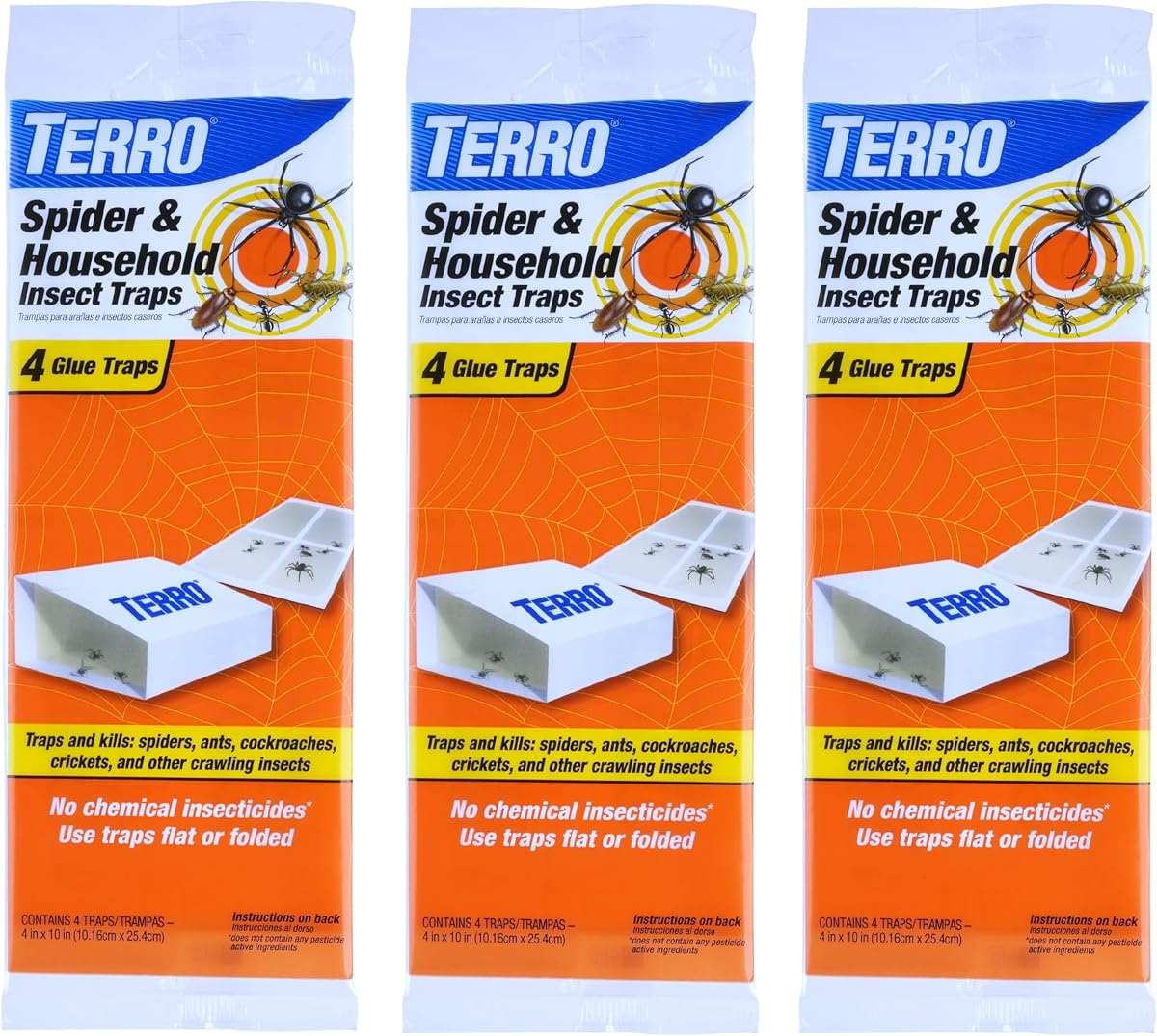
The TERRO T3206SR is a 12-pack of indoor traps designed for spiders, ants, cockroaches, centipedes, and other crawling insects. Its 4.2 rating and non-toxic positioning make it a useful general pest-control accessory, but it is important to recognize that this is not a subterranean termite trap. It belongs in the guide because it illustrates the difference between indoor sticky traps and outdoor termite monitoring systems.
We may earn a commission when you buy through this link, at no additional cost to you.
The traps can be used flat for a larger catch area or folded to conceal captured insects from view. The supplied information recommends placing them along baseboards and under furniture and appliances, as well as in kitchens, pantries, bathrooms, and basements. That flexibility allows one box to cover several rooms and several common crawling-pest locations.
The main drawback is category mismatch. The product contains no wood food source, inspection cartridge, bait, or termite-specific ground station, so it should not be evaluated as a way to detect or control subterranean termites. Its strength is instead broad, low-fuss indoor coverage, particularly where spray application is undesirable.
This product is best for households also dealing with ordinary indoor crawling insects and wanting an easy multi-room setup. It should not be one of the primary choices for a buyer specifically shopping for termite traps. For termites, look for an outdoor monitoring station or an integrated stake, while using this product only as a separate household pest-control tool.
Using the traps flat increases the exposed catch area, while folding them can make the station less conspicuous. That choice lets a household prioritize visibility, convenience, or a more discreet appearance in frequently used rooms.
With 12 traps arranged as four per package set, users can spread the product through more than one area. Placement under furniture and appliances is especially relevant for pests that travel along edges and hidden floor-level routes.
We may earn a commission when you buy through this link, at no additional cost to you.
The 1 Pack Aluminum Access Tool is the highest-rated accessory in this list at 4.7, earning strong attention among users who maintain multiple Termi-te bait stations. It is designed to open station lids more easily by engaging the locking pads and turning them counterclockwise, reducing the need to improvise with a flathead screwdriver.
We may earn a commission when you buy through this link, at no additional cost to you.
Its most practical benefit appears during bulk work. A property professional checking numerous stations can repeat the same motion more efficiently, while a homeowner can handle a sealed or stubborn lid with a purpose-built tool. The aluminum body is described as resistant to deformation and adaptable to varying environmental conditions.
Compatibility is the key caveat. The listing states that the tool is compatible with some Termi-te bait station traps rather than every station on the market. It also provides handling guidance: wash hands, wear clean gloves, and use tweezers or similar tools when changing placements because the bait system is sensitive to odors.
This is a worthwhile buy for someone who already owns compatible stations and regards routine inspection as a regular task. It is not a trap, bait package, or standalone monitoring solution, and a first-time buyer may need to establish a station system before the tool becomes useful. Verify the station type and locking design before ordering.
The tool's internal protruding blocks interact with the station's locking ring. This focused design is more convenient than forcing a general-purpose tool into a tight fitting, particularly when repeated checks are planned.
Regular inspections depend on being able to access the station without disrupting its components. A dedicated opener supports that workflow and is especially useful for users responsible for multiple units around a property.
We may earn a commission when you buy through this link, at no additional cost to you.
The 6 Pcs Termite Bait Station Monitoring Wood Replacement Insert set is a refill-oriented product for use around monitoring stations. Its 2.5 rating indicates mixed feedback, and the supplied listing contains an important ambiguity: the title refers to six pieces, while the feature description says the set includes 20 inserts with dimensions of 2.75 inches in diameter and 3 inches in height.
We may earn a commission when you buy through this link, at no additional cost to you.
Its core material is naturally sourced wood without chemical lures. The inserts are designed to support monitoring by attracting termites naturally, and their gaps are described as aligning with feeding behavior. The product is also said to remain stable in moist soil, which is relevant for subterranean stations exposed to changing ground conditions.
Compatibility language is broad rather than tied to a named station system. The inserts are described as compatible with standard termite monitoring systems, so buyers should measure their existing stations and check the shape before ordering. The quantity discrepancy and lower rating also make it particularly important to read the current listing carefully rather than assuming the headline count applies.
This product makes sense for maintaining a compatible station that already uses wooden bases. It is not suitable as a standalone setup because the outer housing, lid, and other station components may be missing. The recommendation is therefore conditional: verify dimensions, count, and fit first, then use these inserts for regular replacement or expansion of a matching monitoring system.
Using wood without chemical lures provides a monitoring approach based on natural feeding behavior. That can be attractive to property owners who want to monitor activity without adding an attractant to the insert itself.
The listed construction is intended to remain stable in moist soil. That characteristic supports use in subterranean settings where inserts can be exposed to rain, irrigation, and fluctuating moisture levels.
We may earn a commission when you buy through this link, at no additional cost to you.
The 20 Pcs Termite Bait Station Refill Wood Insert product is intended for replenishing wood components in compatible subterranean termite monitoring systems. It has a 2.5 rating, matching the similarly described insert set in sixth place. Buyers may appreciate the stated 20-piece quantity for a broad inspection or replacement program, but should consider the limited feedback and verify compatibility before buying.
We may earn a commission when you buy through this link, at no additional cost to you.
The insert dimensions are listed as 2.75 inches in diameter and 3 inches in height. Each is made from naturally sourced wood without chemical lures and is designed with gaps intended to align with termite feeding behavior. The product is described as suitable for residential properties, gardens, and commercial buildings, with stability in moist soil cited as another benefit.
This is a maintenance component rather than a complete trap. It does not include an outer station, a lid, an inspection cartridge, or termiticide, and the supplied information does not identify one specific station brand. A buyer whose stations use a different insert size or closure may find that these blocks do not fit properly.
The product is best recommended for existing owners of standard monitoring stations who need a bulk supply of replacement wooden bases. It is not the first choice for someone setting up a complete termite monitoring system from scratch. Check measurements, the current station design, and the expected insert count before ordering.
A 20-piece format can simplify maintenance for a user with several stations or a frequent replacement cycle. It reduces the need to reorder small quantities of similar consumables and gives a pest professional a useful supply for recurring inspections.
The gaps in each insert are intended to reflect termite feeding behavior. Combined with wood that contains no chemical lure, this creates a simple food-source approach for monitoring applications.
We may earn a commission when you buy through this link, at no additional cost to you.
The Termi-te Bait Station Cap Replacement pack contains five black covers designed specifically for Advance Termi-te bait stations. It carries a 5.0 rating, the highest listed rating in the guide, and it addresses a specific but important failure point: a station that can no longer protect its bait and internal components because its cover is broken, missing, or damaged.
We may earn a commission when you buy through this link, at no additional cost to you.
The cap is described as forming a tight seal over the top of the station. Its material is presented as sturdy, durable, and able to withstand harsh weather. The installation instructions call for placing the cover over the cartridge, pressing it down, and using the quick-lock process to secure or replace the old cover.
Compatibility remains the main constraint. This is not a universal lid, and the listing indicates use with Advance Termi-te stations and some parts of the related bait system. Buyers should compare the shape, fit, and locking ring with the damaged lid before ordering, particularly when their stations have been modified or came from an older version.
This is a strong recommendation for owners of compatible Advance stations with damaged covers. It is a targeted repair and maintenance product, not a way to monitor termites or eliminate an infestation. Confirm compatibility, inspect the lower station and cartridge for damage, and replace a compromised cover promptly to restore protection from the outdoor environment.
A secure cover isolates the station's bait and gear from outside conditions. Replacing a cracked cap can restore that barrier and protect components that would otherwise be exposed to rain and other weather-related wear.
The five-cover format suits a household with several compatible stations or a professional maintaining multiple properties. It also leaves spare parts available when a cover is lost, damaged, or difficult to remove during routine service.
We may earn a commission when you buy through this link, at no additional cost to you.
The BB PRO Carpenter Bee Traps kit is a 200-count exterior hardware pack centered on stainless steel mesh plugs for blocking carpenter bee entry holes in wood. With a 4.5 rating, it stands out for high-volume property maintenance, but its target pest and physical mechanism are different from those of a subterranean termite monitoring station.
We may earn a commission when you buy through this link, at no additional cost to you.
The plugs are described as a rust-proof, chew-resistant alternative to temporary steel wool, putty, silicone, or expanding foam. They can serve as a physical barrier on their own or act as a final cover after liquid, spray, or powder treatment. The included installation tool and extension pole adapter are intended to improve access and reduce the need to work from a ladder.
Despite the title's broad reference to termite damage, the product is explicitly positioned as a carpenter bee deterrent and hole-filling system. It should not be presented as a subterranean termite trap or as a way to detect termites. Its effectiveness also depends on obtaining a friction fit in the actual entry holes, so hole dimensions and construction should be checked before a large-scale installation.
This product is well suited to property managers, contractors, and homeowners who need many exterior repair plugs and want a rust-resistant, ladder-free option for carpenter bee holes. It is not the right purchase for someone whose primary objective is underground termite detection. Use it for its intended structural protection purpose and keep termite monitoring separate.
The use of 304 stainless steel mesh is intended to resist rust and leave no orange staining on exterior wood. This addresses a common weakness of temporary metal fillers that deteriorate after repeated weather exposure.
The included installation tool and extension pole adapter can make a high exterior task more manageable. The goal is to achieve a secure friction fit without climbing a ladder, improving convenience and reducing fall risk.
We may earn a commission when you buy through this link, at no additional cost to you.
The Advance Termi-te Bait Station Access Tool is a hand tool designed to grip and open sealed quick-lock caps, making routine inspections and bait replenishment easier. Its 4.4 rating and ergonomic design make it a strong premium accessory for people who already maintain compatible Termi-te stations and want a more controlled way to access them.
We may earn a commission when you buy through this link, at no additional cost to you.
The tool is described as compatible with most bait stations, although the product title specifically references Advance Termi-te lids. It holds the cover while the station is open and uses a simple wrist turn to release the cap. This can make the difference between a smooth inspection and an awkward attempt to manipulate a tightly sealed station with an unsuitable implement.
As the listing notes, the bait stations are well sealed and difficult to open, which explains the value of a dedicated accessory. The high-quality material, comfortable grip, and resistance to deformation and weather support repeated use. Nevertheless, the tool cannot improve monitoring results by itself and is not a substitute for checking stations on a consistent schedule.
This is a recommended purchase for a homeowner or pest professional already invested in the Advance station system. It is less useful to a first-time buyer who does not own stations, and buyers should verify the cap style before use. As with handling any bait system, follow the manufacturer's hygiene and inspection procedures and avoid disturbing unnecessarily.
The tool grips the cap while the quick-lock mechanism is released, giving the user better control than working with a loose lid. That control can make the inspection process faster and reduce the chance of awkwardly handling a sealed cover.
A station cannot be checked properly if its cover is difficult to remove. The quick-turn access simplifies opening the unit, making it easier to inspect bait and replenish it before depletion becomes an issue.
We may earn a commission when you buy through this link, at no additional cost to you.
The right termite trap depends on whether you need detection, treatment, station maintenance, or protection against a different wood-boring insect. Start by identifying the station system you own and the role the new product must perform.
A monitoring station is primarily designed to reveal whether termites are feeding at a particular location. It may contain a wood food source, an inspection cartridge, or another removable component that makes activity easier to identify. Active treatment products, such as the Spectracide stakes in first place, are described as both detecting activity and killing foraging termites. Replacement inserts and wooden bases generally belong to the monitoring category because they renew the food source rather than provide a complete treatment system.
Compatibility is the factor most likely to determine whether a replacement part or tool will work. The Trelona-compatible stations accept specified attractants, while the access tools and replacement lids reference Advance or Termi-te formats. The wooden insert listings mention standard systems without naming one exact brand, so buyers should compare diameter, height, closure style, and internal shape. A visually similar station may still use a different insert or locking mechanism, and forcing a mismatched part can damage the station.
Different stations reveal activity in different ways. A pop-up indicator can be seen without opening the device, while a cartridge may require inspection of the station's internal components. Key-free construction may reduce disturbance when termites are present, which is useful if treatment has not yet begun. Consider how often you expect to inspect the system and choose a format that makes the required action easy to perform and interpret.
For underground stations, placement can influence whether the monitoring program is useful. The Advance station is specified ten to 15 feet apart and two to three feet from the foundation, while the Spectracide stakes call for no more than 10 feet apart and the same approximate distance from the home. Other stations are suitable for wooden structures, gardens, farms, and dams. Match spacing to the station instructions and avoid placing devices where they will be regularly crushed, uncovered, or exposed to unnecessary foot traffic.
Outdoor monitoring equipment is exposed to rain, soil moisture, temperature changes, and physical wear. The Trelona-compatible stations are described as moisture-proof, the wood inserts are intended to remain stable in moist soil, and the Advance replacement lids are designed to withstand harsh weather. Durability matters because a cracked lid or weakened insert can compromise the protection or monitoring function it is supposed to support.
A monitoring system is only as useful as its inspection routine. Sealed stations can be difficult to open, which is why the two access tools in this guide are valuable. A tool that grips the lid can simplify regular checks and timely bait replenishment. Before buying an accessory, imagine the full workflow: locating every station, opening it without disruption, inspecting the interior, replacing the bait or insert, and closing the unit correctly.
The number of devices needed depends on the dimensions of the property and the guidance for the selected station. A single Advance station may be enough for a targeted placement or replacement, while a six-pack is more practical for distributing monitors around several structures. The BB PRO pack contains 200 exterior plugs for a different, high-volume hole-blocking task. Match quantity to the job rather than assuming a larger pack is automatically appropriate for termite monitoring.
Termites, carpenter bees, ants, spiders, and cockroaches require different tools. The BB PRO product blocks carpenter bee entry holes and is not a subterranean termite monitor. The TERRO traps target indoor crawling insects and likewise do not monitor underground termites. Always read the target-pest description rather than relying on a broad title that mentions wood damage, bait, or traps.
Begin by reading the instructions for the exact station and any attractant, bait, insert, or replacement part being used. Confirm compatibility, inspect the station for damage, and establish the recommended spacing before installation. Underground monitors should be placed in suitable soil at the distance and intervals stated by the manufacturer, with location flags or shields used to make each station easier to find again.
Create a consistent inspection routine. Open stations gently, look for activity without unnecessary disturbance, and document what you find. If a pop-up indicator appears, note the station's location and arrange the appropriate next response. When replenishing bait or replacing a wood insert, follow the product's hygiene guidance, including washing hands and wearing clean gloves, because odors and disturbance can compromise monitoring or treatment effectiveness.
After each inspection, make sure lids are seated, locking rings are engaged, and the station is stable in the ground. Replace cracked covers, worn inserts, and corroded or loose components promptly. Keep a simple service log with station locations, installation dates, inspection dates, observed activity, and maintenance performed. This record helps you spot changes over time and gives a pest professional useful information if professional treatment becomes necessary.
It depends on the product. The Spectracide Terminate replacement stakes are described as detecting activity and killing foraging termites, while the Advance monitor, Trelona-compatible stations, and wooden inserts are presented as monitoring products. Always read the current listing to see whether a termiticide, bait, or attractant is included.
No. The wood inserts are replacement components for compatible monitoring systems and do not include every exterior housing component. They also contain no chemical lures or termiticide, so they should be used with a complete station that fits their stated dimensions.
Spacing depends on the station model. The Advance Termite Monitor Bait Station is designed to be placed ten to 15 feet apart and two to three feet from the foundation, while the Spectracide stakes use no more than 10 feet apart. Follow the instructions supplied with the model you own rather than combining the figures.
Possibly, but compatibility should be confirmed before relying on it. The tools claim compatibility with most or some Termi-te and Advance stations, yet the locking ring and cap design may vary. Compare the tool's engagement points with the station lid and test it gently on a compatible unit first.
No. The BB PRO product is a physical exterior barrier for carpenter bee entry holes. Its mesh plugs can protect wood or cover a treated hole, but they do not detect subterranean termite activity and should not be used as termite monitoring stations.
Inspection frequency should follow the station manufacturer's guidance and the level of risk around the property. A regular schedule is more useful than infrequent checks, particularly during warm periods when termite activity may increase. Record each inspection and act promptly if a visible indicator appears or the station shows activity.
Avoid unnecessary disruption, note the affected station's location, and contact a qualified pest professional if you are not experienced in termite identification and treatment. A visible signal or damaged insert does not by itself establish the extent of the infestation, which is why professional assessment can prevent unnecessary treatment or missed problems.
No. They support maintenance by protecting station components and making inspection easier, but they do not contain bait or termiticide. Effective control requires an appropriate monitoring or treatment strategy selected according to the property, the activity found, and the station system in use.
The strongest overall choice is the Spectracide Terminate replacement stake because it combines a pop-up detection signal with an advertised ability to kill foraging termites. The Advance Termite Monitor Bait Station is the best budget-oriented monitoring pick, while the Advance Termi-te access tool is the most practical premium maintenance accessory for owners of a compatible station network.
Prioritize compatibility before any other feature. A perfectly designed tool, lid, or insert is not useful if it does not fit the station already installed. Next, decide whether the main need is detection, treatment, refilling, or easier inspection, and select the product category that directly performs that role. Proper placement and regular maintenance are just as important as the hardware itself.
Finally, check the current listing before purchase because included quantities, package configurations, compatibility descriptions, and prices can change. A product title alone is not enough to confirm what is in the box or whether it is appropriate for your property. Use the guide to narrow the field, then verify the latest instructions and contents on the retailer's page.