
MAIYUM 0.8mm 50g Solder Wire
4.6Editor score
0.8mm rosin-core wire
63/37 tin-lead alloy
50g pocket-friendly spool
Soldering is one of the most important skills for maintaining RC cars, trucks, boats, drones, and other hobby electronics. Good solder makes secure connections, but the best choice depends on wire diameter, alloy, joint size, project type, and the experience of the person doing the work.
This guide compares ten solder-related products for RC electronics, including rosin-core wire, lead-free wire, temperature-controlled iron kits, organized work mats, and practice kits for surface-mount components. The evaluation focuses on documented specifications, practical application, included accessories, suitability for beginners, and relevance to RC work.
Each pick highlights a different part of the soldering process, from choosing consumables to building skills and organizing a bench. Ratings and specifications reflect the supplied product information, while current prices and availability can change, so readers should verify the latest listing before purchasing.
4.6Editor score

4.8Editor score

4.8Editor score
As an Amazon Associate we earn from qualifying purchases.
The comparison below covers ten products spanning solder wire, soldering tools, work surfaces, and training kits, with particular attention to the materials, dimensions, features, and project applications most relevant to RC electronics work.

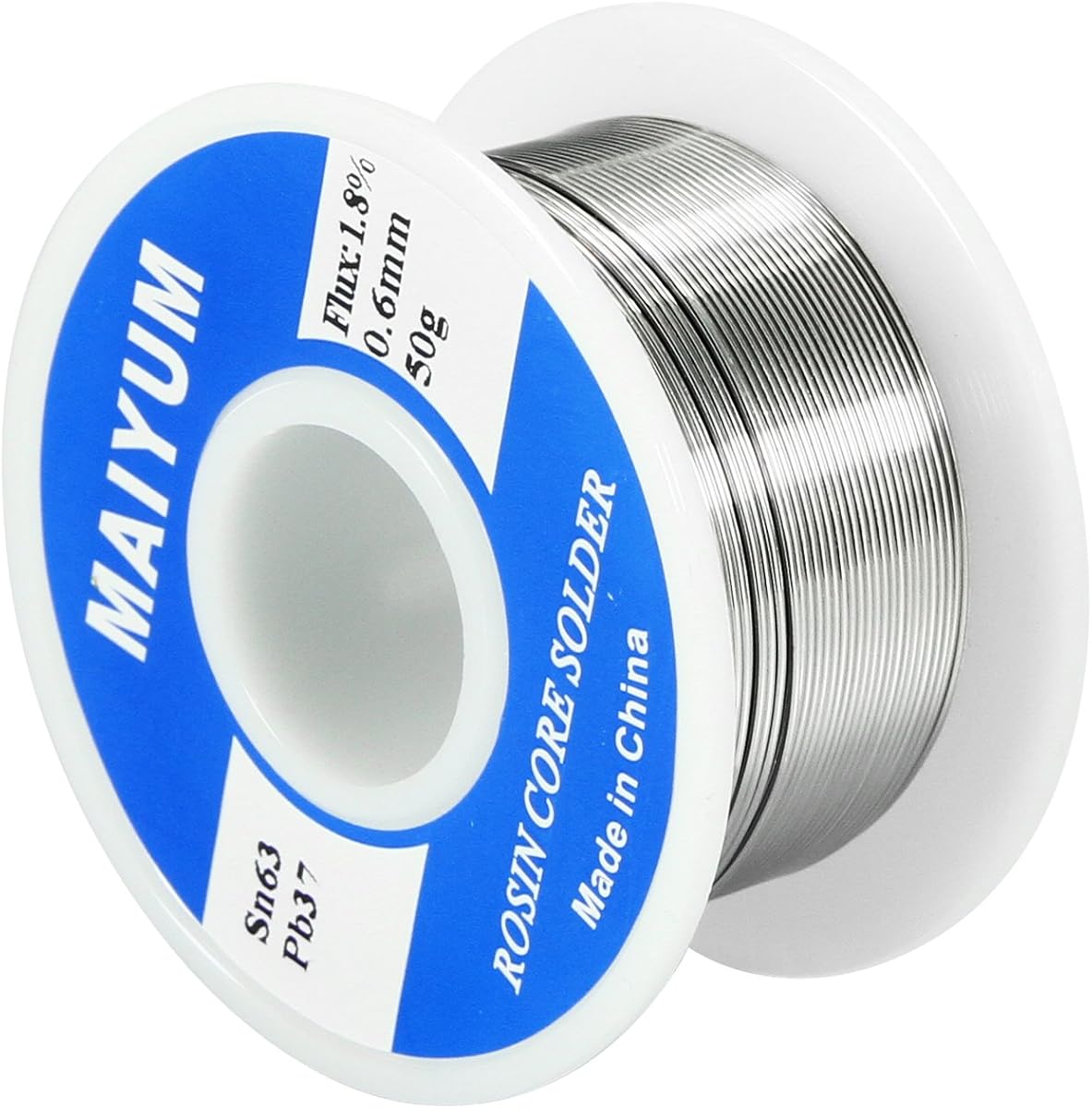


The MAIYUM 63-37 rosin-core solder wire combines 0.8mm wire, a 50g spool, and a tin-lead alloy in a simple consumable package for electronics repair. Its 4.6 rating reflects a broadly favorable customer history, while the documented 361°F melting point makes this an accessible option for hobbyists working with RC circuit boards, cables, and other electrical devices.
We may earn a commission when you buy through this link, at no additional cost to you.
The 0.8mm diameter gives users a practical balance for common solder joints without moving into extremely fine work. The stated 1.8% rosin-core flux is designed to support clean flow, and the manufacturer describes the wire as easy to solder, fast-flowing, and capable of producing strong solder points. Those characteristics make it relevant to replacing connectors, repairing wiring, and working on RC electronics assemblies.
The main compromise is safety. This is a tin-lead solder, and its listing includes a Proposition 65 warning concerning exposure to lead and reproductive harm. It also does not address the wider bench setup: no iron, stand, tips, or cleaning sponge is included. Users still need suitable soldering equipment and responsible handling, ventilation, handwashing, and storage procedures.
Despite those caveats, this is a strong first choice for RC hobbyists who need dependable general-purpose solder rather than a full kit. Choose it when you work with moderately sized pads and wires, value a clearly specified alloy, and want enough material for repeated repairs without a large spool. For beginners, pair it with a temperature-controlled iron and a safe, organized work area.
At 0.8mm, the wire is suited to typical electrical connections and circuit-board repair rather than highly specialized micro work. Its stated diameter also makes the amount of solder easier to control than a thicker feed when repairing loose or disconnected leads.
The rosin core supplies flux directly as the wire melts, reducing the need to treat every joint separately. That convenience is useful for quick RC maintenance sessions, although residue still needs appropriate cleaning and inspection.
We may earn a commission when you buy through this link, at no additional cost to you.
This three-pack of 0.6mm 63/37 solder wire offers a more granular approach to RC repairs, with each spool containing 27g. The 4.5 rating supports its position as a practical option for electronics work, and the documented 361°F melting point is consistent with straightforward joining of common electrical components.
We may earn a commission when you buy through this link, at no additional cost to you.
The finer 0.6mm diameter can be especially useful around small pads, tight leads, and densely populated boards. A three-spool format also gives hobbyists flexibility: one can remain at the bench while others are kept with different tools or in separate workspaces. The rosin-core formula is described as low-residue, which is beneficial when the goal is a cleaner board after rework.
As with the other tin-lead products in this guide, safety is a meaningful drawback. The manufacturer warns that the solder contains lead. The three-pack format also offers less wire per spool than a standard 50g or 100g product, so users doing frequent repairs may need more than one pack over time. No soldering iron or temperature recommendations are included.
This product is a good match for RC builders who perform detailed electronic repairs, work on smaller components, and appreciate having several spools available. It is less compelling for someone who expects to consume large amounts of wire in general electrical work. Verify that the selected iron and tip can produce a reliable joint with this diameter before starting a repair.
The 0.6mm diameter is easier to place around compact RC electronics than a heavier wire. It can also melt into a joint more quickly, so control of the iron temperature and feed rate becomes particularly important.
Keeping more than one spool lets hobbyists divide supplies by project, technique, or location. The format is convenient for workshops and classrooms, but the smaller 27g quantity makes careful inventory management important.
We may earn a commission when you buy through this link, at no additional cost to you.
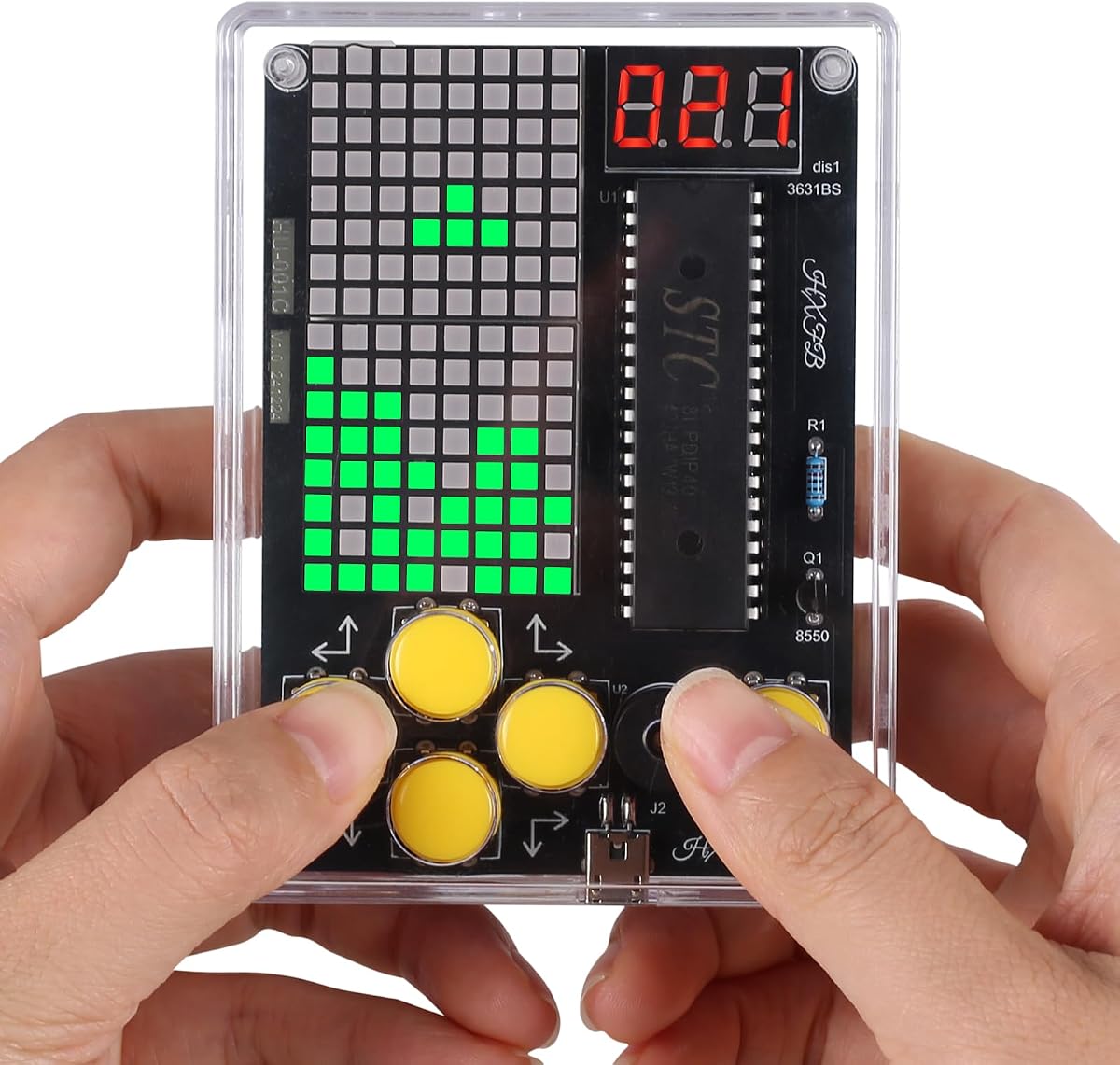
The PEMENOL 7-in-1 DIY Game Soldering Kit is a structured electronics project rather than a conventional spool of consumable solder. It carries a 4.1 rating and is built around assembling real components, soldering them, and then exploring seven interactive functions after the project is complete.
We may earn a commission when you buy through this link, at no additional cost to you.
Three difficulty levels let users progress from basic soldering and component placement toward more involved assembly. The included color-printed manual and video guidance are valuable for beginners who may not yet know how to interpret component placement. The finished project gives learners a functional result, which can make repeated practice more engaging than isolated drills.
This is not a dedicated RC soldering kit, and the supplied information does not indicate that a soldering iron is included. A learner will therefore need compatible equipment in addition to the kit. Its 4.1 rating also places it below the higher-rated wire and tool products, so it is best viewed as a training solution rather than the core solder supply for an RC bench.
The kit is a strong option for teens, adults, students, and workshop participants who want guided practice before tackling live RC electronics. Its structured instructions and progressive levels make it especially useful for building confidence with placement, soldering, and testing. For an RC hobbyist focused on immediate vehicle repair, a spool of solder and a suitable iron would be more direct.
Three documented difficulty levels help users choose an appropriate starting point. This is valuable for beginners because each stage can reinforce component identification, placement, and soldering before moving to a more complex assembly.
Seven interactive functions give the project a clear endpoint. That combination of assembly and operation can help learners connect the physical soldering process with a working electronic system.
We may earn a commission when you buy through this link, at no additional cost to you.
The MAIYUM 0.6mm 50g solder wire offers a fine-diameter option for RC hobbyists working on smaller connections. It has a 4.6 rating, uses a documented 63/37 tin-lead alloy with 1.8% rosin-core flux, and melts at 361°F according to the product information.
We may earn a commission when you buy through this link, at no additional cost to you.
The 0.6mm wire can deliver solder more precisely to compact pads and narrow leads than a heavier gauge. It remains versatile enough for circuit boards, cables, TVs, radios, toys, and general electrical repairs, making it a sensible wire choice for hobbyists whose projects range from small RC electronics to household repairs.
The principal limitation is the same lead-related concern carried by the other 63/37 wires in the guide. Users need to account for safe handling, ventilation, washing, and responsible disposal. The product also provides only the wire, so it does not help with tip selection, joint preparation, or workspace organization.
Compared with the 0.8mm MAIYUM option, this pick is better suited to precision placement and smaller components. It is a particularly practical choice for users who have discovered that thicker wire is awkward around miniature RC electronics. Buying one or both gauges can give a hobbyist more flexibility as joint sizes change.
A 0.6mm feed can reduce excess material around tight pads. This helps when replacing small connectors or working near closely grouped components where a large amount of solder would be difficult to manage.
The 50g quantity is practical for regular maintenance and portable use. It also reduces the commitment involved when a hobbyist is building a new bench and is still determining which wire gauge becomes the primary choice.
We may earn a commission when you buy through this link, at no additional cost to you.
The STREBITO Soldering Mat is a premium bench accessory designed to improve organization and heat protection during electronics work. Its 4.8 rating is among the strongest in the guide, and its large 21.65 by 15.75-inch surface provides a dedicated area for PCB repair, small components, screws, and tools.
We may earn a commission when you buy through this link, at no additional cost to you.
The silicone construction is documented to withstand temperatures up to 932°F while helping shield the workbench from heat. Seventeen accessory zones, 133 compartments, ten screwdriver slots, one tool zone, and three magnetic areas give RC builders a systematic place to keep tiny parts. Raised edges help prevent components from rolling away during reassembly.
This mat is not an anti-static mat and does not prevent static discharge. The manufacturer recommends allowing it to dissipate static and pairing it with an anti-static wrist strap for ESD-sensitive requirements. It also contains no solder, iron, or tips, so its value depends on what else is already part of the workstation.
For hobbyists who routinely open RC vehicles, replace receivers, reconnect ESC wiring, or sort tiny screws, this is a highly useful upgrade. It reduces bench clutter and creates a safer surface for hot tools. The 4.8 rating and extensive organization system make it our premium pick, even though it is a supporting accessory rather than the solder itself.
Tiny screws, connectors, and components can disappear or be installed in the wrong position during an RC repair. Dedicated compartments and magnetic sections make it easier to maintain order while the project moves from soldering to testing.
The documented 932°F heat resistance provides a surface intended to withstand demanding soldering activity. The soft, elastic silicone also offers a non-scratch layer between hot tools and the underlying workbench.
We may earn a commission when you buy through this link, at no additional cost to you.
The Plusivo 60W digital soldering kit combines a temperature-controlled iron, five replaceable tips, solder wire, and more than 15 additional accessories. Its 4.8 rating reflects a highly attractive general-purpose package, while the LED display and adjustable 200-500°C range make it particularly relevant for RC repair work involving different component sizes.
We may earn a commission when you buy through this link, at no additional cost to you.
The iron is described as heating quickly and using a ceramic heating element, four ventilation holes, and a heat-resistant silicone grip. Five tips provide flexibility for everything from small electronics to broader repair work. Accessories include a desoldering pump, tweezers, stand, sponge, mini wire stripper, mini screwdrivers, a mini PCB, and heat-shrink tubes.
The kit is centered on a 120V US plug, so buyers in other electrical regions should verify compatibility before ordering. A digital display provides visibility, but the listed accessory count does not replace the need to match tip shape and temperature to each joint. Users must also observe appropriate ventilation and lead-safety practices when using the included SnPb wire.
This is our Editor's Choice because it covers the broadest range of needs for someone building a functional RC soldering station. It combines consumables, tip options, rework tools, and a stand in one organized package. New hobbyists can use it for ordinary board and wire repairs, while experienced builders can value the adjustable temperature and interchangeable tips.
The digital display lets the operator read the selected temperature directly. That visibility is useful when moving between a larger wire connection and a smaller surface-mount component rather than using one fixed setting for every repair.
A stand, sponge, desoldering pump, tweezers, wire stripper, screwdrivers, solder, and heat-shrink tubes cover common supporting tasks. This makes the package especially convenient for hobbyists assembling a first electronics workspace.
We may earn a commission when you buy through this link, at no additional cost to you.
The EGSCST two-pack is designed for practicing surface-mount soldering rather than completing an RC repair. It has a 4.1 rating and includes two complete practice kits, allowing beginners to repeat the same assembly process and then make a second attempt with more confidence.
We may earn a commission when you buy through this link, at no additional cost to you.
Each board provides a varied selection of SMD components, including 0805 and 0603 parts, diodes, transistors, and IC chips. Clearly labeled green PCB footprints help users identify where each component belongs, while the range of parts introduces the placement challenges found in real electronic assemblies.
The kit does not include a soldering iron, and it is not an RC-specific project. The value lies in deliberate repetition: a user can practice soldering different package styles without risking an expensive receiver, ESC, or other live component. As with any electronics project, appropriate tools, ventilation, and careful component orientation remain the user's responsibility.
For an RC enthusiast who wants to improve fine-pad soldering, this is a focused training purchase. It is best used before repairing small onboard components or attempting rework on a production PCB. The two-pack format also makes it useful for workshops, study groups, or a parent and child learning together.
A second board lets a learner approach the same placement and soldering tasks with improved understanding. That repetition is valuable because the first attempt can focus on learning while the second can focus on consistency and joint quality.
0805 parts, 0603 parts, diodes, transistors, and IC chips create a more meaningful challenge than soldering large through-hole components. This makes the boards useful preparation for smaller modern electronics assemblies.
We may earn a commission when you buy through this link, at no additional cost to you.
The MAIYUM 0.8mm 100g spool is a higher-volume version of a well-specified general-purpose solder wire. It carries a 4.6 rating and uses a 63/37 tin-lead alloy, 1.8% rosin-core flux, and a documented 361°F melting point.
We may earn a commission when you buy through this link, at no additional cost to you.
The doubled 100g quantity makes this option attractive to builders who repair regularly, maintain several RC vehicles, or expect to use wire across multiple kinds of electronics. At 0.8mm, it remains suitable for common circuit boards, cable repairs, and hobby electrical projects rather than being restricted to one specific joint size.
Lead content remains the primary safety consideration. The listing explicitly warns about potential exposure, so users should follow safe workshop practices and keep the spool away from children or unintended use. The larger spool also takes more space than the 50g format, which may be inconvenient for a portable kit or an occasional repair kit.
For an active hobbyist who has already established that 0.8mm suits their work, the 100g spool is a logical supply choice. It reduces the need to replace consumables frequently while preserving the same core alloy and diameter as the smaller option. A new beginner may find the 50g version more economical until a preferred gauge and frequency of use are known.
A 100g spool suits users who expect repeated work across several projects. The larger quantity is particularly useful for a shared hobby bench where a smaller spool would be consumed quickly.
Using the same 63/37 alloy and 0.8mm diameter as the smaller MAIYUM option can make technique easier to maintain. Staying with one known wire type is helpful while learning how much heat and feed each joint requires.
We may earn a commission when you buy through this link, at no additional cost to you.
The MAIYUM 0.6mm 100g solder wire combines a fine wire diameter with a larger spool, making it suitable for hobbyists who repeatedly service compact electronics. It has a 4.6 rating and documents a 63/37 tin-lead alloy, 1.8% rosin-core flux, and a 361°F melting point.
We may earn a commission when you buy through this link, at no additional cost to you.
The 0.6mm feed is appropriate for smaller pads and leads where precise placement matters. The 100g quantity reduces refill frequency for users who already know that fine wire works well for their boards. Potential applications include RC circuit repairs, cable work, radios, toys, and other electrical devices.
Fine wire can melt quickly, so a stable and appropriately controlled iron temperature is important. Like the other tin-lead options, it requires attention to safety because the manufacturer includes a warning about lead exposure. The product also includes no desoldering aid, stand, tip, or mat, so it is a consumable rather than a complete repair solution.
This is a strong choice for RC specialists, experienced hobbyists, and technicians who want a substantial supply of fine solder. It also serves as a logical companion to a 0.8mm spool, allowing the user to match wire gauge to the joint instead of forcing one gauge for every task.
The 0.6mm wire can be placed with greater precision around small component pads. That makes it useful when an RC receiver, ESC, or similar assembly contains small terminals or closely spaced connections.
The 100g spool is useful for users who have already selected fine wire as their standard. Keeping a larger quantity on the bench minimizes interruptions caused by running out during a multi-stage electronics project.
We may earn a commission when you buy through this link, at no additional cost to you.
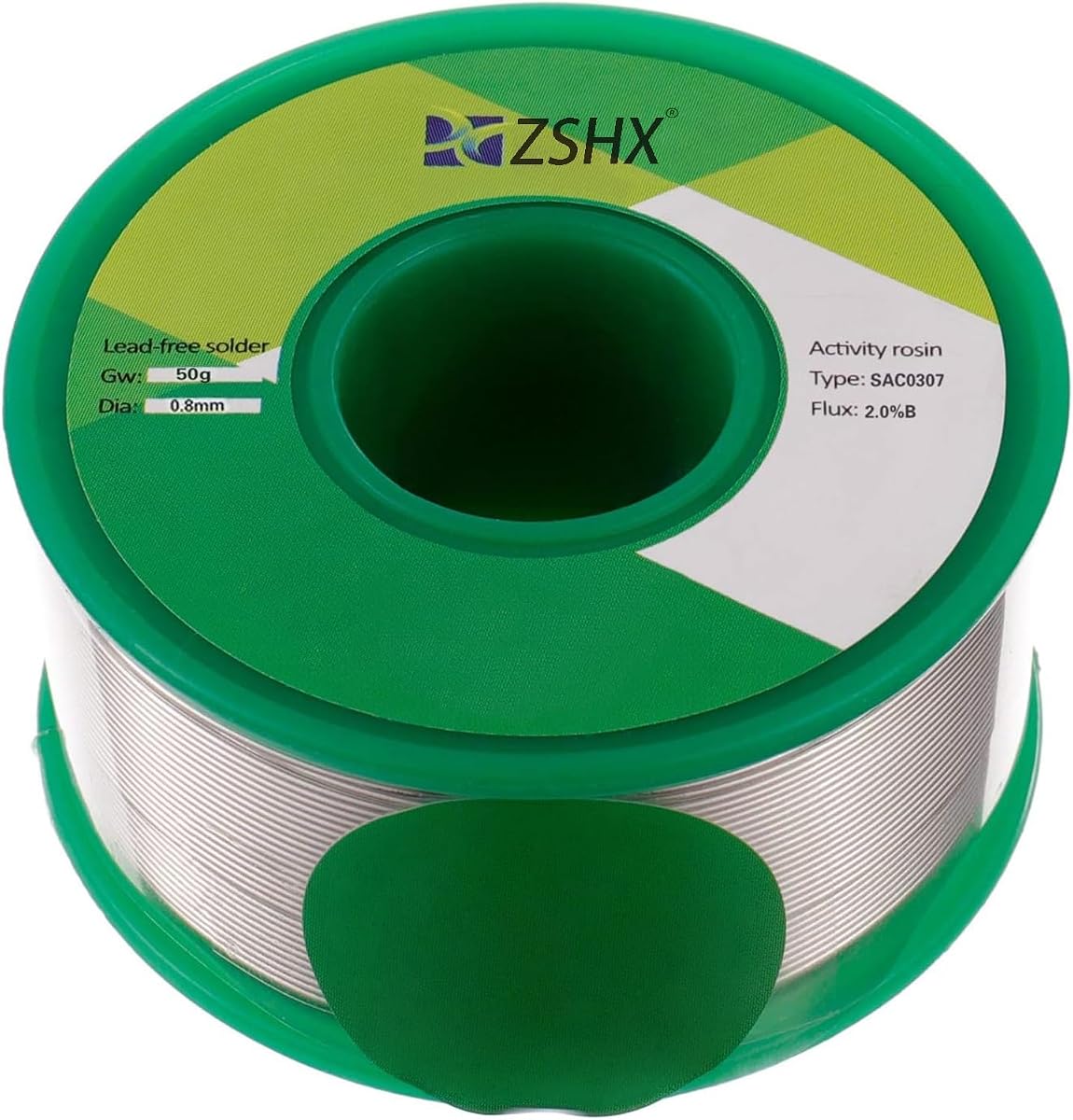
The ZSHX lead-free solder wire provides a 0.8mm rosin-core option for RC hobbyists who prefer to avoid a lead-containing alloy. It has a 4.6 rating and uses a documented Sn99-Ag0.3-Cu0.7 composition with 2% flux content.
We may earn a commission when you buy through this link, at no additional cost to you.
The stated melting point is 217°C, or 422.6°F, higher than the 183°C melting point of the 63/37 products in this guide. That distinction matters because a lead-free solder generally needs a hotter working setup and more care to achieve smooth flow. The 0.8mm diameter remains familiar and is suitable for common electrical soldering applications.
The 50g quantity is compact, making this a practical starting supply. However, the listing does not provide specific temperature or tip recommendations, so users must establish suitable settings through careful practice. Lead-free material also does not remove the need for ventilation, fume awareness, or safe cleanup because heated solder fumes and residue still require appropriate handling.
This is the best lead-free pick in the guide for users who specifically want a solder consumable without lead. It suits general RC wire and board work, provided the operator is prepared for the higher operating temperature. A dedicated training board can be useful for refining the technique before using lead-free wire on a critical RC component.
The Sn99-Ag0.3-Cu0.7 composition provides a lead-free alternative for electronics hobbyists. It is especially relevant to users who want to avoid handling a lead-containing solder alloy at their RC bench.
With a stated melting point of 217°C, the wire requires more heat than the 63/37 alternatives. Users should select a capable iron, begin with a lower practical setting, and avoid leaving the tip against a small component for too long.
We may earn a commission when you buy through this link, at no additional cost to you.
Choosing solder for RC projects means balancing alloy safety, wire diameter, joint size, equipment requirements, and the type of repair or training involved. The right consumable also depends on whether the user needs general wiring support, fine board work, a complete toolkit, or a better-organized bench.
The two main alloy choices in this guide are 63/37 tin-lead and Sn99-Ag0.3-Cu0.7 lead-free solder. The tin-lead option has a documented lower melting point of 183°C, which can make it easier to work with, while the lead-free alloy melts at 217°C and generally demands more heat. Lead-free choices may suit users who wish to avoid a lead-containing material, but the higher temperature means the iron, tip, and technique must be capable of producing a good joint.
Choose the alloy that fits your safety preferences and equipment, then give it time to become familiar. Switching alloys often changes the heat, feed rate, and tip choice required for a smooth result.
Wire diameter affects how much solder enters the joint and how easily the user can control the connection. The 0.8mm options are general-purpose choices for common wires, cables, and circuit-board repairs, while 0.6mm wire gives hobbyists finer placement around smaller pads and narrow leads. Very large connections may need a heavier feed than either option, while delicate assemblies can be difficult to flood with thicker wire.
Smaller is not automatically better, because a very fine wire can also demand more careful heat control. Select the gauge that matches the work, and keep both 0.6mm and 0.8mm available if you regularly service different RC components.
All of the standalone wire products reviewed here use a rosin core, which supplies flux as the solder melts. That makes them convenient for common board and wire repairs because the user does not have to apply separate flux to every joint. The products also describe low residue or specify a flux content of 1.8% or 2%, but actual board appearance can vary with temperature, iron cleanliness, and joint size.
A rosin-core wire is a convenient starting point, while experienced users may add separate flux for difficult or oxidized work. Always inspect joints after soldering and clean residue according to the needs of the component and project.
Solder cannot be evaluated independently of the tool that heats it. A temperature-controlled iron with a readable display gives more control than a basic fixed-temperature tool, and the Plusivo kit provides an adjustable 200-500°C range with five replaceable tips. The lead-free wire's 217°C melting point deserves particular attention because the working temperature must be sufficient to create a smooth joint without damaging the component.
Use a tip that can reach the joint without covering surrounding parts, and clean it between tasks. If you are starting from scratch, a kit that includes a stand, sponge, solder, and basic tools can simplify bench setup.
A wire spool is the essential consumable for ongoing RC repairs, but it does not heat, support, or clean the work. Complete soldering kits include an iron, tips, solder, stand, and often a desoldering pump, tweezers, wire strippers, screwdrivers, sponge, and heat-shrink tubes. Such a package is more useful for a first setup, while an experienced hobbyist may only need additional wire or one missing accessory.
For a new bench, a complete kit offers the broadest starting foundation. For a functioning workspace, compare the missing items with the cost of adding them separately and prioritize whichever option creates a safer, more complete setup.
RC repairs may involve receiver leads, motor wires, ESC connections, servo connectors, power switches, lighting, and other small assemblies. A 0.8mm wire is often convenient for ordinary lead and cable work, while 0.6mm becomes more attractive for compact board terminals. Larger structural connections and different component packages can require different tips, accessories, or techniques beyond wire choice alone.
List the components and joint types you expect to repair before buying. This prevents a familiar general-purpose spool from being selected for a project dominated by fine surface-mount work, and it helps identify whether a desoldering pump or practice board would add more value.
Practice projects let a beginner learn component orientation, solder temperature, feed rate, joint inspection, and cleanup without risking a critical RC device. The PEMENOL kit offers a guided seven-function project across three difficulty levels, while the EGSCST two-pack focuses on repeated SMD placement with 0805, 0603, diodes, transistors, and IC chips.
Training is especially valuable for lead-free solder because its higher melting point changes the operating conditions. Use practice components to establish a repeatable process before moving to a receiver, ESC, or other expensive assembly.
A soldering mat protects the work surface and provides a place for small parts, but it does not replace ventilation or ESD protection. The STREBITO mat has 133 compartments, magnetic zones, and documented heat resistance up to 932°F, making it valuable for frequent RC work. Its manufacturer explicitly states that it does not prevent static, so sensitive electronics may also require an anti-static wrist strap and suitable static-control procedures.
Choose a surface that is heat-resistant, easy to clean, and large enough for the project. Keep loose screws organized, provide a safe iron stand, ventilate the area, and treat every soldering task as a combination of electrical, thermal, chemical, and component-handling work.
Begin by preparing the work area, the board, and the components. Clean the iron tip, confirm that the tip and temperature are suitable for the selected alloy, and secure the RC project so it does not move. Identify each pad, connector, and component orientation before heating anything, and keep small screws in an organized container rather than leaving them on the bench.
Heat the pad and component lead together, then feed a small amount of solder into the heated joint rather than melting the solder away from the work. The wire's rosin core should help the joint flow, but excessive solder can create bridges and difficult-to-clean residue. Remove the solder and inspect the joint before moving to the next connection.
After soldering, let the component and board cool, clean the tip, and inspect for continuity, polarity, bridges, cold joints, and loose wires. Reassemble the RC device in stages, test the relevant function, and troubleshoot before sealing the project. Store wire in a dry place, keep the mat clean, replace contaminated tips, and follow safe handling procedures for both leaded and lead-free solder.
The better choice depends mostly on joint size and the user's control. The 0.6mm options in this guide are useful for smaller pads, tight leads, and detailed electronics work, while 0.8mm wire is easier to feed into ordinary cables and moderately sized circuit-board connections. Beginners may find the larger wire quicker to handle, while fine-wire users generally value more precise placement.
Lead-free solder can be used for electronic connections, but it has a higher documented melting point than the 63/37 tin-lead alternatives reviewed here. You need a capable, controllable iron and careful heat management to achieve a sound joint without damaging the board or component. Practicing on a spare board first is sensible before working on a valuable receiver or ESC.
A temperature-adjustable iron with a readable display and suitable replaceable tips offers more control than a basic fixed-temperature tool. The Plusivo kit provides an adjustable 200-500°C range, five tips, and common support accessories. The correct setting depends on the solder, tip, board, and component, so begin conservatively and practice before applying the iron to a critical assembly.
For many common wire and board repairs, rosin-core wire is sufficient because flux is supplied as the solder melts. Separate flux can still help with difficult, oxidized, or rework-heavy joints. The joint should be inspected for adequate flow and cleaned when necessary, because a clean-looking repair should also be electrically sound and mechanically secure.
A desoldering pump is useful when a joint needs to be removed or a connection needs to be separated without lifting the entire component. It is particularly helpful for replacing connectors, removing old switch or motor wiring, and correcting mistakes. The Plusivo kit includes one, while standalone solder-wire selections do not.
Practice on a dedicated board before attempting fine work on a live receiver, ESC, or other valuable device. The EGSCST two-pack provides repeated practice with 0805, 0603, diodes, transistors, and IC chips, while the PEMENOL kit offers guided, progressive assembly with a finished interactive result. Either approach is more useful than practicing directly on a component you cannot replace.
No. The STREBITO mat is documented as heat-resistant and non-scratching, but its manufacturer states that it does not prevent static discharge. If your work involves electrostatic-sensitive components, use an appropriate anti-static wrist strap and follow established ESD-control procedures in addition to protecting the physical work surface.
A safe iron stand, cleaning sponge, fine tweezers, wire strippers, small screwdrivers, a desoldering pump, and heat-shrink tubing can all support common repairs. Small-parts organization is especially useful because connectors, screws, and components can otherwise be lost or installed incorrectly. The Plusivo kit bundles many of these items, while the STREBITO mat supplies organized storage space.
The MAIYUM 0.8mm 50g wire stands out as the most straightforward general-purpose choice, while the Plusivo 60W digital kit provides the broadest all-in-one foundation for a new RC soldering station. The STREBITO mat earns the premium designation by solving heat protection and small-parts organization across a busy electronics bench.
Prioritize alloy compatibility, wire diameter, and the size of the joints you actually plan to repair. Fine-wire users can choose 0.6mm, ordinary connection work is well served by 0.8mm, and lead-free preferences are covered by the ZSHX option. Whichever route you take, pair the consumable with a capable iron, organized workspace, safe handling, and deliberate practice.
Ratings, specifications, prices, and availability can change, so check the current product listing and all safety information before buying. Comparing the latest details is especially important for leaded solder, electrical compatibility, included accessories, and the needs of your particular RC project.