
Cubitt Teens Smartwatch
4.4Editor score
Bluetooth calling support
Twenty-plus sport modes
Parental notifications and controls
A smartwatch for an 11-year-old should balance entertainment, communication, fitness features, and responsible parental control without feeling like a miniature adult phone. The right model depends on whether the priority is gaming, reliable location tracking, direct calls, school-friendly controls, or simple entertainment for family and friends.
This guide compares ten watches using the supplied feature descriptions, customer ratings, intended age ranges, connectivity methods, displays, water resistance, and practical limitations. It covers standalone 4G models, Bluetooth-connected fitness watches, and camera-focused toys designed to work independently of a smartphone.
Each review explains who the watch best suits, which features set it apart, and where compromises may appear. The top selections highlight strong all-around choices, supervised communication, and a feature-rich experience, while readers should verify current product details, compatibility, and pricing because features and offers can change.
4.4Editor score

4.6Editor score

3.7Editor score
As an Amazon Associate we earn from qualifying purchases.
The table below places all ten watches side by side, emphasizing age fit, connectivity, core functions, and practical limitations so families can quickly identify the most suitable type for an 11-year-old.
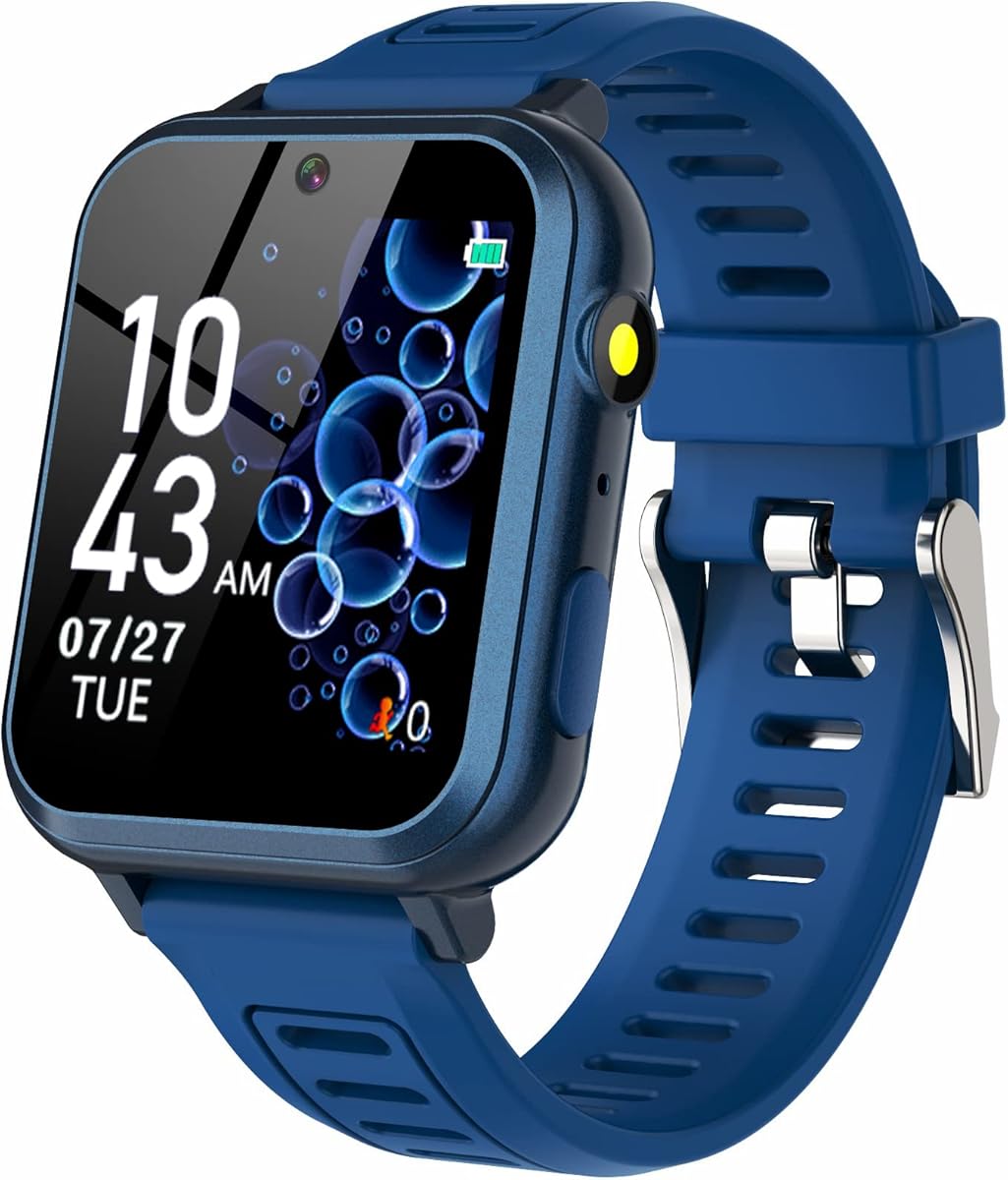


This watch provides an easy way to give an 11-year-old a playful, independent device without introducing cellular service or requiring a connected smartphone. It earns a 4.3 rating and combines 39 games with a camera, video recorder, music player, calculator, pedometer, alarms, and numerous personalization tools. Its appeal lies in offering a substantial feature set while keeping the setup approachable.
We may earn a commission when you buy through this link, at no additional cost to you.
The entertainment tools are unusually broad for a watch designed to operate independently. Children can explore puzzle games, take selfies, record video, select wallpapers, and listen to music stored on the included memory card. The listing also mentions time teaching, audiobooks, a habit tracker, a silent profile, five language options, and screen and theme settings. A 1.54-inch-class child-friendly form factor keeps the experience focused on short, casual interactions rather than serious messaging.
The main limitation is that this is not a communication watch. It has no calling function, no SIM card, and no cellular location service, so it cannot serve as a dependable solution for a child who needs to check in after school. Battery life is described as three to seven days depending on use, and the watch requires about two hours for a full charge. The included USB cable and simple, app-free operation reduce friction, but families needing calls and tracking must look elsewhere.
This is a strong recommendation for an 11-year-old whose family wants a shared entertainment gadget, a birthday gift, or a way to encourage independent use without a mobile plan. It is particularly suitable when the child already has a family phone and the watch will stay off the wrist during school. For children who need emergency contact and supervised location updates, choose one of the standalone 4G models instead.
Every principal function operates directly on the watch, allowing games, camera features, alarms, and settings to work without a phone connection. That makes setup simpler for younger users and useful for travel, outdoor play, or shared family devices.
The camera, video recorder, customizable wallpapers, MP3 player, and large photo and video storage capacity give the watch more variety than a basic game device. It becomes a compact creative outlet as well as a game console.
We may earn a commission when you buy through this link, at no additional cost to you.
The Wiszodet Kids Smart Game Watch is designed for children roughly ages five through 12, making its stated range a good match for most 11-year-olds. It has a 4.4 rating and packages 39 puzzle games with a color touchscreen, camera, video, music, pedometer, alarm clock, flashlight, voice recorder, and calculator. The intent is clearly entertainment with a few practical routines layered in.
We may earn a commission when you buy through this link, at no additional cost to you.
Its strongest selling point is the variety of games. The listing emphasizes logical thinking, reaction skills, hand-eye coordination, and time teaching, so the watch can function as both entertainment and light educational practice. The camera records pictures and videos, supports wallpaper customization, and offers storage for more than 10,000 HD photos or over six hours of video. A full-touch color screen and simple controls make the device approachable without a connected app.
The trade-off is that it offers no way to call or message, and it does not provide cellular GPS tracking. Parents interested in location, emergency communication, or school-time contact would need a more advanced phone watch. Some feature descriptions also suggest app-based viewing for activity data on comparable models, making the precise setup details worth checking on the listing before purchase. The watch is nevertheless straightforward for a child to operate on its own.
Choose this model for an 11-year-old who enjoys games, photography, and music and who does not need the watch to function as a phone. Its broad age range, polished feature collection, and 4.4 rating make it a convincing all-around toy-style option. It also works well for birthdays, holidays, and travel when a child needs engaging downtime without cellular commitments.
The 39 puzzles are not the only feature on offer, but they are the core attraction. The stated focus on logic, reaction time, coordination, and time recognition gives parents a more purposeful explanation for extended play.
Because no SIM card or application download is required, children can begin using the watch quickly. A parent can configure alarms and basic settings, after which the child can manage games, media, and camera functions independently.
We may earn a commission when you buy through this link, at no additional cost to you.
The VTech KidiZoom Smartwatch DX4 combines a 4.6 customer rating with a polished creative experience aimed at children. It includes two cameras, a large high-resolution screen, a metal body, a music player, a composer app, camera effects, activities, reaction games, and 50 built-in clock faces. English, Spanish, and French language options add practical value for a child developing time-telling and language skills.
We may earn a commission when you buy through this link, at no additional cost to you.
This model feels more like a creative activity device than a conventional utility tracker. Children can add effects to photographs and videos, compose music, explore challenges, and personalize the display with downloadable clock faces. A shake-to-hear feature reads the time aloud, which can help a younger child build confidence with schedules. The splash-proof construction also makes it suitable for active play, although it should not be treated as suitable for every submerged activity.
The watch does not provide the calling, messaging, or GPS features of a standalone phone watch. Instead, its strengths are games, creativity, music, and time education. The included micro-USB cable should be used for charging, and the listing specifically advises against third-party adapters. A rechargeable lithium-ion battery avoids disposable battery replacement, while the broad age-four-plus recommendation includes 11-year-olds comfortably.
This is the strongest fit for parents who want a child-safe creative watch rather than a miniature phone. Its high rating, recognizable child-focused design, dual cameras, and broad activity content make it an engaging choice for birthdays, holidays, or everyday creative play. Choose it for entertainment and learning; choose a 4G model when independent communication and real-time location are the priorities.
Two cameras support both still images and video, while effects and stickers help children shape their own results. The included composer app adds another creative layer, making the watch more engaging than a conventional step counter.
Reaction games, challenges, and downloadable clock faces turn the watch into an activity tool. Spoken time and a large screen make schedules more accessible for younger children who are still learning to read a standard watch face.
We may earn a commission when you buy through this link, at no additional cost to you.
The Cubitt Teens Smartwatch is one of the most age-appropriate choices in the list because it is explicitly designed for children ages 11 through 14. It has a 4.4 rating, a modern 1.85-inch AMOLED touchscreen, Bluetooth calling, more than 20 sport modes, and parental notification controls. It bridges the gap between a basic fitness tracker and a connected teen accessory.
We may earn a commission when you buy through this link, at no additional cost to you.
Fitness is unusually comprehensive. The watch tracks steps, calories, distance, heart rate, and sleep, while dedicated modes cover running, cycling, and everyday movement. It also includes more than 20 games, customizable alarms, and watch faces. The screen has 390-by-450 resolution, with eight faces preloaded and more than 100 available through the app. IP68 water resistance and interchangeable straps suit school, sports, and changing styles.
Its connectivity model requires some attention. Calls are made through Bluetooth rather than a separate cellular plan, so the child generally needs a compatible nearby phone for the full calling experience. Notifications for calls, texts, WhatsApp, Instagram, Facebook, and other services are reflected on the watch, and a parental password lock adds control. This setup is less independent than a 4G watch, but it may be more manageable for an 11-year-old.
The Cubitt is our best overall recommendation because it aligns naturally with the lower end of its stated teen age range and combines communication, fitness, games, and school-friendly organization. It is best for a child ready to manage notifications and a Bluetooth connection with a parent's phone. It is less suitable for independent check-ins during school or travel.
Tracking steps, distance, calories, heart rate, and sleep gives an 11-year-old a more useful picture of daily activity than a basic game watch provides. Dedicated sport modes make it easier to follow running, cycling, and routine movement.
Bluetooth calling keeps the phone out of a child's hand during short interactions, while approved notifications and a password lock help maintain boundaries. This is a practical middle ground for older kids who are not yet ready for a fully independent cellular device.
We may earn a commission when you buy through this link, at no additional cost to you.
The JrTrack 5 SE is the most safety-focused and technically advanced product in this guide. It is a standalone phone watch for children age six and older, with real calling, SMS and MMS messaging, photos, voice notes, video messages, group messaging, and app-based parental management. Its 3.7 rating is the lowest listed, but its dedicated tracking and communication features go far beyond the entertainment watches in the list.
We may earn a commission when you buy through this link, at no additional cost to you.
Its headline feature is real-time GPS through a dedicated location chip, active tracking, safe-zone alerts, and location history. SafeCORE adds SOS alerts, optional 911 calling, geofence notifications, and unknown-caller blocking. Parents can also control applications and time limits. The School-Fi function can recognize arrival at school and automatically limit distractions while retaining essential communication, reducing the need to manage every schedule manually.
The main compromise is dependence on a compatible service. The watch uses Cosmo Mobile Family-Safe service and an eSIM, and it cannot be used with other carriers. This creates an ongoing service commitment and more setup than a standalone toy watch. The lower 3.7 rating may also reflect the complexity of cellular service, app setup, or the expectations surrounding a premium child phone. Buyers should review service compatibility and activation steps carefully.
For a family prepared to manage a real cellular plan, the JrTrack 5 SE offers the strongest safety and independent communication package. An 11-year-old can use approved contacts, exchange messages, and check in without carrying a conventional phone. It is best for school commutes, mixed-age family activities, and situations where reliable location and controlled contact matter more than a large game catalog.
Dedicated GPS, active tracking, safe zones, route history, SOS alerts, and optional emergency calling make this a practical choice for independent travel. The feature set is more comprehensive than the Bluetooth notifications offered by conventional fitness watches.
When the watch recognizes arrival at school, it can automatically apply restrictions without requiring parents to adjust a schedule for every location or time change. Essential location and emergency features remain available while distractions are reduced.
We may earn a commission when you buy through this link, at no additional cost to you.
This fitness-focused smartwatch is intended for children and teens ages 6 through 14, making it a relevant choice for an 11-year-old interested in movement and routines. It has a 4.1 rating, a 1.5-inch color touchscreen, 19 sport modes, automatic step, distance, calorie, heart-rate, and sleep tracking, and an IP68 water-resistance rating.
We may earn a commission when you buy through this link, at no additional cost to you.
The sleep features distinguish it from most toy-style watches. The watch records deep sleep, light sleep, and awakenings, while reminders encourage hydration and reduce extended sitting. A vibrating alarm can wake one child without disturbing others. For sports, the 19 modes include running, jump rope, basketball, and other indoor or outdoor activities, giving a child various ways to review movement habits.
Connectivity is limited. The watch receives Bluetooth notifications for calls, SMS, and services such as WhatsApp, but it cannot make or answer calls independently because it has no SIM card or standalone Wi-Fi. The product title says no phone or app is needed, while the description also says detailed activity data can be viewed through an app; buyers should confirm exactly which functions require the companion software. Battery life is described as up to five to seven days, depending on use.
This is a good recommendation for a child who wants a watch that looks and operates more like a fitness tracker than a game console. Its practical metrics, reminders, and sport modes support everyday healthy habits, while the IP68 rating makes it suitable for active routines. It is less appropriate for emergency calling or precise location tracking.
Heart rate, distance, calories, and detailed sleep records provide a more useful activity picture than a basic pedometer. The range of sport modes helps a child connect everyday exercise with a selectable activity.
A vibrating alarm supports a quieter wake-up routine, while hydration and sitting reminders encourage healthier habits. These small prompts can make the watch feel more like a supportive daily tool than passive entertainment.
We may earn a commission when you buy through this link, at no additional cost to you.
This 4G watch offers a capable phone and GPS setup for ages five through 12, giving it a 4.3 rating and broad relevance to an 11-year-old. It supports real-time location, video and voice calls, text messages, a one-key SOS feature, a camera, safe-zone alerts, location history, school mode, an alarm, a calculator, a stopwatch, and five educational games.
We may earn a commission when you buy through this link, at no additional cost to you.
The parental JuniCare app is central to the experience. Guardians can create SafeZone boundaries, review routes, block unknown callers, manage school mode, and configure contacts. An SOS button held for five seconds cycles through as many as three preset guardian numbers, while the watch supports 15 contacts for regular calls. The 1.85-inch screen, 240-by-280 video calling resolution, and 700mAh battery are appropriate for a child's wrist.
Connectivity does require extra work. The watch needs a T-Mobile Nano SIM card, which is not included, and the family must install the app, bind the device, and configure the network. If a signal does not appear, the manual APN setting may need adjustment. That makes this less convenient than a Bluetooth watch, though it delivers the independence and contact tools many parents want.
Choose this model for an 11-year-old who travels independently, spends time outdoors, or needs a dedicated way to contact family. It balances communication, GPS, and school controls better than basic game watches. The trade-off is ongoing cellular-service administration and a setup process that older children may need help completing.
Real-time GPS, customizable SafeZone alerts, and route history give parents a clearer view of where a child is and how they arrived. These features are especially useful for school trips, neighborhood exploration, and regular after-school travel.
The dedicated SOS control can alert several guardians in sequence, while the regular contact list supports communication with a wider family group. Unknown-caller blocking adds another layer around the calling experience.
We may earn a commission when you buy through this link, at no additional cost to you.
This watch combines a 4G phone, GPS tracker, and parent-managed entertainment device for children ages four through 12. It has a 4.2 rating, a 1.7-inch curved IPS display, camera, alarm, games, video chat, messaging, class mode, and an SOS control. An included Speedtalk SIM simplifies the initial hardware purchase, although it still requires activation and service selection.
We may earn a commission when you buy through this link, at no additional cost to you.
The setup process is straightforward. A parent downloads the Junicare app and scans a QR code displayed on the watch. The app supports contact management, unknown-call blocking, real-time location, electronic geofences, 24-hour route playback, and remote class mode. During class, games and other entertainment functions can be disabled while positioning and emergency calling remain available, which is a useful balance for school use.
Location uses dual GPS and LBS, and the two-way video chat includes a front-facing camera. The watch is designed for both boys and girls, with a skin-friendly breathable silicone strap and a woven alternative. A significant limitation is that the complimentary Speedtalk SIM is only usable within the United States. The family must activate it through the official website and select a suitable data plan, making service cost awareness important.
For families seeking cellular communication and organized school controls without assembling a separate SIM package, this is a convenient option. It is particularly attractive for an 11-year-old who wants video chats and games but needs parents to enforce focus remotely. It is less suitable for international use or for families wanting carrier flexibility.
Parents can establish familiar safe areas such as home or school and receive alerts when a child leaves them. Twenty-four-hour route playback adds context that a single location dot cannot provide, helping families review a day's movements.
Remote activation can disable games, the calculator, pedometer, and stopwatch while preserving location and emergency calling. It is a simple way to reduce distractions when a child is expected to concentrate.
We may earn a commission when you buy through this link, at no additional cost to you.
The Tixpc Kids Smart Watch is a polished entertainment option for children ages four through 12. Its 4.4 rating reflects a feature-rich product that includes 39 puzzle games, a camera, video, a music player, a pedometer, an alarm clock, a calculator, a flashlight, a timer, a stopwatch, a recorder, themes, and wallpapers. It is designed to be useful without a smartphone or application.
We may earn a commission when you buy through this link, at no additional cost to you.
Games provide the biggest draw, with the listing connecting them to reaction speed, logic, and hand-eye coordination. The camera includes a large-head sticker effect for playful photographs, and captured images can become wallpapers. Music can be transferred from a computer through USB into a dedicated folder, allowing the child to listen to selected tracks without cellular streaming. A calendar and three time reminders help organize daily activities.
This is not a communication or safety device. There is no calling, messaging, real-time location, or parental remote control, so it cannot replace a phone or GPS watch. The value of the product comes from entertainment and basic time management in a wearable form. Storage is listed as supporting more than 10,000 HD photos or over six hours of video, which adds creative flexibility for regular use.
For an 11-year-old who wants a fun, independent watch for games, music, photos, and reminders, this is a convincing recommendation. It is also an easy gift because there is no carrier setup or account process. Families should choose a cellular model instead when checking in after school and tracking location are essential.
USB transfer into a My Music folder gives a child access to selected songs without a cellular data plan. The feature is simple for parents to prepare and gives the watch more purpose beyond its game library.
Three programmable reminders, a calendar, timer, and stopwatch support simple routines. They cannot provide parental oversight, but they help an 11-year-old organize homework, chores, and activities on the wrist.
We may earn a commission when you buy through this link, at no additional cost to you.
This 1.54-inch IPS smartwatch combines entertainment with habit-focused tools, earning a 4.4 rating and earning a place for families interested in a gift-oriented device. It includes 39 games, an HD selfie camera, video, an MP3 player, a voice recorder, a pedometer, a flashlight, an alarm, a stopwatch, a calculator, a habit tracker, parental control, a silent profile, and theme options.
We may earn a commission when you buy through this link, at no additional cost to you.
The habit tracker and parental control add a useful layer beyond standard entertainment. Games are presented as a way to exercise logic, reaction time, and hand-eye coordination, while a durable aluminum frame and simple touch interface suit regular use. The camera supports stickers, photos, video, and wallpaper customization, making the watch a small creative outlet for an 11-year-old.
The product lists an upgraded 500mA battery and a claimed life of more than seven days on a full charge. Actual runtime will depend on game, camera, and music use, and the supplied USB cable handles charging. Like most watches in this category, it has no standalone calling or GPS location service. Its appeal therefore rests on entertainment, routine building, and customization rather than independent communication.
This is a good birthday or holiday choice for an 11-year-old who enjoys games, music, and photography and wants a watch with a little more purpose. Parents can still use the alarm, silent profile, and habit features to encourage independence. If a child regularly travels alone, however, a GPS phone watch is the more responsible and capable choice.
The dedicated habit tracker is more useful than a generic game counter because it gives a child a way to record and review routines. It can support school preparation, chores, exercise, or personal goals without requiring a full smartphone.
The aluminum frame, IPS touch display, 39 games, and media features create a versatile device for downtime. A long claimed battery life may also reduce the frequency of charging, although real use will depend on the selected features.
We may earn a commission when you buy through this link, at no additional cost to you.
The most useful smartwatch for an 11-year-old is the one that meets the family's actual communication and supervision needs while remaining appropriate for school, exercise, and independent use. Consider connectivity, age fit, parental tools, battery expectations, and the kinds of activities your child actually enjoys.
A standalone 4G watch can call, text, and transmit location without relying on a nearby family phone, making it the most practical choice for school commutes and independent outings. These models require a compatible SIM or dedicated cellular service, adding activation steps and ongoing plan management. Bluetooth-connected watches are often simpler and less expensive, but calls and notifications depend on a nearby phone. Fully offline watches avoid service costs and complexity but provide no emergency communication or real-time location.
An 11-year-old sits between the traditional kids-watch market and the teen fitness-watch category. The Cubitt is explicitly designed for ages 11 through 14, which makes its interface and feature mix especially relevant. Other models list broad ranges that include 11-year-olds but emphasize colorful games, cameras, or smaller characters. A parent should consider whether the child wants a toy-like watch or a more adult-looking accessory that can remain appropriate as the child gets older.
Useful controls include approved contacts, unknown-caller blocking, password locks, class mode, time limits, app management, and remotely managed safe zones. These features are more meaningful than raw app counts because they directly affect who can contact the child and when the watch is used. Entertainment-focused offline models may include a basic parental lock or silent profile, but they do not offer the same remote oversight as phone watches.
Location should be evaluated through the features provided rather than a generic GPS label. Strong options include real-time active tracking, dedicated location hardware, safe-zone alerts, route history, and detailed parent-app maps. The JrTrack 5 SE emphasizes active tracking and safe zones, while the 4G JuniCare models add geofencing and route replay. A watch without location may still be fun, but it should never be presented as a dependable safety solution for an independently traveling child.
Games are the defining attraction on most models aimed at children, but variety and age suitability matter more than a large headline count. Puzzle games can support logic and reaction skills when parents want a more educational justification. Camera and video functions add creativity through photos, effects, and wallpapers, while music players can provide offline entertainment. A teen-oriented watch with fewer childish games may be preferable for an 11-year-old who feels too old for a toy-like design.
An 11-year-old may benefit from a watch that records steps, distance, calories, heart rate, sleep, and specific sports. The Cubitt and the dedicated kids fitness tracker are strongest in this category, with many sport modes and daily health metrics. Keep in mind that fitness features encourage awareness rather than guaranteeing healthier behavior. A vibrating alarm, hydration reminder, and sleep record may be more useful for family routines than complicated training dashboards.
Battery claims vary from several days to more than a week and should be treated as a guide rather than a guarantee. Camera use, video, games, music, cellular reception, and screen time all affect runtime. Rechargeable models with included cables are more convenient than replaceable-battery designs. A child who forgets to charge frequently may value a long claimed runtime, but a parent with a daily charging routine may accept shorter life for a slimmer or more advanced design.
Children run, wash their hands, play outside, and occasionally drop devices, so durability matters. IP68 ratings, splash-proof bodies, comfortable straps, and sturdy frames are positive indicators for everyday use. A rating does not mean every watch can survive swimming or soaking, and buyers should still follow the manufacturer's care instructions. For an active 11-year-old, a secure adjustable strap and readable display may influence long-term satisfaction more than a minor difference in listed thickness.
Begin by charging the watch fully, then review its intended age rating, included accessories, and setup instructions. Offline models can usually be configured directly, while Bluetooth and 4G products require their associated apps, account approval, compatible contact setup, and network or SIM activation. Before handing the watch over, set the correct time format, alarms, emergency contacts, school restrictions, and any daily usage limits.
Create a consistent household rule for when the watch can be used. For example, games and camera functions might be limited during lessons, while emergency calling and location remain available. If the watch includes fitness tracking, explain that steps, sleep, and heart rate are estimates rather than medical measurements. A child who understands the device's limits is more likely to use it independently and responsibly.
Care for the watch by keeping the charging contacts clean and dry, using the supplied cable where specified, and avoiding unsupported third-party adapters. Check the strap fit, screen, camera lens, and water-resistance care guidance regularly. Update apps and firmware when instructed, review approved contacts, and remove unnecessary games or contacts as the child grows. For cellular models, check service status and location-sharing settings before school or travel.
The best choice depends on whether the child needs communication, location tracking, games, or fitness tools. The Cubitt is well matched to ages 11 through 14, the VTech KidiZoom DX4 emphasizes creative play, and the JrTrack 5 SE provides the most advanced supervised phone and GPS experience. A simpler game watch may be sufficient when independent calls are unnecessary.
A GPS smartwatch is most useful when a child travels to school, activities, or visits independently. Look for real-time location updates, geofence alerts, route history, approved contacts, and SOS functions. Without these features, a watch is better understood as an entertainment or fitness device rather than a reliable safety tool.
It depends on the model. Bluetooth watches generally need a compatible phone nearby for calling and app-based notifications, while offline game watches need neither a phone nor a network. Standalone 4G watches use their own cellular connection and SIM or service, allowing check-ins away from a parent's phone.
Many puzzle games can support logic, reaction time, and hand-eye coordination, although they are not a replacement for formal education. The VTech watch also provides creative tools and time practice, while several 39-game models emphasize puzzles and time teaching. Look for age-appropriate content rather than assuming a game count measures educational value.
A useful target is several days of normal use, but heavy gaming, video, music, weak cellular reception, and frequent location updates can reduce runtime. The supplied descriptions list ranges from roughly three to more than seven days. Families should establish a regular charging routine and avoid treating a maximum claim as a guarantee.
Yes, if it includes reliable location, restricted contacts, and remote school controls. Features such as School-Fi, class mode, safe zones, route history, and an SOS button are more relevant than entertainment alone. Parents should still set expectations, confirm the child knows how to request help, and test contact and location functions before independent use.
They can be, provided family privacy rules are established. The relevant models support photographs, video, stickers, and wallpapers, but some can store large amounts of media. Parents should discuss consent before photographing other people, limit sharing, and keep the watch away from sensitive spaces.
Choose a game watch for inexpensive, independent entertainment with no ongoing service. Choose a phone watch for calls, messaging, contact restrictions, school controls, and location tracking. A fitness-focused model offers a middle path, providing health data and notifications without the same independent cellular capability.
The strongest overall option is the Cubitt Teens Smartwatch because its stated age range begins at 11 and it combines Bluetooth calling, fitness tracking, games, parental notifications, and a modern AMOLED display. The VTech KidiZoom Smartwatch DX4 is ideal for creative play, while the JrTrack 5 SE stands apart for families that need advanced GPS, approved-contact calling, and school-focused controls.
Before choosing, prioritize the watch that solves the family's real problem. Use an offline game model for inexpensive entertainment, a Bluetooth fitness watch for phone-assisted communication, and a standalone 4G model when a child must contact guardians or be located independently. Age fit, strap comfort, parental controls, battery expectations, and service terms are often more important than the number of games.
Finally, check the current listing, compatibility information, service requirements, included accessories, and latest price before purchasing. Product features and promotions can change, and the descriptions in this guide reflect the supplied product information rather than hands-on testing. Confirm that the selected watch suits the child's maturity and the family's communication needs before making the final decision.