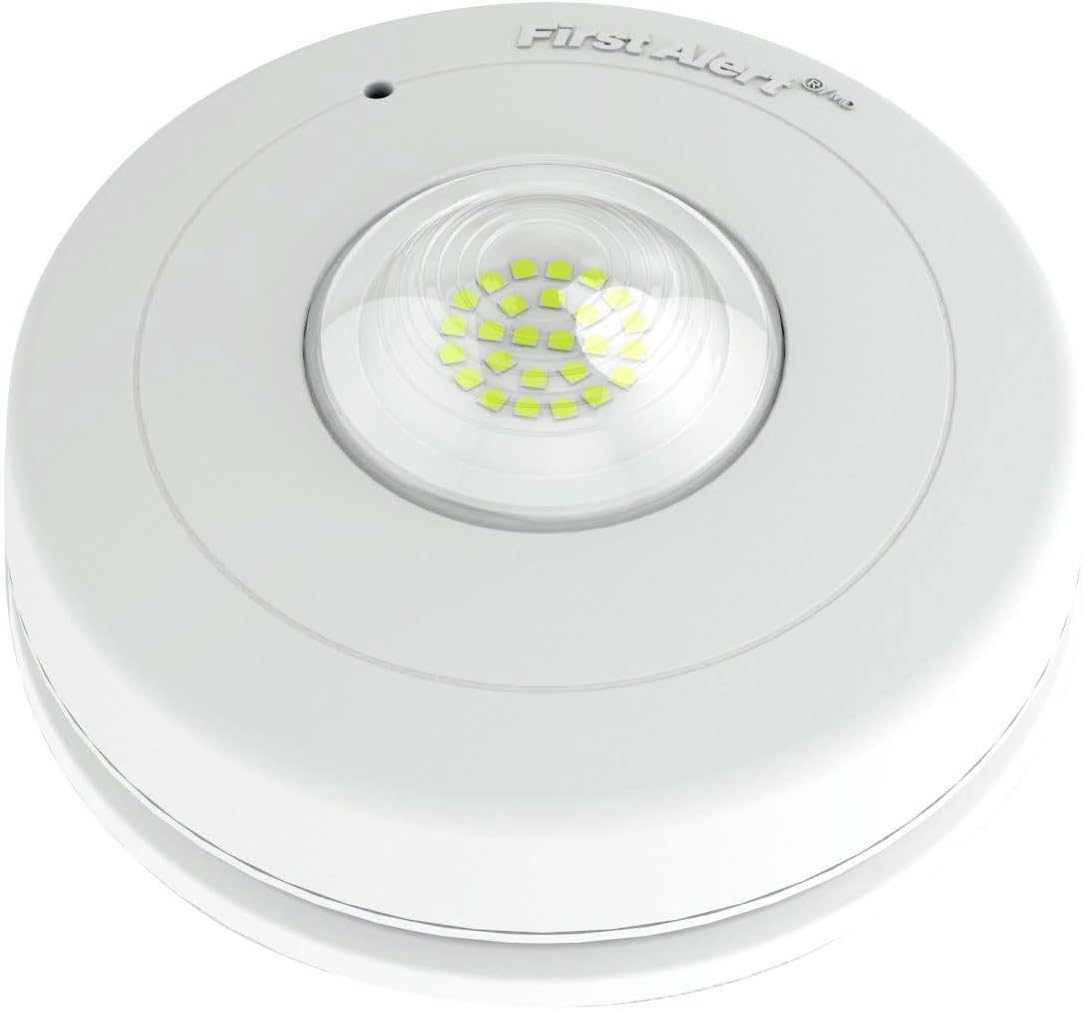
First Alert SLED177 Hardwired Hearing Impaired LED Strobe Light
4.1Editor score
Bright 177-candela strobe
Synchronized multi-unit flashes
Slim ceiling or wall design
Our expert guide compares 10 smoke alarms for hearing impaired, highlighting visual alerts, carbon monoxide detection, backups, smart features, and installation
Smoke alarms for hearing impaired residents must communicate danger through more than sound. Visual strobes, smart notifications, strong illumination, and reliable carbon monoxide warnings can make emergencies easier to notice, especially while sleeping or when background noise is high.
The products in this guide were compared by examining their alert methods, sensing capabilities, power options, interoperability, installation requirements, accessibility features, and practical trade-offs. The list includes dedicated visual alarms, combined smoke and carbon monoxide units, and connected detectors that can provide phone-based warnings.
Each review explains what makes the product most useful, who it is best suited for, and where its coverage is limited. Product features and availability can change, and current pricing varies, so readers should confirm the latest specifications and offers before purchasing.
4.1Editor score

4.6Editor score
4.2Editor score
This side-by-side comparison evaluates each alarm by alert type, hazard coverage, power source, and connectivity. It also highlights whether a product serves as a complete alarm, a visual supplement, a carbon monoxide detector, or a smart notification device.


The First Alert Hardwire Smoke Alarm with 10-Year Battery Backup & LED Light is the strongest all-around choice in this guide for households that need smoke detection and a visible warning in one unit. It carries a 4.6 rating and integrates a smoke alarm with an LED strobe, giving users both an audible signal and a visual alert without relying on a separate notification accessory.
We may earn a commission when you buy through this link, at no additional cost to you.
Precision Detection is one of its most useful selling points. According to the product information, the sensing technology is designed to reduce cooking-related nuisance alarms while still providing early warning. Hardwired primary power supports a permanent installation, while the ten-year battery backup helps maintain protection during an outage. Its ability to interconnect with most compatible First Alert and BRK alarms means one triggered unit can activate a broader network of warnings.
There are practical trade-offs. This is not a plug-in product, so installation may require compatible wiring and suitable electrical-box placement. The integrated design also means the alarm and visual notification are inseparable: buyers cannot independently position the strobe away from the smoke sensor. These are acceptable limitations for many households, but a dedicated strobe can offer more flexibility in rooms where the alarm's location is not ideal.
This is a recommended pick for a primary residence, bedroom, hallway, or other location where an at-a-glance visual signal matters. It offers a particularly practical balance of hazard detection, outage resilience, interconnection, and accessibility. Buyers who already own compatible alarms can use it as a visual centerpiece, while others can build outward with matching interconnected units.
The integrated LED light gives users with hearing loss a second way to notice an alarm. It is especially helpful in sleeping areas, where an audible signal may not wake someone effectively, and in areas where hearing protection, television, or other background noise can mask a conventional alarm.
The hardwired design provides a dependable primary power source, while the ten-year battery backup covers outages without requiring routine battery changes. This makes the unit especially appealing for locations where reliable in-home warning is a priority.
We may earn a commission when you buy through this link, at no additional cost to you.
The First Alert SLED177 is a dedicated visual notification device rather than a smoke detector, but that distinction makes it valuable for households that already have compatible alarms and want a bright, unmistakable strobe. Its 4.1 rating reflects a practical approach focused on visibility, synchronization, and straightforward hardwired installation.
We may earn a commission when you buy through this link, at no additional cost to you.
The stated 177-candela LED output is the central feature. It is designed to provide a powerful visual warning intended for hearing impaired residents. When several units are installed, the trouble-signal synchronization feature allows the strobes to flash together. That synchronized pattern can make an emergency easier to recognize throughout a home and can be especially helpful in bedrooms, hallways, kitchens, and common living spaces.
Its main limitation is equally important: it does not sense smoke, carbon monoxide, or other hazards. It must be paired with an appropriate alarm system rather than treated as a complete replacement. The requirement for 120-volt hardwiring and quick-connect wiring also makes installation planning important. Users who cannot safely modify their electrical system should consult a qualified installer.
This is a recommended choice for someone who wants strong, freely positioned visual alerts without replacing a functioning hardwired alarm. Its slim profile and wall-or-ceiling mounting options add flexibility, while synchronization makes it practical for a multi-room setup. It is best viewed as an accessibility upgrade to a complete alarm network, not as a standalone smoke alarm.
A dedicated strobe separates visual warning from sensing, allowing it to be placed where the light is easiest to notice. This flexibility can improve coverage in a bedroom or other room where the smoke detector's location is governed mainly by hazard detection rather than accessibility.
Synchronized flashing helps a household recognize that multiple rooms are signaling the same event. The shared visual pattern can provide a clear, consistent warning even when someone does not initially understand the source of the alert.
We may earn a commission when you buy through this link, at no additional cost to you.
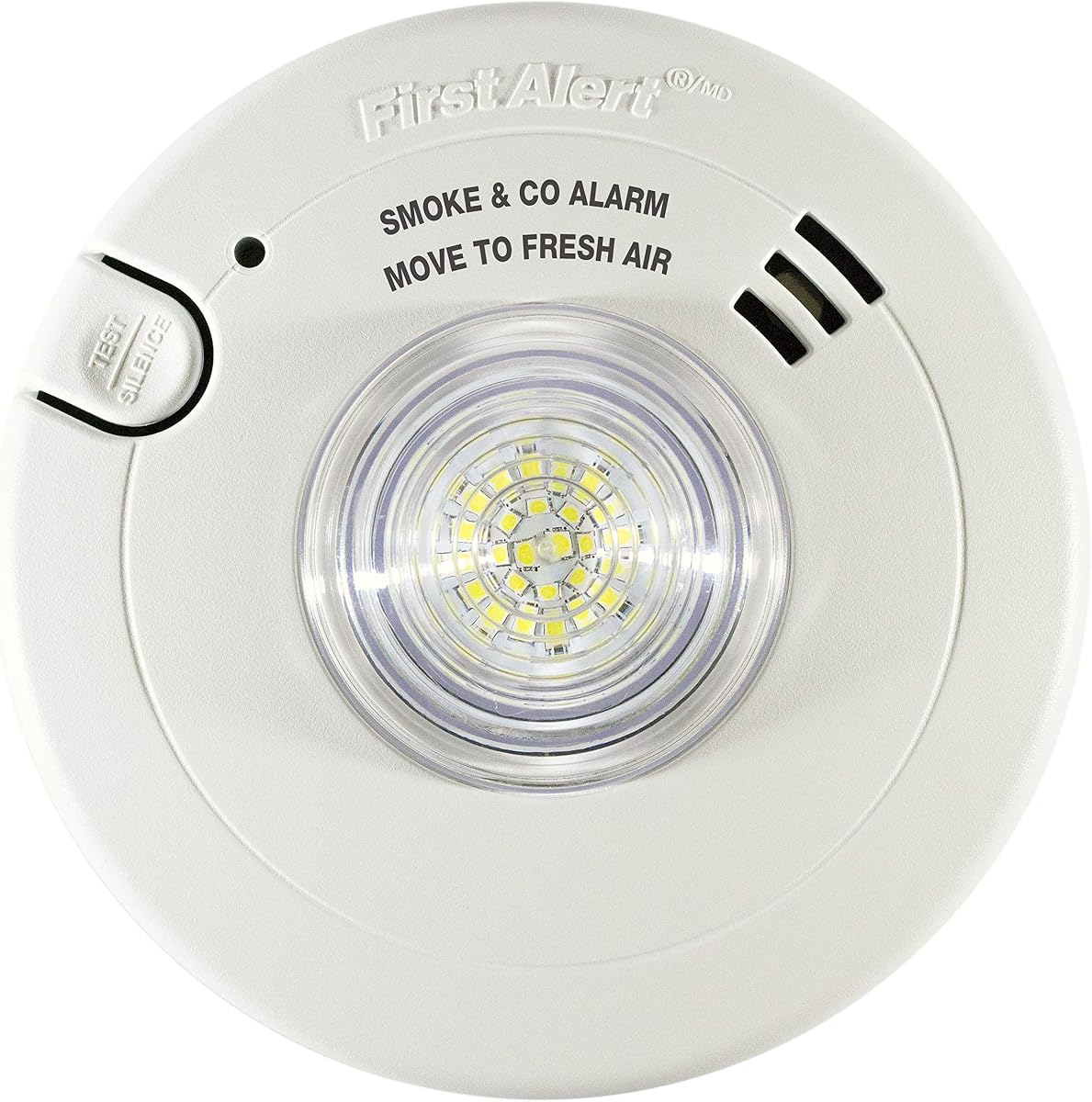
The First Alert BRK 7030BSL is the most feature-focused conventional alarm in the group. It combines smoke and carbon monoxide detection with an LED strobe, providing broad hazard coverage and an accessible visual warning from a single installed unit. Its 4.2 rating reflects a capable design that serves both general safety and hearing-accessibility needs.
We may earn a commission when you buy through this link, at no additional cost to you.
A standout feature is the Smart Strobe system, which uses separate flash patterns to distinguish smoke from carbon monoxide. That distinction can help residents react more quickly because they can identify the alert type visually. The 77-candela synchronized LED is designed to wake hearing impaired residents, and multiple installed units can flash in unison. Optipath 360 technology also provides direct access to the smoke sensing chamber, supporting the product's inspection and sensing design.
Compared with a dedicated 177-candela strobe, this unit has a less powerful light output, but it compensates by including smoke and carbon monoxide sensors. Its hardwired format and integrated housing can simplify a whole-home plan by reducing the number of separate devices and wiring runs. It still demands more installation planning than a battery alarm, and accessibility should be considered across the entire home rather than only at the device itself.
This alarm is a strong recommendation for a household seeking a single visual-and-audible unit that covers both fire and carbon monoxide risks. It is particularly compelling when distinct visual patterns are important, when synchronized units are planned, or when minimizing separate devices is a priority. The supplied warranty information also provides a ten-year limited warranty when the stated conditions are met.
Separate flash patterns allow a resident to distinguish a smoke event from a carbon monoxide event. This is more informative than a single undifferentiated flashing pattern and may help occupants decide how to respond before checking the alarm's location.
Combining sensing and visual notification in one unit can streamline installation and reduce wall clutter. It is a practical option for new systems or for replacing separate conventional alarm and strobe components.
We may earn a commission when you buy through this link, at no additional cost to you.
The First Alert Hardwire Combination Smoke & Carbon Monoxide Alarm combines two hazard sensors with an LED strobe in a single device. Its 4.6 rating is the highest tied rating in this guide, and the combination of smoke detection, carbon monoxide detection, and visual notification makes it a serious contender for accessible whole-home protection.
We may earn a commission when you buy through this link, at no additional cost to you.
Precision Detection technology is designed to reduce nuisance alarms caused by cooking while supporting early warning. Interconnection with most compatible First Alert and BRK alarms allows one unit to trigger a network of alerts, while the integrated strobe provides the visual signal needed by hearing impaired residents. A test/silence button supports routine testing and can temporarily silence nuisance warnings for up to eight hours.
The product information confirms hardwired operation but does not state that this model includes a ten-year battery backup. That distinction matters during outages and should be checked against the manufacturer's current documentation before installation. As with the other hardwired choices, it requires suitable electrical support and is not suited to users seeking simple plug-and-play placement.
This model is recommended for households that want both smoke and carbon monoxide coverage with a built-in visual alert and a connected alarm network. It suits people who value a single device for multiple functions and already have or plan to install compatible hardwired alarms. Buyers especially concerned about outage protection should verify the backup specification for the exact model.
Smoke and carbon monoxide sensing in one unit reduces the number of separate detectors needed for those hazards. The visual strobe adds a third layer of accessibility without requiring a separate notification device at every alarm location.
Interconnect support lets compatible alarms communicate so that an event in one area can produce warnings throughout the property. For residents who may not hear a local alarm, this wider notification pattern is particularly valuable.
We may earn a commission when you buy through this link, at no additional cost to you.
The Kidde Carbon Monoxide Detector is designed around an accessible combination of wall power, battery backup, a digital display, and a safety illumination light. It has a 4.2 rating and is especially relevant to deaf or hearing impaired residents who may benefit from seeing carbon monoxide readings and a visible emergency cue rather than relying only on sound.
We may earn a commission when you buy through this link, at no additional cost to you.
Installation is straightforward because the unit plugs into a standard 120-volt outlet. A ten-year lithium battery maintains backup operation during outages. The digital LED display shows the carbon monoxide level and its parts-per-million reading, while Peak Level Memory records the last detection or test. That history can be valuable when checking a property after an alert or when arranging service for a fuel-burning appliance.
The safety light illuminates the surrounding area when dense smoke is present, providing a path-oriented visual cue. However, this is a carbon monoxide detector, not a smoke alarm, and the supplied details do not indicate that it interconnects with a broader alarm network. It should therefore complement, rather than replace, a complete smoke detection and emergency notification setup.
This product is a good fit for a home that needs accessible carbon monoxide information and wants a detector with backup power and minimal installation effort. It is less appropriate as the primary solution for someone specifically shopping for an integrated smoke alarm with strobe. Its greatest value comes from adding readable, visible information to a broader safety plan.
The digital display turns detector status into information that can be checked visually. This is useful during routine monitoring and after an alarm because it can show whether a carbon monoxide level is currently present or has recently been recorded.
The sealed ten-year lithium backup preserves operation if wall power fails, while the integrated safety light can help illuminate a route when smoke is present. These features complement one another during emergencies involving power loss or reduced visibility.
We may earn a commission when you buy through this link, at no additional cost to you.
The First Alert BRK Hardwire Combination Smoke & Carbon Monoxide Alarm with LED Strobe combines broad hazard detection, an accessible visual warning, and a ten-year battery backup. Its 4.0 rating is the lowest among the ten products here, but the specifications make it a credible choice for homes that need multiple protective functions in one hardwired unit.
We may earn a commission when you buy through this link, at no additional cost to you.
Precision Detection is designed to reduce cooking-related nuisance alarms while providing early warning. The integrated LED strobe gives hearing impaired residents a visual alert, and multiple compatible BRK units can be interconnected so that one alarm causes the strobes to flash in unison. Most importantly, the ten-year battery backup offers continued protection during power outages without routine battery replacement.
Its one-pack configuration means a buyer may need more than one unit for a multi-room installation, and the product information does not describe a dedicated brightness rating or distinct hazard flash patterns. The visual output therefore cannot be directly compared with the 177-candela dedicated strobe or the pattern-based BRK 7030BSL. Those seeking maximum placement flexibility may prefer a separate visual notification unit.
This alarm is recommended for a home seeking a conventional, interconnected combination detector with visual notification and long-term outage protection. It is especially useful where one integrated device is preferred over separate smoke, carbon monoxide, and strobe components. It is less suited to plug-and-play installations, but offers a well-rounded feature set for a professionally planned hardwired system.
The ten-year battery backup is a meaningful advantage for a hardwired alarm because it provides a second source of protection during an outage. Households do not need to schedule frequent battery replacements while retaining the benefits of a permanent installation.
Interconnecting compatible BRK units allows synchronized strobes to communicate an event beyond the room where it began. This whole-home pattern is especially helpful when a resident needs a warning from another part of the property.
We may earn a commission when you buy through this link, at no additional cost to you.
The First Alert Battery Smoke Alarm is a straightforward smoke detector with a 4.5 rating, easy installation, and a front-access battery compartment. It does not include a strobe, so it is not a complete accessibility solution on its own. Even so, it can serve as a useful sensing component when paired with visual notifications or other alert devices elsewhere in the home.
We may earn a commission when you buy through this link, at no additional cost to you.
Precision Detection technology complies with new industry standards and is designed to reduce nuisance alarms caused by cooking while providing early warning in a fire. The battery-powered format allows placement without hardwiring, and the front-access compartment makes battery replacement easier. A test/silence button supports regular checks, while the end-of-life warning signals when the alarm should be replaced.
The major limitation is its reliance on sound alone for the immediate warning. It may not wake a hearing impaired sleeper, and no smartphone or inter-device connection is listed in the product information. Batteries also require periodic attention, and the absence of a backup power source means an exhausted battery can compromise protection until it is replaced.
This model is recommended for renters, secondary locations, or users who prioritize simple placement and maintenance over integrated visual alerts. It can also serve as a standard smoke sensor in a larger accessibility-focused network. For a hearing impaired resident seeking a standalone unit that addresses both sensing and visual notification, a strobe-equipped model is the more direct choice.
The battery design removes the need for electrical wiring, making the detector practical in older homes, rentals, or additions. A front-access compartment further reduces the inconvenience of routine battery changes.
Precision Detection is intended to balance early warning with fewer cooking-related false alarms. That can improve usability in kitchens and nearby areas where a conventional detector may be triggered more often.
We may earn a commission when you buy through this link, at no additional cost to you.
This First Alert Battery Smoke Alarm shares the same core feature set as the other battery-powered detector in the guide: Precision Detection, a front-access battery compartment, an end-of-life warning, and a test/silence button. Its 4.5 rating indicates strong customer reception, and the straightforward battery format makes it useful for flexible placement.
We may earn a commission when you buy through this link, at no additional cost to you.
Its greatest strength is simplicity. No wiring is required, and the front-access compartment supports routine battery replacement without immediately dismantling the unit. Precision Detection is designed to comply with updated industry standards, reduce cooking nuisance alarms, and provide early fire warning. The end-of-life indicator helps users avoid overlooking an aging detector.
From an accessibility standpoint, however, the product does not provide a strobe, display, app notification, or listed interconnection capability. Its local warning remains dependent on sound. Buyers who need visual or remote notification should plan to add a suitable strobe or connected system rather than expecting this model to meet every accessibility requirement on its own.
This detector is a good selection for a battery-powered smoke sensing role, particularly in rental properties, guest rooms, basements, or other areas where wiring is inconvenient. It also works as a basic component in a larger alarm plan. For a hearing impaired user who needs a single device to sense smoke and provide a visual signal, the hardwired strobe models are better aligned with the need.
Putting the battery compartment at the front means users can reach it without removing the detector from its mounting position. That practical detail can make routine maintenance more likely and less disruptive.
Even though it lacks a visual warning, this alarm provides the basic smoke-sensing function needed in a layered safety plan. Pairing it with accessible notifications can add communication without complicating the detector itself.
We may earn a commission when you buy through this link, at no additional cost to you.
The Kidde Smart Smoke & CO Detector with Ring is the strongest connected option in the guide because it combines smoke and carbon monoxide sensing with real-time phone notifications. Its 4.1 rating reflects an attractive combination of hazard coverage and smart-home connectivity, although it does not include the local visual strobe offered by several hardwired alternatives.
We may earn a commission when you buy through this link, at no additional cost to you.
The detector alerts users through the Ring app when smoke, carbon monoxide, or a low-battery condition is detected, and no subscription is required for those notifications. It also connects with Alexa-enabled devices. The supplied information states that adding one Kidde smart detector can provide mobile alerts for every hardwired alarm in the home, subject to the user guide and compatible setup.
It is hardwired and uses an AA battery for backup, providing a useful balance between permanent installation and outage resilience. The optional Ring subscription adds continuous monitoring but is sold separately and should not be confused with the standard app alerts. Smart connectivity also creates dependencies on phone settings, application access, network availability, and account configuration, so it should complement rather than replace a conventional local alarm.
This product is recommended for hearing impaired residents who are comfortable using a smartphone and want warnings away from home. It is also attractive for households already invested in the Ring ecosystem or seeking whole-home connected notifications. For maximum accessibility, buyers can pair it with dedicated strobes, but the detector's built-in alert methods are primarily audible and digital.
Real-time app notifications allow a resident to receive smoke, carbon monoxide, and low-battery warnings while away. This extends the reach of a hardwired alarm and can be particularly valuable for people who do not reliably hear a conventional indoor alarm.
The ability to provide mobile alerts for compatible hardwired alarms through one smart detector can simplify a connected installation. Buyers should verify compatible models and setup requirements in the product's user guide before planning a mixed network.
We may earn a commission when you buy through this link, at no additional cost to you.
The Kidde Smart Smoke Detector with Ring offers a focused approach to connected smoke detection. It has a 4.2 rating, sends smoke and low-battery notifications through the Ring app, and supports communication with Alexa-enabled devices. For a household that specifically wants remote smoke warnings without adding carbon monoxide sensing, it is a more streamlined option than the dual-hazard model.
We may earn a commission when you buy through this link, at no additional cost to you.
The unit is hardwired with an AA battery for backup, so it can remain operational during a power interruption while providing a permanent primary installation. Enhanced sensing technology is designed to reduce false alarms associated with cooking compared with prior Kidde generations. Notifications do not require a subscription, although an optional Ring plan is available for continuous smoke monitoring and is sold separately.
The absence of a strobe means the device does not independently deliver a strong local visual alert. Remote phone warnings are valuable but depend on the resident carrying a phone, having network access, and receiving notifications promptly. It also lacks carbon monoxide sensing, so it cannot cover that separate hazard. Users with specific accessibility or dual-hazard requirements should consider the dedicated strobe and combination models in this guide.
This product is recommended for smart-home users who want connected smoke alerts, already use Ring or Alexa, and want a smoke-only unit. It is also useful as one component of a broader system that includes visual strobes or carbon monoxide detection. Among the guide's smart products, it provides a simpler feature set and may appeal to users who do not need dual-hazard sensing.
The Ring app sends smoke and low-battery warnings without requiring a subscription for the basic notifications. This gives residents an additional communication channel when they are away from the alarm or unable to rely solely on an indoor sound.
Hardwiring supports a stable primary power source, while the AA battery provides continuity during an outage. The result is a practical compromise between connected electronics and the resilience expected from a permanently installed alarm.
We may earn a commission when you buy through this link, at no additional cost to you.
The right accessible smoke alarm depends on the warning methods, hazards, installation, and smart features that fit the home. Reviewing these factors before buying helps avoid a unit that cannot provide a sufficiently noticeable alert during the situations in which it is needed most.
A strobe or bright safety light is one of the most direct ways to make an alarm accessible to a deaf or hearing impaired resident. Look for an integrated LED warning or a dedicated visual notification device, and consider whether the light is powerful enough to be noticed through a bedroom door or from another room. A product with synchronized flashes can make a whole-home warning easier to recognize.
A smoke alarm detects fire-related smoke, while a carbon monoxide detector identifies the potentially deadly gas associated with fuel-burning appliances. Combination units provide both functions in one housing and can simplify installation. If separate devices are preferred, choose models with complementary coverage and make sure the carbon monoxide detector is placed according to its manufacturer instructions.
Battery alarms are easy to install but require ongoing battery maintenance. Hardwired units provide a dependable primary power source, and models with sealed ten-year or similar backup batteries remain operational during outages. Read the product details carefully because backup specifications differ among otherwise similar combination alarms.
A smart detector can send smoke or carbon monoxide warnings to a phone, which is valuable when the resident is away, asleep with the phone nearby, or unable to hear the local alarm. Review whether notifications work without a subscription, which alerts are included, and whether app, account, network, and phone settings could interfere with delivery.
Battery units can usually be installed without an electrician, while hardwired and 120-volt devices require compatible wiring, proper placement, and safe electrical connections. Quick-connect features may simplify installation, but they do not remove the need to follow the manufacturer's instructions. Anyone uncertain about household wiring should use a qualified installer.
An interconnected alarm network can sound throughout the home when one unit detects danger. Compatible strobes that flash in unison provide a stronger visual signal across rooms. Verify the stated compatibility with other units rather than assuming every alarm from the same brand will interconnect, because product families and electrical systems can differ.
Different flash patterns can communicate whether smoke or carbon monoxide triggered the alarm. Digital concentration displays and peak-level memory provide additional information for carbon monoxide devices. These details can help residents respond more appropriately, although they should supplement rather than replace a clear emergency response plan.
Choose alarms with an accessible test or silence button, clear end-of-life warnings, and easy battery access. Test every unit on a consistent schedule, confirm that visual notifications activate, and replace batteries when directed. Smart detectors also need attention to app permissions, software updates, and network connections so remote warnings remain reliable.
Before installation, read the manufacturer instructions, identify the correct placement for each device, and confirm whether the unit requires hardwiring, a standard outlet, or a battery compartment. Never assume a visual notification device can replace a smoke sensor. A complete home plan may require smoke alarms, carbon monoxide detectors, interconnected units, and dedicated strobes working together.
Test each alarm regularly using its test or silence control. Confirm that the audible tone, LED or strobe, display, and any connected phone notifications all activate as expected. For synchronized systems, trigger one compatible unit and verify that the other lights flash in unison. Test the system while lying in bed or from another room so you can judge whether the warning is actually noticeable in your daily environment.
Maintain devices according to their instructions, replacing batteries when the low-battery warning appears and replacing the entire alarm when the end-of-life signal activates. Clean accessible vents and light surfaces without allowing moisture or debris to enter the unit. For connected products, keep the application updated, review notification permissions, and preserve account access so remote alerts are not interrupted.
A hardwired smoke alarm with an integrated LED strobe is often the most direct choice because it provides both audible and visible warnings from one device. A dedicated strobe can also be added to compatible alarm systems for more flexible placement. The best arrangement depends on the home's wiring, existing equipment, and whether smartphone-only notifications are considered sufficient.
A smart alarm can add phone-based warnings, but it should not be assumed to provide the same always-visible local alert as a strobe. Phone notifications depend on the device, network, account, and application settings. Many households use smart detectors alongside hardwired visual alarms so they receive both in-home and remote warnings.
Yes, because the devices detect different hazards. Smoke alarms identify fire-related smoke, while carbon monoxide detectors measure a colorless gas that may be produced by malfunctioning fuel-burning equipment. A combination unit can cover both, or separate detectors can be used where placement and system design make that more practical.
Battery backup models are designed to continue warning during outages, provided the battery is healthy and properly installed. A hardwired alarm with a sealed long-term backup battery offers similar continuity while using the electrical system for routine operation. Users should test regularly and replace batteries or end-of-life units promptly.
The appropriate number depends on the floor plan, sleeping arrangements, alarm placement, and whether strobes are interconnected. Bedrooms, hallways, kitchens, living areas, and other occupied or sleeping spaces may need dedicated coverage. Installing synchronized units can make a whole-home warning more recognizable.
A strobe alarm uses a bright, patterned flash intended to signal an emergency, while a general notification light may simply illuminate or display information. The Kidde carbon monoxide detector's safety light is intended to help guide someone through dense smoke, but it is not a substitute for a smoke alarm or a synchronized emergency strobe network.
Not necessarily, but they must be compatible under the manufacturer's instructions and electrical requirements. The listed First Alert and BRK units have stated interconnection capabilities, while the smart Kidde products describe connectivity through their respective systems. Confirm compatibility, wiring method, and setup guidance before combining brands or models.
Follow the manufacturer's schedule and test each unit regularly enough that a failed device would be noticed quickly. Testing should confirm the audible alarm, visual strobe, display, and remote notifications where applicable. Also check that interconnect synchronization works and that connected-phone permissions remain enabled.
The First Alert Hardwire Smoke Alarm with 10-Year Battery Backup & LED Light stands out as the most balanced overall recommendation because it combines smoke sensing, visual notification, backup power, and interconnection. The First Alert SLED177 is a flexible dedicated strobe, while the BRK 7030BSL offers the most advanced conventional combination of smoke sensing, carbon monoxide detection, and distinct visual patterns.
Prioritize a warning method that works reliably for the intended resident, then confirm the necessary hazards, installation requirements, and network compatibility. Hardwired strobes provide strong local visual coverage, smart detectors extend warnings to phones, and dedicated lighting or supplemental alarms can close gaps in larger or differently wired homes.
Product specifications, compatibility, and pricing can change, so verify the current listing and manufacturer instructions before purchasing. A complete accessible safety plan should include suitable smoke and carbon monoxide coverage, prominent visual alerts, regular testing, and a clear response procedure for every household member.